
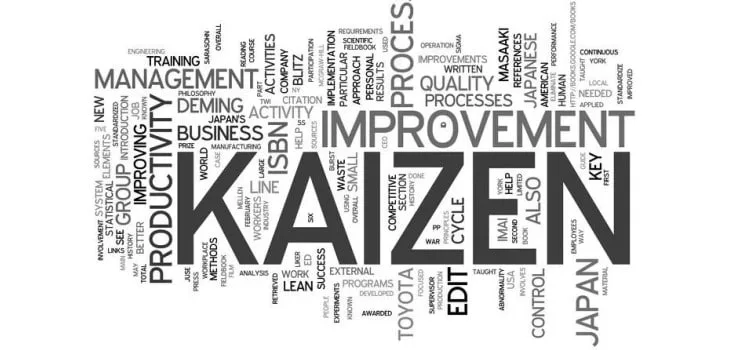
Kaizen (改善) is the Japanese name for a change that makes something better. When a goal keeps slipping, look at the part of the work you repeat: one delay, one search for a tool, one defect that reaches the next person. You change that part, and you keep the change only when the result is better.
The characters are ordinary ones. Kai (改) means change, and zen (善) means good, so 改善 reads as improvement. The method is the decision to repeat that improvement with the people who do the job, rather than waiting for a single large redesign.
Contents 3
How did the kaizen method originate?
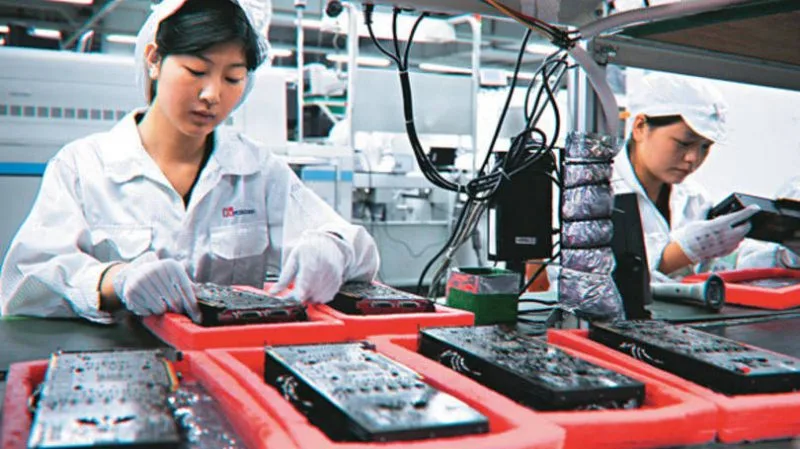
The habit grew on Japanese shop floors in the decades after the war, while factories were trying to rebuild output and cut waste at the same time. Toyota's account of its production system says that every employee carries out daily, incremental kaizen, aimed at waste, unevenness, and overburden. In Japanese those three are muda, mura, and muri.
Taiichi Ohno, backed by Eiji Toyoda, set that system on two pillars, jidoka and just-in-time. Toyota treats hands-on kaizen as the base of jidoka. People learn the job by doing it, remove what gets in the way, and only then hand a cleaner version of the job to a machine. Just-in-time means making only what is needed, when it is needed, and in the amount needed.
Outside Japan, the word arrived later. In 1985 Masaaki Imai founded the Kaizen Institute in Switzerland. In 1986 McGraw-Hill published Kaizen: The Key to Japan's Competitive Success, his account of the continuous improvement he had seen at Toyota and at other companies working in the same way. In 1997 he published Gemba Kaizen, subtitled a commonsense, low-cost approach to management. Gemba is the place where the work happens. The book asks a manager to go there, and to leave ongoing improvement with the people closest to the job. His short name for the whole approach was everyone, everywhere, every day.
What is the purpose of Kaizen?
Inside a company the purpose is concrete. Shorten a wait, cut an extra walk, stop a defect before it travels, and shrink the pile of parts that exists because the next step is not ready. The other half of that purpose is a written standard. If each person does the task a different way, there is no baseline, and nobody can tell whether today's change helped.
The purpose is the same away from a production line. A chore, a study hour, or a household job can lose time to searching and to doing the same piece twice. That lost time is the waste the method is built to catch. When the trouble is the shape of the whole day, how to manage your time is the wider map, and a kaizen cycle is the test you run on one piece of it.
Principles and concepts of Kaizen
Four ideas are enough to start, because the method keeps returning to them.
- Go to the gemba and watch the work where it happens, instead of trusting a report written afterward.
- Put the change in the hands of the person who does the job, on ordinary days, not only after something breaks.
- Choose a change you can finish this week without a new budget. The 1997 book called that approach commonsense and low-cost.
- Write the current best way where people can see it. The next change has to beat that standard.
Those ideas rest on the 5S, five Japanese words for making a workplace easy to read. The order is seiri, seiton, seiso, seiketsu, shitsuke.
- Seiri (整理) sorts what this job needs from what it does not, and the unneeded items leave.
- Seiton (整頓) gives everything that stays a fixed place, close to the hand that uses it, so a gap shows a missing item.
- Seiso (清掃) is cleaning used as inspection. Seiso means sweeping, wiping, and looking while you do it. A film of oil, or a layer of dust, is often the first sign of a crack or of a part that has started to move.
- Seiketsu (清潔) means cleanliness and hygiene, the state those three steps are meant to hold. In factory training this step is also the schedule that keeps seiri, seiton, and seiso in place, which is why English courses label it Standardize.
- Shitsuke (躾) is the discipline of doing the four steps without waiting to be told, and of checking that they are still happening.
A sorted drawer can still sit inside a process that wastes an hour. The 5S make the place readable. The cycle below is what changes the process.
The subject is simple to explain and easy to abandon after the first cleanup. Six moves are enough:
- Name one opportunity, a task you repeat rather than the whole job.
- Watch that task once, in the place where it happens, and write the steps as they are.
- Pick one change you can finish this week, such as a tool moved closer, a step removed, or a checklist of three lines.
- Use the change on the real work.
- Study the result. If the wait, the defect, or the search didn't get smaller, drop the change.
- If it did get smaller, write the new way down and treat it as the baseline from here.
Take a study hour that loses its first eight minutes to finding the notebook, the audio file, and a pen that writes. Seiri clears the unrelated papers. Seiton puts the notebook, the pen, and the headphones in one marked spot before you sit down. That layout is the only change under test. After several sessions, look at the clock. When those eight minutes shrink, the layout becomes the standard. When they are still there, the layout is the wrong guess, and the next move is to watch the hour again.
On a line, the same test belongs to the people at the station. A cleanup nobody repeats next Monday stops short of shitsuke. A suggestion that never gets tried is still only a note on the board.


Community
Comments
0 comments
There are no published comments in this language yet.
Send comment