
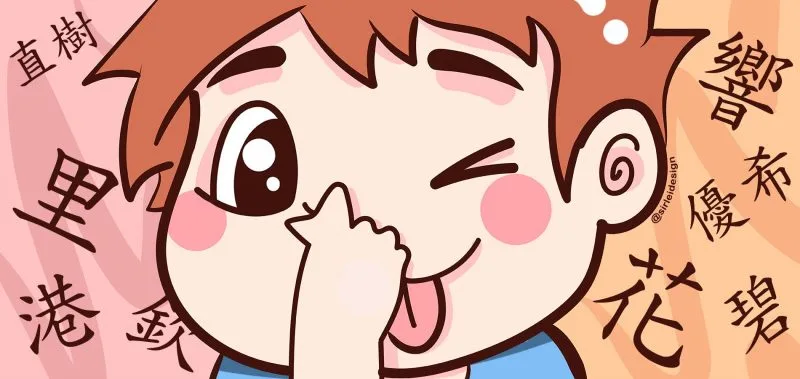
Have you ever wondered what Japanese nicknames are like? Are there nicknames in such a formal language? How do nicknames work in the Japanese language? What are the main nicknames in Japan? In this article, you will see all of this and much more.
We will teach our readers that in the Japanese language there are many interesting facts related to Japanese nicknames. Ready to venture into the world of Japanese nicknames?
Table of Contents
Are there Nicknames in Japan or in the Japanese language?
Japan is a very formal language, so nicknames are rarely used. When one person becomes close to another, they usually call them by their first name. This is the main way to express love, affection, and friendship.
However, the Japanese have some cute nicknames. They often use adjectives to express affection, such as kawaii which means cute, and various other nicknames. The most common way to nickname a Japanese person is by using and shortening the person’s own name.
It is not easy to find a list of Japanese nicknames because usually, Japanese nicknames are literally puns with names, along with the addition of some cute suffix. Fortunately, there are indeed some nicknames that we can highlight and present.
Adana and Aijyou – Nickname in Japanese
Japanese nicknames are called adana [あだ名], also known as aijyou [愛称] which indicates nicknames for animals, affectionate, intimate, and informal nicknames. It can be recognized in English as nickname [ニックネーム].
A nickname is generally used to call another person, to add to the names of online game characters, accounts on forums and websites, or even for pets. Some nicknames are teasing and offensive, but they are not common in Japan.
Motorcycles and cars are also nicknamed; some name their vehicles Hayate which means fast or Nozomi which reminds of the bullet train. Even places like the Tokyo Police Department get nicknames like Sakuradamon.
Stations and trains also tend to get nicknames. Some nicknames are as common in Japan as in the West, animal names like “Pochi” [ポチ] for dogs and “Tama” [タマ] for cats are good examples of Japanese nicknames for pets.

Nickname Shortening the Name
The Japanese way of giving nicknames is one of the smartest and most fun in the world. The most common and simple method is shortening the name, which happens a lot in the West. Just as we say Dani for Daniele, the Japanese say Haru for Haruna.
Generally, the last or the last two syllables are omitted when nicknaming someone in Japanese. It is also necessary to use a treatment suffix; the most common for women is -chan and for men is -kun. Remember that these are informal suffixes for friends.
We recommend reading: Japanese Honorifics – The Meaning of san, kun, chan, and others
As a form of nickname, another unusual suffix that exudes cuteness, affection, and sweetness is -tan, used for babies and cute children. Another alternative is the suffix -rin. At the end of the article, we will leave a list with many cute suffixes to use in names.
Not only the first name but also the family name or surname is often used as a shortened nickname with a cute suffix in Japan. So consider turning your friend’s last name into something cute.
Some names can be abbreviated by adding an extension [ー] at the end of the last syllable. Others shorten the name by removing a syllable (あいうえお) and replacing it with a small tsu [っ]. Here are some examples below:
- Miichan from Misaki (extension ー);
- Yukko from Yuuko (small tsu);
- Yuririn from Yuri (suffix);

Nickname Combining Names
Another option is to combine the first name with the last name. For example: Kimura Takuya can become Kimu-Taku, a cute nickname created by joining the first and last name in Japanese. Another famous example is Matsumoto Jun which becomes MatsuJun for fans.
Some names are not shortened, but they are also not combinations of the first and last names. Some simply combine parts of the name with other adjectives, onomatopoeias, or words that represent or show some characteristic of the person.
Famous people like singers, idols, and voice actors usually have their names modified in a way considered Kawaii. Below is a list of names that have been combined or shortened in a unique way:
- Maririn – Mariko Shinoda;
- Meetan – Megumi Ohori;
- Hikki – Utada Hikaru;
- Miikashi – Miike Takashi;
- Emurina – Emu Kasurina (foreign name);
- Kyonkyon – Kyoko Koizumi
- Match – Kondo Masahiko
- Yukko – Yukiko Okada
- Mayyu – Mayu Watanabe
- Aii – Aika Hirota

Nicknames with Kanji Puns
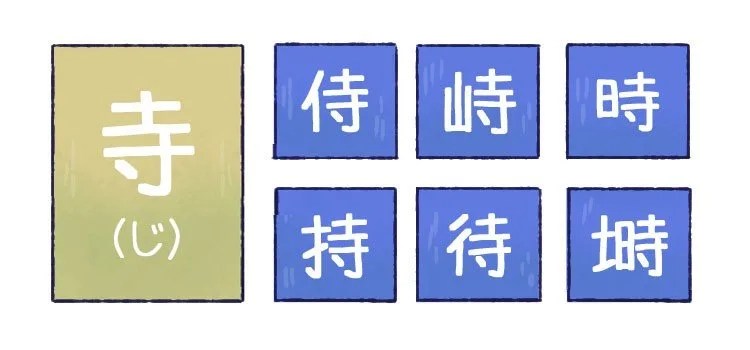
Japanese names are written using ideograms that usually have their own meanings. The ideograms called kanji can also have different readings; many have the same reading, which allows for the creation of nicknames.
For example, if a friend of yours is called Shi [市] you can write a message using Shi [士] which means knight. Yes, you can indirectly nickname someone by saying the same name, but in your mind, it reminds you of something else.
Who doesn’t remember the famous Ichigo [一護]? His name and ideograms have absolutely nothing to do with each other, but ichigo can also mean strawberry. People with this name end up being associated with strawberries, one way or another.
Others have names that can be read in a different way. Take the case of Otonage [大人気] which can also be read as Daininki [大人気] which literally means a super popular person.
The possibilities are endless, but for these creations, it is necessary to have advanced knowledge of Japanese ideograms and also to know the person well to relate some characteristic to their name.
Nicknames by Mispronunciation
Some Japanese nicknames can arise from breaking or mispronouncing. You can intentionally mispronounce by pronouncing a word that sounds like another. Another cause is rendaku where KA [か] becomes GA [が] or TA [た] becomes DA [だ], which kind of generates nicknames.
Others create nicknames derived from names but that remind some word or Japanese adjective that coincidentally is similar or the same written with another ideogram. We have the famous case of Sawako which became Sadako in the anime Kimi ni Todoke.
See below some examples of nicknames that were created through mispronunciation, similarity, or rendaku:
- Teko > Peko
- Ayachan > Yayachan
- Manaka > Maaka
- Reina > Reenya
Also read: Rendaku – Sequential Vocalization in the Japanese Language
Other alternatives would be to intentionally reverse the syllables of the name to form nicknames. Translate the name into English or add syllables that are synonyms to the person’s name. There are countless ways to play with names. See below:
- Yuichan – Chanyui
- Nanami – Miinana
- Haruka – HaruHaru
- Momo – Peach
- Koharu – Chibiharu
Affectionate Nicknames in Japanese
Below we will leave some cute and affectionate nicknames used in the Japanese language. Remember that some of the nicknames below need to be pronounced with suffixes (chan, kun) to make sense. I will mark with [#] those that need a suffix.
| Japanese | Romaji | Meaning |
| ダーリン | daarin | Darling – From English Dear |
| ハニー | hanii | Honey – Honey |
| 旦那 | danna | Cute form of husband |
| 嫁 | yome | Fiancée, wife |
| 奥さん | okusan | Wife |
| 夫 | otto | Husband |
| 妻 | tsuma | Wife |
| 団子 | dango | Japanese Sweet # |
| 鼠ちゃん | nezumichan | Little Mouse |
| あなた | anata | Dear |
| スウィーティー | Suuiitii | Sweetheart, sweetness |
Pejorative Nicknames in Japanese
Below we will leave a list of nicknames that are used as insults or pejorative. We recommend reading our article that talks about swear words in Japanese. Remember that pejorative nicknames in Japanese are also used by changing the name.
Some add a word similar to the name but that has an insulting tone, adding the formal suffix -san. Some of the nicknames in the list below will explain this well. Sometimes the insult is not intentional, just a characteristic of the person.
We recommend reading: 100 Swear Words and Insults in Japanese
| Japanese | Romaji | Meaning |
| 駄目君 | damekun | Failure, loser |
| ボケ | boke | Idiot |
| バカちゃん | bakachan | Idiot |
| バカち | bakachi | Idiot |
| 不細工 | busaiku | Awkward |
| ガキ | gaki | Shorty, brat |
| 豚 | buta | Pig |
| あほ | aho | Fool |
| 変態 | hentai | Pervert |
Cute Suffixes in Japanese
The idea below is simple; in the circle, you place the person’s name followed by the treatment suffix. Doing this serves as a nickname and a cute treatment for an intimate friend. All the suffixes below are considered cute and affectionate.
Some of the suffixes below are more appropriate when used to shorten or merge a name. For example, Fujita Niko can become Nikorun using the shortening of the name with the suffix run. See if the chosen suffix fits better this way.
- 〇〇ちゃん – chan
- 〇〇ちゃそ – chaso
- 〇〇ちゃま – chama
- 〇〇ちゅん – chun
- 〇〇しゃん – shan
- 〇〇たん – tan
- 〇〇たそ – taso
- 〇〇たゃ – tya
- 〇〇きゅん – kyun
- 〇〇きゃん – kyan
- 〇〇ん – n
- 〇〇やん – yan
- 〇〇はん – han
- 〇〇ちん – chin
- 〇〇りん – rin
- 〇〇めろ – mero
- 〇〇める – meru
- 〇〇にゃ – nya
- 〇〇みゅ – myu
- 〇〇にゃん – nyan
- 〇〇ぴょん – pyon
- 〇〇ぽぽ – popo
- 〇〇ころ – koro
- 〇〇しゃん – shyan
- 〇〇ぺこ – peko
- 〇〇ち – chi
- 〇〇す – su
- 〇〇ぴ – pi
- 〇〇ぷー – puu
- 〇〇ーぬ – ーnu
- 〇〇もち – mochi
- 〇〇まる – maru
- 〇〇ぽよ – poyo
- 〇〇っちょ – ttyo
- 〇〇ちょこ – choko (love chocolate)
- 〇〇めろ
- うさ〇〇 – Prefix (Usagi)
- ゆめ〇〇 – Prefix (夢)
- 〇〇てぃー
Research sources: Fluent
Leave a Reply