
Every so often, anime, games, or even simple Japanese symbols get treated as if they were automatically dangerous. That reaction usually comes from fear, rumor, or a lack of context.
I am not trying to attack any religion here. I just want to show how quickly people can turn a cultural difference into a moral panic.
Contents 7
Why does this happen?
I respect people who choose to avoid content that does not fit their faith. The problem starts when rumor becomes fact and a personal boundary turns into a blanket judgment about Japan or Japanese pop culture.
That is how stories get repeated long after they have been disproved.
Pokémon and Hello Kitty
One of the most common examples is the idea that Pokémon means "pocket demons." It does not. The name is short for Pocket Monsters, which is exactly what it says: small monsters, not demons.
Similar rumors have followed Hello Kitty for years, including the absurd claim that it has something to do with a pact with the devil. A quick search is enough to see how weak those stories are. I have also written about Hello Kitty.
If you want the longer version of that debate, I already covered it in Hello Kitty and Pokemon are from the devil?
Vampire teeth and anime
Another claim I hear a lot is that sharp teeth in anime prove something occult. In reality, it is usually just a design choice or a beauty trend. In Japan, slightly crooked teeth have even been seen as charming in some contexts, and that is where the idea of yaeba comes from.
If you are curious about the practical side of teeth and appearance in Japan, I also wrote about dentistry in Japan.
Anime are not all the same
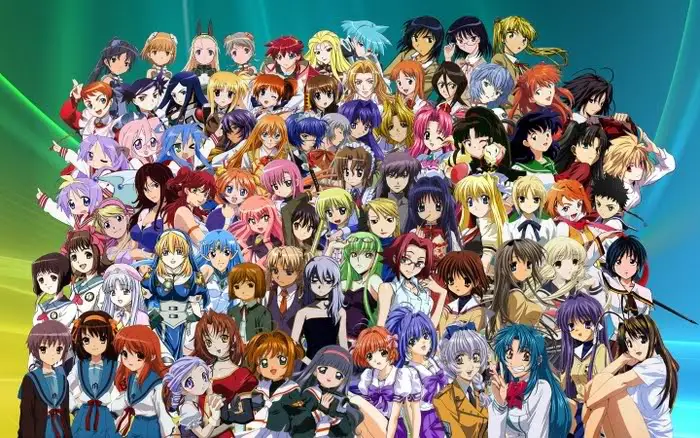
Anime is not one genre. Every year, new titles come out across school life, romance, fantasy, drama, comedy, and history. Some shows are harmless, some are not, and some clearly are not meant for every viewer.
That distinction matters. You can criticize a specific show without pretending it represents an entire country or an entire medium.
Cultural differences
A lot of the confusion comes from culture. Japan has its own symbols, references, humor, and ways of mixing fiction with everyday life. Once language and context are missing, people often fill the gap with their own assumptions.
That is how harmless details can start sounding sinister to someone who is not familiar with the original meaning.
Attacking the wrong target
It is fair to say, "this is not for me." It is not fair to turn that into a claim that everything from Japan is spiritually corrupt or morally suspect.
The same logic could be used against plenty of Western movies, series, or games. If you search hard enough, you can make almost anything look suspicious.
Double standards
Have you noticed how some people reject Japanese works for symbolic or moral reasons, but give a pass to Western entertainment with very similar themes? That is where the double standard becomes obvious.
There is nothing wrong with having personal limits. The problem is when criticism turns lazy and starts treating an entire culture as if it shared one moral profile.
Japan is not perfect, and anime is not automatically harmless. But turning every Japanese work into a spiritual threat helps nobody. It is better to understand the work first and then decide whether it fits your values.


Community
Comments
0 comments
There are no published comments in this language yet.
Send comment