
Religious freedom in Japan is guaranteed by the Constitution and widely respected in society. The country keeps religion and the state apart: there is no official religion, and a person may profess a faith, change belief, or follow none.
Despite this freedom, religiosity in Japan has unique characteristics. Many people do not follow a single religion, but rather a combination of Shinto, Buddhist traditions, and even Western influences. There is also tension around so-called new religions, especially after crimes and after courts dissolved religious corporations.
Contents 11
The Japanese Constitution and Religious Freedom
Article 20 of the Constitution of Japan, promulgated on 3 November 1946 and in force since 3 May 1947, establishes that:
- Freedom of religion is guaranteed to all.
- No religious organization shall receive any privileges from the State, nor exercise any political authority.
- No person shall be compelled to take part in any religious act, celebration, rite or practice.
- The State and its organs shall refrain from religious education or any other religious activity.
This means that Japan has no official religion and the state does not interfere in individual beliefs. Unlike the period before World War II, when state Shintoism was promoted as part of Japanese nationalism, today there is a clear separation between religion and government. Article 89 reinforces that line by barring public money from maintaining a religious institution.
How Religions Operate in Japan?
Japan has significant religious diversity, with three major traditions standing out. The landscape of beliefs is in What are the religions of Japan?. The focus here is what the law allows and how that shows up in daily life.
1. Shinto
Shinto is the native religion of Japan and is deeply linked to national culture. Although many people participate in Shinto rituals, such as visiting shrines and celebrating festivals, few consider themselves exclusive "followers" of Shinto.
2. Buddhism
Buddhism arrived in Japan in the 6th century and still has great influence, especially in funeral rituals. Many Japanese families maintain a Buddhist altar at home, the butsudan, to honor their ancestors.
3. Christianity and Other Religions
Christianity represents a minority, with about 1% of the population identifying as Christian. The Agency for Cultural Affairs counted about 1.87 million Christian adherents at the end of 2024. There are also new religions, such as Soka Gakkai, a lay Nichiren Buddhist movement, and groups inspired by Shinto-Buddhist beliefs.
Japan vs. China - Religious Freedom
Japan and China are often confused as similar countries, but they treat religion very differently. China's constitution speaks of freedom of belief, and the state recognizes five religions (Buddhism, Taoism, Islam, Catholicism, and Protestantism) under patriotic associations. Outside that frame, house churches, Falun Gong, and other groups face restriction or repression. In Japan, registration as a religious corporation (shūkyō hōjin) brings tax exemption. Losing that status does not, by itself, ban worship.
To understand more about how this religious persecution and lack of freedom affects believers in China, read our article on: Is There Religious Freedom in China?
If you are curious about South Korea and North Korea, we have the article: Is There Religious Freedom in Korea?
Restrictions and Challenges to Religious Freedom
Despite the freedom guaranteed by law, some religions face difficulties in Japan:
1. Discrimination Against New Religions
New religious groups, such as Soka Gakkai and Seicho-No-Ie, are often viewed with suspicion by society. Some people treat them as closed groups and avoid interacting with their members. Part of that wariness, in the case of Soka Gakkai, also comes from its historical link with the Komeito party, founded in 1964 and formally separated from the organization in 1970.
2. Aum Shinrikyo and the Dissolution of Religious Corporations
Religious freedom was questioned after the sarin gas attack on the Tokyo subway in 1995, carried out by the group Aum Shinrikyo. The group lost its status as a religious corporation, and successors such as Aleph remain under watch by the Public Security Intelligence Agency. Since then, the public has grown more skeptical of new religions.
A more recent case, of a different kind, is the former Unification Church (Family Federation for World Peace and Unification). After the assassination of Shinzo Abe in 2022, the government asked the courts to dissolve the corporation. The Tokyo District Court ordered the measure in March 2025. The High Court confirmed it in March 2026, and the Supreme Court upheld the decision in June 2026. The order removes tax exemption and leads to the liquidation of assets. Believers may continue to practice the faith as a voluntary association.
3. Social Pressure
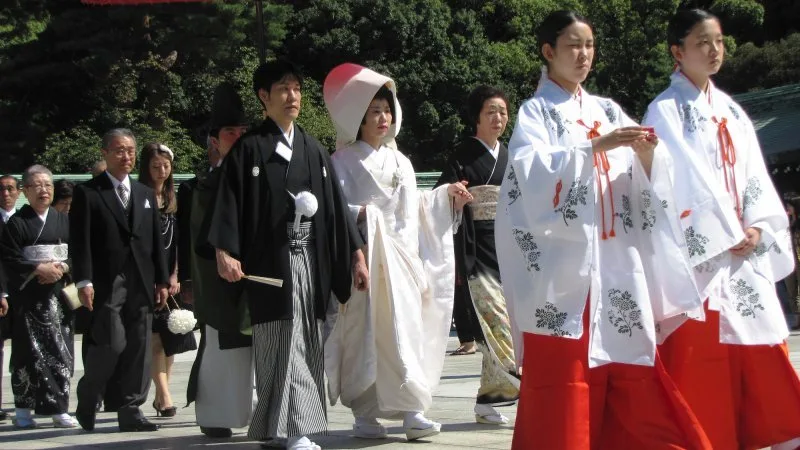
Although Japan is religiously free, there is social pressure to follow certain rituals, such as Shinto-style weddings and Buddhist ceremonies at funerals. People who completely reject religion may be seen as different.
Conclusion
Japan has laws that guarantee the separation of religion and the state: to believe, not to believe, to change faith, and to refuse a rite sit in Article 20. Social and historical challenges still shape how certain religions are viewed, and the state can dissolve a group's legal personality, as with the former Unification Church. Diverse beliefs continue to coexist in daily life, with the limit on institutional privilege and on family custom.




Community
Comments
0 comments
There are no published comments in this language yet.
Send comment