

When a manga reaches a hundred collected volumes, it stops feeling like a weekend read and starts looking like a shelf with its own postcode. The surprise is not that One Piece and Detective Conan are long; it is how many quieter Japanese serializations have kept going even longer.
This list ranks 15 of the longest manga series by collected tankōbon volume count. It is a snapshot rather than a permanent scoreboard: a new release changes an ongoing series, and some catalogues group connected continuations under one heading. That is why the count matters more here than a dramatic claim about a single, unchanging champion.
Contents 7
How this list measures a manga’s length
Chapter totals can mislead. A four-panel newspaper comic, a weekly action series and a monthly drama do not package their chapters in the same way. Publication years can mislead too, because hiatuses and relaunches make a long calendar run look larger than the reading pile. Collected volumes offer a more useful common unit: they show how much material a reader can actually line up on a shelf.
The numbers below are the Japanese collected-volume totals checked for this revision. “Ongoing” means the total may already be higher by the time you read this. A completed series can still receive a later special volume, so catalogues do not always agree about the final number.
15 longest manga series by collected volumes
| Rank | Series | Creator | Volumes | Status |
|---|---|---|---|---|
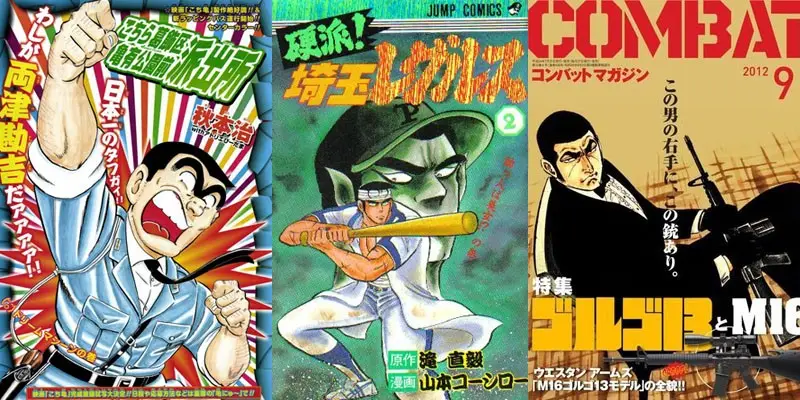
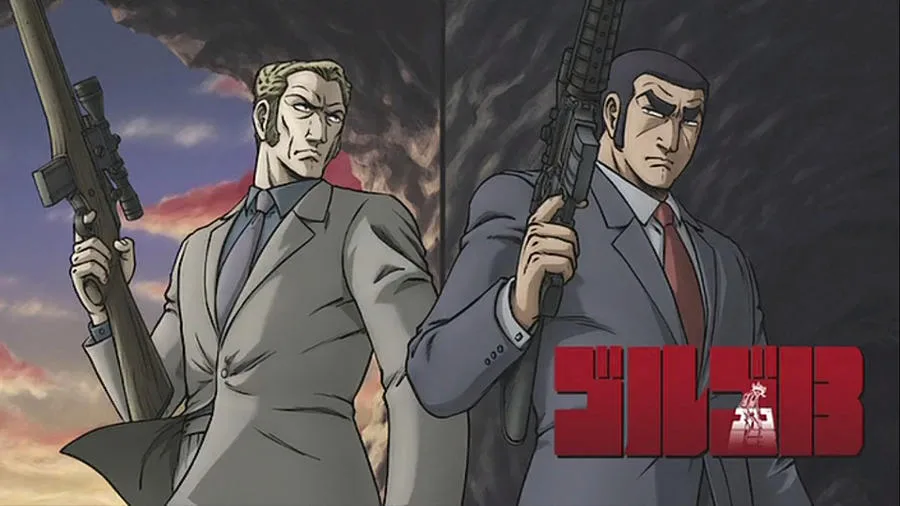
| 1 | Golgo 13 | Takao Saito / Saito Production | 221 | Ongoing |
| 2 | Dokaben | Shinji Mizushima | 205 | Completed |
| 3 | KochiKame: Tokyo Beat Cops | Osamu Akimoto | 201 | Completed |
| 4 | Minami no Teiō | Dai Tennōji and Rikiya Gō | 188 | Ongoing |
| 5 | Cooking Papa | Tochi Ueyama | 178 | Ongoing |
| 6 | Silver Fang | Yoshihiro Takahashi | 158 | Ongoing |
| 7 | Grappler Baki | Keisuke Itagaki | 156 | Ongoing |
| 8 | Kinnikuman | Yudetamago | 150 | Ongoing |
| 9 | Hajime no Ippo | George Morikawa | 145 | Ongoing |
| 10 | JoJo’s Bizarre Adventure | Hirohiko Araki | 139 | Ongoing |
| 11 | Edomae no Sushi | Shin Tsukumo and Terushi Satō | 133 | Ongoing |
| 12 | Onihei Hankachō | Takao Saito / Saito Production | 128 | Ongoing |
| 13 | Kobo, the Li’l Rascal | Masashi Ueda | 121 | Ongoing |
| 14 | Tsuribaka Nisshi | Jūzō Yamasaki and Kenichi Kitami | 118 | Ongoing |
| 15 | Kowashiya Gen | Hoshino Hideki and Sadayoshi Ishii | 118 | Ongoing |
Why Golgo 13 sits at the top
Golgo 13 began in 1968 and remains a fixture of Big Comic. Its lead, Duke Togo, is an assassin whose cases can move across countries, eras and political moods without forcing the series into one continuous plot. That flexible premise helps explain its unusual endurance: readers can enter through an individual case, while the series keeps building a huge collected run.
The number is striking, but it should not turn the rest of the list into footnotes. A long manga is not automatically a single uninterrupted narrative. Some entries are broad franchises, some are workplace or family strips, and some use episodic premises that can return week after week without losing their identity.
The giants most international readers recognize
Hajime no Ippo, JoJo’s Bizarre Adventure, Grappler Baki and Kinnikuman are easier reference points for many English-language readers. Their longevity comes from different engines: boxing matches and a large supporting cast in Ippo; new generations and settings in JoJo; escalating martial-arts confrontations in Baki; and the wrestling-comedy imagination that has kept Kinnikuman in circulation for decades.
Those titles also show why “longest” does not mean “same reading experience for everyone.” A reader looking for a single protagonist’s steady journey may connect with Hajime no Ippo. Someone who likes distinct arcs can approach JoJo part by part. The volume count is a scale, not a recommendation by itself.
Long-running does not always mean battle manga
The upper end of the list is full of genres that travel less often outside Japan. Cooking Papa builds its long life around home cooking and office life. Kobo, the Li’l Rascal comes from the compact rhythm of newspaper-style comedy. Tsuribaka Nisshi turns fishing and workplace life into an enduring comic world, while Edomae no Sushi and Kowashiya Gen show how specialized work can sustain a long serial run.
That variety is the real lesson behind the numbers. A title does not need global visibility to last for generations. A reliable premise, a recognizable setting and readers who want to return to its characters can be more durable than a short burst of international attention.
Where are One Piece and Detective Conan?
They are still enormous. In the same volume-count comparison, One Piece stands at 115 collected volumes and Detective Conan at 108, both ongoing. Their absence from this top 15 is a useful correction to the idea that the best-known export must also be the longest Japanese serialization.
If you want to understand where these series came from, it helps to look beyond individual titles at the Japanese manga publishers and magazines that give weekly, monthly and semimonthly works their rhythm. And if your curiosity is about screen runs rather than shelves, compare this list with the longest-running anime in history; manga volumes and anime episodes measure very different kinds of longevity.
What to take from a huge volume count
Start with the premise, not the commitment. A 200-volume shelf can be inviting when each case, match or gag has its own small payoff, and intimidating when a story expects you to remember every turn from years earlier. Check whether the series is episodic, divided into parts, completed or still growing before deciding where to begin.
The best surprise in this ranking is not a number. It is the range of worlds that kept readers returning: police comedy, cooking, fishing, boxing, historical drama, action and everyday life. That is a much better reason to explore a long manga than trying to finish it faster than anyone else.





Community
Comments
0 comments
There are no published comments in this language yet.
Send comment