

Have you ever thought about becoming a Japanese translator? Working with it professionally? Have you ever wondered how to do this without being fluent in the language, or just as a hobby to overcome procrastination and delve deeper into the Japanese language? What types of translation exist? Is it reliable to use Google translation?
When we talk about Japanese translation, the subject seems endless. It can refer to the simple task of automatically translating a sentence, interpreting a conversation, or making a complete translation of a book or website. In this article, we have created a complete guide discussing translators and the translation of the Japanese language.
Contents 25
Introduction - Why talk about translation?
Some time ago, I was translating with the help of Google Translator some words in Japanese and I noticed that the translation is not 100% accurate most of the time. And it’s not a matter of the translator being bad, it’s just some eccentricities that the language has.
This basically means that Japanese leads you not to fully trust translation tools like online translators, including Google Translator. For this reason, if you need to translate any text from Japanese, it’s best to always accompany it with an online dictionary.
Some may think that we are insinuating that the Japanese language is very difficult. In reality, it’s the opposite; the Japanese language is so simple that it becomes impossible to translate from Portuguese to Japanese or from Japanese to Portuguese automatically using Google Translator.
The History of the Japanese Language
As they say, know yourself and you will know your enemy. So before we take sides, saying things like Japanese is complicated or it’s difficult to learn Japanese and other things of that sort, let’s learn a little more about this language.
Very little is known about the prehistory of the Japanese language, but Chinese documents recorded some words from this language around the 3rd century, but until the 8th century, no more texts with these words were recorded. It is believed that the language underwent massive changes throughout its history.
In the Heian period (794 to 1185), the Chinese significantly influenced the vocabulary and phonology of ancient Japanese. Between 1185 and 1600, during the middle period, in the last years of this period, the Japanese began to add changes in characteristics that approached modern Japanese, and it was also during this period that the first instances of European loanwords were recorded.
These linguistic loans significantly increased after the isolation of the Edo period ended, around 1853. Loans from the English language in particular became frequent, and thus words of foreign origin proliferated in Japanese.

Characteristics of the Japanese Language
To avoid being vague, I will list some characteristics of the Japanese language. I will not mention particularities of any dialect of Japanese; I will only mention general characteristics that encompass the entire language.
In Japanese, the word order is typically subject-object-verb, unlike Portuguese, which is subject-verb-object. Particles mark the grammatical function of words, and the sentence structure is topic-comment. Sentence-final particles are also used to add additional impact, whether emotional or emphatic, and also to ask questions.
Nouns do not have grammatical number or gender, and there are no articles. Verbs are conjugated mainly for tense and voice, but not for person. And as we know, Japan has a well-structured system of honorifics that is used to mark the relative status of the participants in the dialogue.
Japanese also extensively uses Chinese characters, or kanji, in its writing system even though they have no genetic relation to each other. A large part of the Japanese vocabulary is borrowed from Chinese.
Together with the Kanjis, the writing system of the Japanese language uses two syllabic scripts, Hiragana (ひらがな or 平仮名) and Katakana (カタカナ or 片仮名). The Latin script is used in a limited way, such as for imported acronyms. The numeral system uses Arabic numbers as well as traditional Chinese numbers.

Types of Japanese Translation
Before we talk about translation and translators, we need to know the types of existing translations and their different sectors:
Professional Japanese Translation: This translation tends to be slow and done by a professional fluent in the language, sometimes with documentation that proves their professional skills.
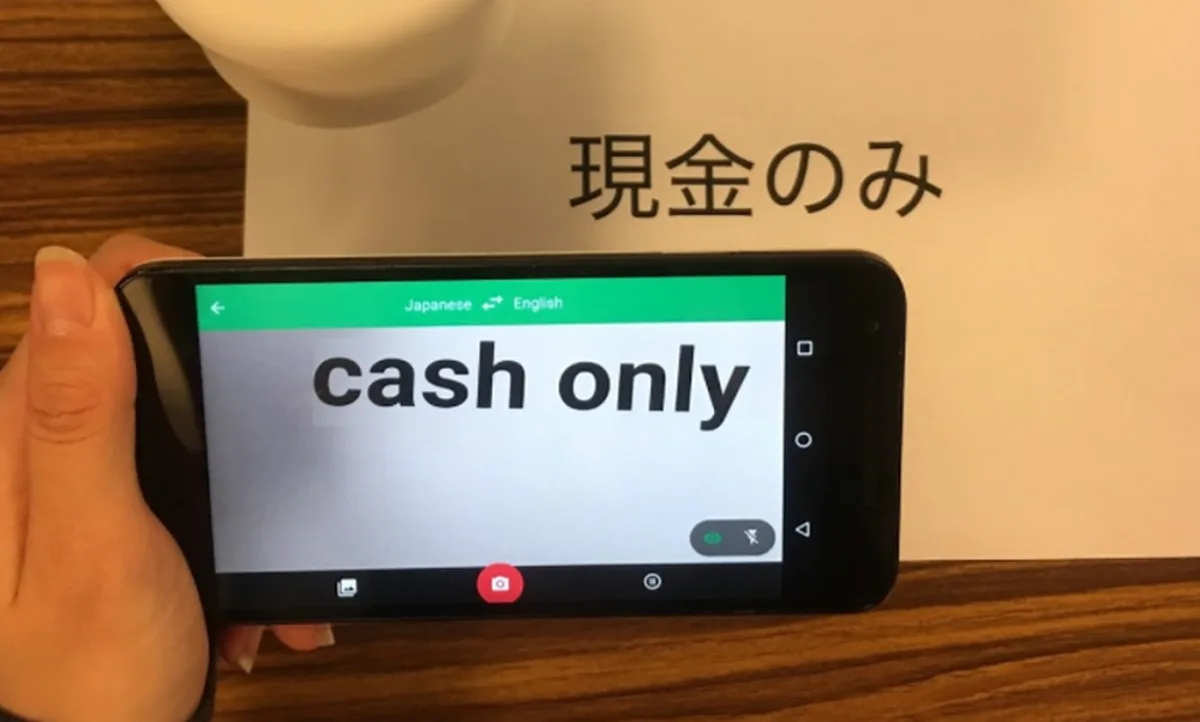
Automatic Japanese Translation: This translation is often inaccurate, especially when it comes to Portuguese to Japanese. Programs like Google Translator cannot identify linguistic aspects and translate everything literally. There are more professional software used by companies, but without human oversight, it is impossible.
Computer-Assisted Translation (CAT): When a professional translator uses software assistance to speed up the translation service but makes all possible changes and corrections.
Literal Translation: A translation that closely resembles what is written in the Japanese language. A type of translation that requires less time and skill and can be done with the help of programs.
Interpretive Translation: When we try to adapt the text to Portuguese using synonyms or expressions that make more sense in our language. This is very common in the Japanese language, where literal translation never makes as much sense to us.
Administrative Translation: This term refers to the translation of administrative texts - a very broad term. For translation, it refers to the common terms and texts used in companies and organizations that they use in day-to-day administration.
Commercial Translation: Sometimes called business translation, commercial translation encompasses any type of document used in the business world, such as letters, company invoices, contest documents, annual reports, etc. Often, commercial translations require specialized translators with knowledge of the terminology used in the business world.
Computer-Assisted Translations: Individuals and companies often turn to free online translation tools to translate phrases or documents. Behind the online translation tool, a software program analyzes the text according to predefined linguistic rules and reconstructs the text in a different language according to the corresponding rules of the target language. They do not produce a perfect copy of the submitted text in another language.
A free translation service or online translation tool can never replace a human translator and should only be used when you want to translate text written in a foreign language into your native language or into a language you understand.
Computer Translation: refers to translations of anything related to computers, such as software, instructions, and help files.
Financial Translation: For the financial industries, financial translation is the translation of texts of a financial nature, such as banks, stocks, commodities, and investment funds.
General Translation: General translations are less complicated, and the language used is not of a high level (sometimes called lay terms). In general translation, there is no specific or technical terminology used. Although they are simpler, they are still not suitable for using a free translation tool.
Legal Translation: Legal translations require highly trained translators, as they involve the translation of legal documents, such as statutes, contracts, and treaties. The translator not only needs expertise in the source language but also needs a legal understanding and an excellent grasp of the source and target cultures.
Literary Translation: A literary translation is the translation of novels, poems, and plays. A literary translator must also be able to translate feelings, cultural nuances, humor, and other subtle elements of the literary work.
Medical Translation: Medical translations are also highly complex and involve the translation of medical packaging, textbooks, manuals for medical equipment, and medication labeling. Specialization is required.
How to become a Japanese translator?
Being a translator is not an easy task; there are several areas in which a Japanese translator can work. They can translate websites, articles, books, spreadsheets, and many other types of information; prices and profits can vary greatly from one service to another.
There are also numerous translation tools and methods used to work in this field. Throughout the article, we will talk about many of them, but first, I will leave a video from a friend talking about Japanese translation and then a series of somewhat obvious tips for those who wish to enter this market.
In the article, we will not address terms such as translation prices or service schematization; we will only talk about the systems, tools, and methods used. The video is there to answer these other questions about the translation business.
Tips for Becoming a Translator
Translate texts: Although it is obvious that to master a language, a lot of practice is necessary, there are people who will become experts in the language with just a few texts. I, honestly, do not study Japanese but rather English, and despite having translated several light novels, I feel I am not even close to reaching an advanced level.
Compare translations: Did you translate the texts? Great, now find out if this text has already been translated and compare them. A good way to do this is to take a book that has already been translated in its original version and try to translate it, then compare it with the already translated version.
Ask for opinions: It’s no use just translating and comparing; as they say, your translations are not made for you. You need to ask for opinions from other people, both translators and especially people who are laymen in the subject.
Look for good tools: Tools like translators are not entirely effective, although they have a good rate with other languages. However, in languages like Japanese, their effectiveness drops significantly, so it is advisable to use dictionaries. But if you prefer these tools, I recommend using more than one or two to clear up any doubts.
Technology: Your smartphone is not just for accessing social networks, playing games, watching videos, or other utilities. It is a broad tool and can be used for studying and even working. Currently, there are various digital dictionaries and translators for the device.
Audio content: It’s not enough just to write; it’s also necessary to understand speech. For this, things like music, movies, anime, or other similar content are incredibly useful.
Branch of professional translation
Now that you have received some tips, let’s get to know the tools and methods used for translation.

Active Terminology Recognition Tools (ATR)
These tools automatically analyze texts in format to identify occurrences of terms or other items in that text that are also present in a terminology database.
When they identify occurrences of known terms, they can highlight them in the text, propose stored equivalents from the database for insertion into the text by the user, or automatically replace occurrences of those known terms with equivalents from the database.
ATR tools should be combined with a terminology database (usually stored in a terminology management system) and are often translation memory systems.
Vocabulary Translators – Bilingual Concordances
Bilingual concordances allow users to search for occurrences of character strings (for example, sequences of characters) in bitexts (that is, original texts and their translations that have been aligned and are displayed side by side or one above the other).
They generally allow users to search in one or both languages and offer advanced search features. These tools can help users find, study, and compare various occurrences of the character string and to identify and/or evaluate potential translations of lexical units, phrases, sentences, or even structures.

Bitext Aligners
These are used to create bitexts (that is, to split original texts (source) and their translations (target texts) into smaller segments and then match the source and target segments). These tools generally operate at the sentence level and match sentences according to their relative length, their place in the text, and sometimes their content.
Since these formal criteria and the nature of the texts do not always allow for perfect alignment, most tools also offer functions to help users correct the alignment manually.
Bitexts can be used to assist in the analysis of translations and technical translation; they can be searched using bilingual concordances and are also the starting point for creating translation memories (cf. the entry for translation memory systems).
Corpora
These are collections of electronic texts that have been assembled to help users study the language and its use. They are generally designed to provide a representative sample that gives an overview of a particular type of language (for example, in a specific register, region, field, or type of text).
These text collections can help users determine which lexical units are generally used or combined. Corpora are generally searched using monolingual concordances (for example, in the case of monolingual or comparable corpora) or bilingual concordances (in the case of parallel corpora, also called bitext corpora).
Electronic Dictionaries
Electronic dictionaries are becoming increasingly popular alternatives to traditional paper dictionaries. These resources, which can be monolingual, bilingual, or multilingual, may be available on CD-ROM or online. They often provide quick, easy, and flexible access to dictionary entry content to help translators and other users find the information they need.
It is important not to confuse these dictionaries with term banks, which, although also generally available online, usually have different purposes and organization. It is also important to note that not all electronic dictionaries are of the same quality; it is particularly important to be cautious when using free online dictionaries.
Localization Tools
Localization tools are a task that involves the translation and adaptation of a webpage, software application, or other product for a specific linguistic and cultural community. As the task often involves working with complex computer coding, many participants are usually involved in the process.
Various localization tools have been created to assist translators and other localization professionals in managing the complexities of the task (including managing workflow, providing accurate word counts and estimates, separating the textual components to be translated from the computer code that must be preserved, and managing terminology and previously translated texts or versions of texts).
In addition to dedicated localization tools, translation memory systems and terminology management systems are very useful for many localization projects.
Machine Translation Systems
Machine translation (MT) systems are different from all other tools described so far because instead of assisting a human translator or language professional in their work, MT systems take on the entire process of translating texts. However, this does not mean that language professionals do not have a role to play.
When MT systems are used, humans are more often involved in the review (called post-editing) of the target text produced by the MT system to ensure that it is correct and suitable for the intended use. In some cases, humans may also adjust how the MT system operates (for example, by adding or modifying the dictionaries it uses) or preparing documents in such a way that they can be translated as successfully as possible by the system (called pre-editing).
MT systems are most useful when the original texts can be carefully prepared to be easily translated by the system (for example, clarifying ambiguous expressions, using straightforward sentences), and/or when the target text is intended only to aid understanding (and not, for example, for publication). There are different underlying techniques used by MT systems.
Some try to imitate the ways in which humans process language (for example, grammatical rules), while others operate using statistical probabilities or taking previously translated text examples as models. Just as human translators can produce different versions of a target text, so will different MT systems. It is important not to confuse the abbreviated MT for machine translation with TM, which means translation memory.

Monolingual Concordances
Monolingual concordances are computational tools that assist in the analysis of corpora. They are primarily used to locate and display occurrences of character strings (that is, sequences of characters) in corpora. They generally offer advanced search features (for example, Boolean operators, wildcards).
Some present the retrieved occurrences in keyword-in-context (KWIC), which displays each occurrence on a separate line, with the string character that the user searched for displayed in the center. This presentation was designed to work by comparing multiple occurrences more easily and efficiently, particularly as most tools also allow occurrences to be sorted using various criteria.
Analyzing occurrences of character strings can help users evaluate how words and phrases are used. Many concordances also offer additional corpus analysis functions (for example, they can make lists of all forms of words present in the corpora and their frequencies to help identify particularly relevant items in a collection of texts).
Office Tools
The Microsoft Office Suite offers various software applications to assist with tasks such as creating, editing, and managing presentations (PowerPoint), spreadsheets (Excel), and databases (Access). Translators, writers, and editors can use these tools to access documents for translation and to store and manage terminology, client information, and other data. Teachers may be interested in using these tools to prepare lectures or presentations at conferences, to store research data, or to calculate grades.
Search Engines
The most well-known internet search engine is Google, although there are others (including Yahoo!, Alta Vista, and Ask.com). Search engines analyze the content of web pages and create lists of occurrences of word forms found on pages or their URLs, in the information that web page creators provide about their pages (the page metadata) or in links to pages.
This analysis facilitates and speeds up online searching using keywords. Search engines also use sophisticated calculations to rank search results in an attempt to present the pages most likely to be useful to a user at the top of the results list.
Many search engines also offer various specialized search functions, and each search engine has its own particular syntax that must be learned to optimize searches. A different type of search tool, called a meta search engine (for example, Dogpile), performs searches across multiple search engines at once and synthesizes the results.

Term Banks
Term banks are resources that assist in researching terms used in specialized language, and are particularly useful, for example, for specialized and technical translation and technical writing.
Typically bilingual or multilingual, term banks are collections of term records, that is, highly structured entries in databases that store data about concepts that are important in specialized fields (for example, terms, their equivalents in other languages, definitions, contexts, sources, and notes).
This concept-based structure and specialized orientation differentiate term banks from most electronic dictionaries, which are generally organized by lexical item.
Term Extractors
Term extractors are computational tools that analyze texts in electronic format and identify candidate terms (that is, lexical units that appear to be terms in a specific domain). Term extractors use a variety of methods to find candidate terms, all of them calling on formal criteria, such as frequency analyses or word combination structures.
Note that this automated software does not produce perfect results. Some actual terms contained in the text may be overlooked, while some candidates that are not terms may be proposed. Therefore, the output of a term extractor should be verified by a language professional.
Terminology Management Systems
Terminology management systems (TMSs) are tools similar to generic databases and management systems, but designed specifically to assist translators and other language professionals in storing and managing terminological data (for example, terms, equivalents, domains, definitions, contexts, and sources).
TMSs allow users to create, store, manage, and search their own term records for items they believe will be useful for future work. They typically suggest or even impose record structures to help users store various types of terminological data, and also offer a number of search functions to help users find the records they need quickly and easily.
TMSs are generally a more powerful alternative to the more general Office tools (for example, spreadsheet documents, tables, or databases) for storing terminology. Another advantage is that TMSs can sometimes work together with an active terminology recognition tool and/or translation memory system as part of a larger translation environment.
It is important to note the difference between TMSs (typically used to store personal records or records for a reasonably small group of users) and term banks (which are generally organization-wide products or even public or commercial).
Translation Environments
Term used to refer to systems that include various different translator tools in an integrated package. These environments are generally centralized translation memory systems or similar tools, but they usually also include bitext aligners, terminology management systems, term extractors, active terminology recognition tools, and bilingual and/or multilingual concordance functions, among other tools.

Translation Memory Systems
Translation memory (TM) systems are designed to save time and effort in translating documents that contain repetitions (internal, within the same text, or external, in other similar documents).
TM systems store segments of texts that have been translated, accompanied by their translations, usually in a type of database called translation memory. (These corresponding segments, sometimes called translation units, can be created automatically as a user translates, or can be assembled using an existing source and the target texts combined using a bitext aligner.)
Most TM systems link directly to text editors (for example, word processors) so that they can be used while a translator is working on a translation as they normally would. When a translator is working on a text in which a segment is similar or identical to one that has already been translated, the TM system may automatically suggest the previous translation for reuse.
The translator can then decide whether this translation is appropriate for use in the new text. If so, they can simply insert it into the new translation or edit it as necessary and insert it. If the suggestion is not appropriate, the translator can simply reject it and translate it themselves.
TM should not be confused with machines
translation systems (MT); translation memories allow humans to recycle segments of previous human translations, while MT systems perform translations automatically and most often rely on humans to edit afterward. Although these two types of tools may be integrated into some translation processes or even in a single translation environment, they operate in very different ways.
Web Tools
The category of web tools is general, including various types of tools useful for language professionals that can be used online. Some of them are difficult to fit into classic tool classes. Others are more general tools that can still be useful for translators and others in the language sector.
- Websites to learn and also practice the Japanese language
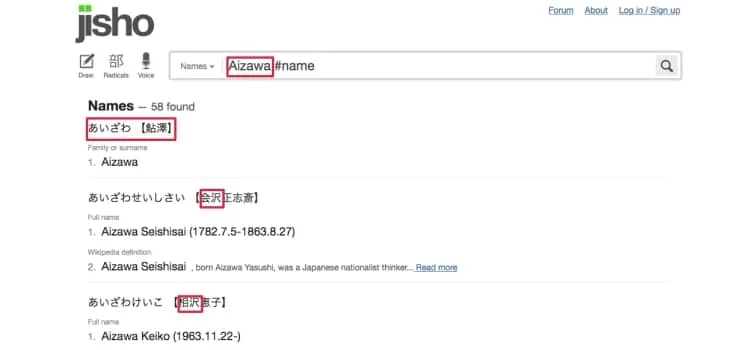
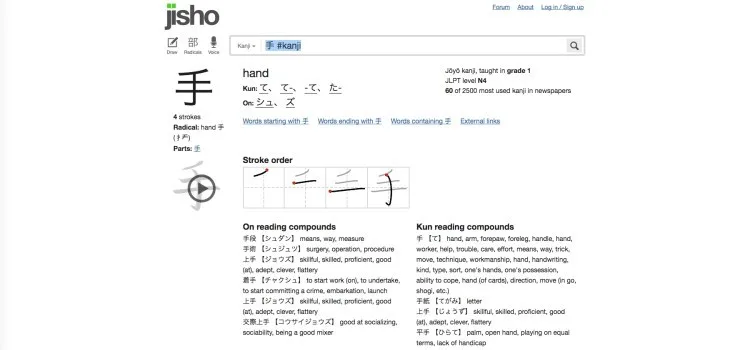
- How to translate and learn Japanese using Jisho?
Word Processors
Word processors are software programs that help users input, edit, format, and save text documents. Most also offer additional functions that can help translators, writers, and editors compare or review documents, save information in different formats or layouts (for example, as tables), and convert files into different file formats.
Translation memory systems and other translation tools often interact with word processors to provide assistance to translators directly in the word processor environment.
And now? What should I do?
This will depend exclusively on you; which path will you choose? I have only laid out the paths, but I cannot choose for you. All I can do is wish you good luck and ask that whatever path you choose, you must strive as much as possible.
This article has come to an end, folks. If you have any questions, suggestions, or criticisms, just comment below. And keep an eye on the site; we are always posting new articles. Thank you, dear reader, for reading this article up to here. Until the next article.





Community
Comments
0 comments
There are no published comments in this language yet.
Send comment