
One Piece is one of the most successful manga series ever published, and two questions keep coming back: what does the title mean, and why do so many characters carry a D. in their names? The first question has an answer, the second has been open for more than twenty years.
This article separates what the manga confirms from what characters only suspect and from what fans have built on top of it. Anyone who has not read to the recent chapters should be careful, because a few sections deal with late material.
Contents 7
Where the title One Piece comes from
It begins with an execution. Gol D. Roger, the King of the Pirates, announces before he dies that his treasure lies gathered in one place. That sentence starts the Great Pirate Age, and years later Monkey D. Luffy sets out to find the treasure.
The title is first of all the name of that treasure. In Japanese, ワンピース also means a garment made of one piece, such as a dress or a swimsuit that is not split into two parts like a bikini. The double meaning is ordinary in everyday Japanese.
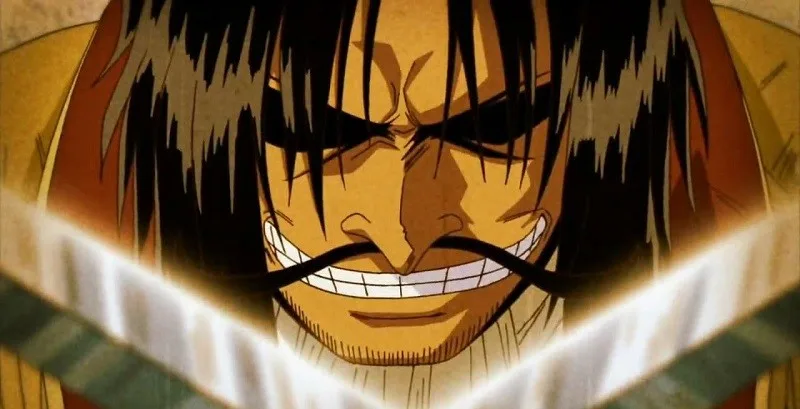
Whether Eiichiro Oda chose the title for that double meaning is not confirmed. The name of the treasure and the everyday sense sit side by side, and both fit a series in which things usually have more than one side.
Who carries the D.
The D. does not open a name or close it: it sits in the middle, between family name and given name. These bearers are confirmed in the manga:
- Monkey D. Luffy, Monkey D. Dragon and Monkey D. Garp
- Gol D. Roger, Portgas D. Rouge and Portgas D. Ace
- Marshall D. Teach and Rocks D. Xebec
- Jaguar D. Saul and Trafalgar D. Water Law
- Nefertari D. Lily, and through her the Nefertari family, including Cobra and Vivi
In Law's family the D. was a hidden part of the name. In the Nefertari line it surfaced late, when King Cobra spoke of his ancestor Lily, who lived around eight hundred years ago.

The Will of D.
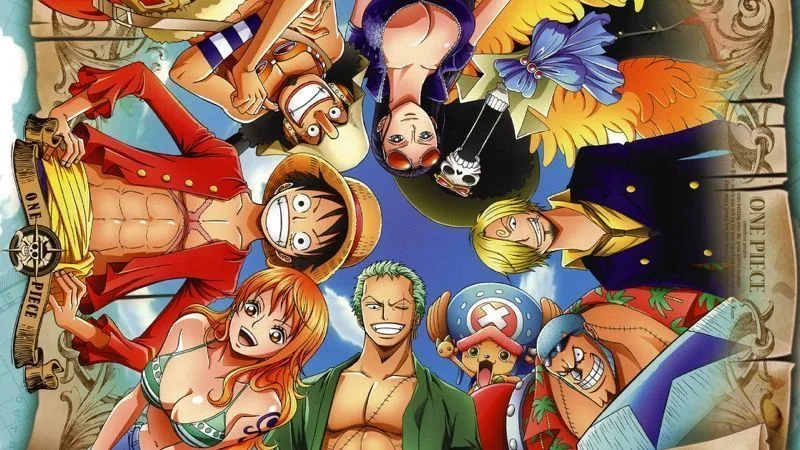
Dr. Kureha provides the first clue. She reveals that the Pirate King was not called Gold Roger but Gol D. Roger. From that moment the initial looks deliberate, and it suggests the World Government shortened the name on purpose.
Later Jaguar D. Saul explains that the D. is passed down through generations, so it is not a coincidence in a name. Whitebeard speaks of the Will of D. and says Roger told him what it means. The bearers themselves often do not know.
Enemies of the gods
Donquixote Rosinante, who grew up in Mary Geoise, describes how the letter is treated there. Parents warn naughty children that the D. will come and eat them, and old people mutter that the D. always brings a storm.
In some places bearers are called natural enemies of the gods. Rosinante guessed that the gods in that phrase are the Celestial Dragons, the descendants of the founding kings. The World Government still watches the trail and keeps the Pirate King's full name out of the record.
What the late chapters add
In his conversation with King Cobra, Im says the Will of D. existed before the Void Century. Cobra also gives the name of his ancestor Nefertari D. Lily. That makes one of the founding families a bearer, which changes the earlier picture of a hunted minority.
Lily lived about eight hundred years ago, in the period from which no reliable records survive. Her name ties the D. to the founding of the World Government and to the question of why some families later disappeared from the record.
Which theories exist
The most common theory links the D. to the kingdom destroyed during the Void Century. A second reads the letter as part of a name from the distant past, pointing towards Joy Boy. Others treat it as the start of words such as Dawn or Davy.
None of these readings is confirmed. Oda has not stated the meaning, and the manga still offers hints that do not yet fit together. Anyone joining the discussion should separate documented statements from guesses.
Why the D. carries the plot
What stands out is that bearers appear whenever the world changes. They topple rulers, reshape kingdoms and stand at the turning points where new eras begin. That pattern is what makes the D. a narrative thread.
One example is the fight against Enel, who calls himself a god. That a bearer of the D. defeats him is read by many as support for the phrase about enemies of the gods, although the manga never says so directly.

For a starting point on similar shows, the overview of pirate anime like One Piece is a good place to begin. On the origin of the title, the note on sukumizu and school swimwear explains the garment meaning, and anyone who gets hungry while reading will find a recipe in the One Piece burger.

Community
Comments
0 comments
There are no published comments in this language yet.
Send comment