
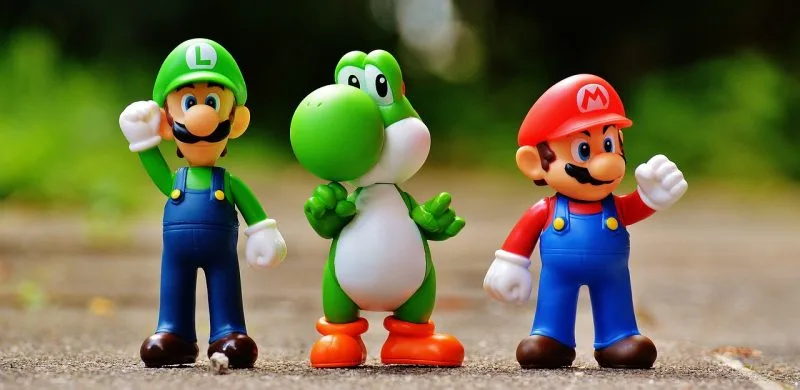
I think everyone knows that games undergo localization changes from one region to another. In Japan, the original names of beloved characters, items, and kingdoms often reveal clever puns, cultural references, or entirely different personalities compared to the international versions we grew up playing. In this guide, we explore the authentic Japanese names of Nintendo's most famous characters.
The inspiration for this topic originally sparked after chatting about gaming trivia shared by my friend Rodrigo Coelho, who runs a well-known YouTube channel covering everything Nintendo. Exploring how these Japanese names reflect folklore, culinary jokes, and wordplay shows just how much creative care goes into character design.
Contents 4
What does the name "Nintendo" mean?
In Japanese, the company name Nintendo is written with three kanji characters: [任天堂]. This combination is commonly translated as "leave luck to heaven" or "entrust your destiny to the heavens."
Breaking down the characters reveals the nuance behind this phrasing. The ideogram [天] (ten) represents heaven or the celestial realm, while [堂] (dō) denotes a hall, temple, or sanctuary. Together, [天堂] (tendō) evokes a sacred hall or paradise. The initial character [任] (nin) carries the core meaning of responsibility, duty, or entrustment, connecting directly to the verb makaseru [任せる], which means to leave something in someone else's hands.
Historians often connect the name to the traditional Japanese proverb Un o ten ni makaseru [運を天に任せる], meaning to leave one's fortune in the hands of fate and accept whatever destiny brings.
Another popular historical angle points to Nintendo's founding in Kyoto in 1889 as a manufacturer of traditional hanafuda flower cards [花札]. Because card games at the time were frequently tied to underground gambling parlors, the concept of tempting fate while upholding personal duty resonated strongly. The colorful seasonal illustrations on hanafuda decks were also celebrated for their picturesque beauty, harmonizing with the paradise imagery in the name.
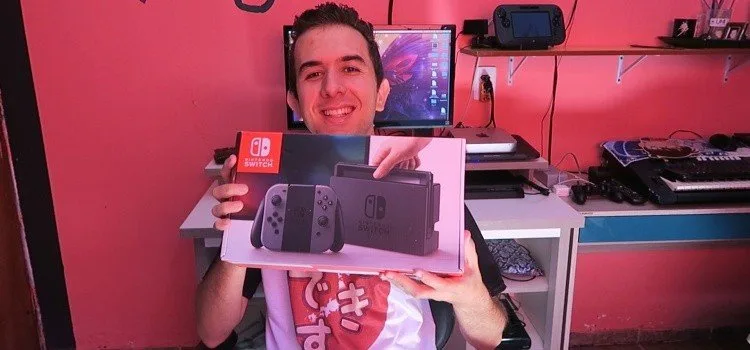
Names of Nintendo games and consoles in Japanese
Game titles also undergo significant adaptation between regions. For example, The Legend of Zelda is known in Japan as Zeruda no Densetsu [ゼルダの伝説]. The worldwide phenomenon Pokémon originated as Poketto Monsutā [ポケットモンスター], literally Pocket Monsters, before being abbreviated into its globally recognized brand.
One of the most famous linguistic easter eggs appears in the adventure mode of Super Smash Bros. Ultimate, known in English as World of Light. In Japanese, the mode is titled Tomoshibi no Hoshi [灯火の星], meaning Star of Light. When the kanji readings are reversed using Sino-Japanese on'yomi phonetics, the title sounds like Hoshi no Kābī [星のカービィ], the Japanese title of Kirby of the Stars. Game director Masahiro Sakurai, who created Kirby, noted that while the phonetic similarity was an extraordinary coincidence, it delighted fans who watched Kirby escape Galeem's cosmic beam as the sole survivor.
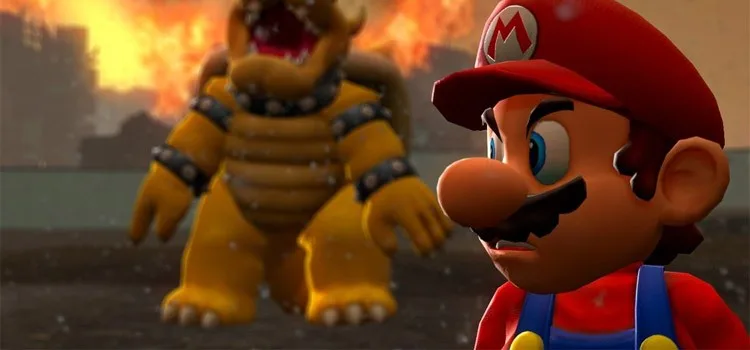
Hardware names share similar historical differences. The iconic Nintendo Entertainment System (NES) and Super NES were launched in Japan as the Famicom [ファミコン] and Super Famicom, short for Family Computer. While Western localizations frequently adapt or transliterate foreign terms into English, exploring gaming vocabulary in Japanese provides immense insight for enthusiasts. For readers interested in wider pop culture terms, our guide to essential Japanese otaku vocabulary breaks down similar linguistic trends.
Names of Nintendo characters in Japanese: Super Mario
The Mushroom Kingdom features some of the most striking localization differences in video game history. Several iconic characters originally received names rooted in culinary humor, Japanese folklore, or visual puns that were replaced when translated for Western audiences:
- Bowser (Kuppa / クッパ): Creator Shigeru Miyamoto wanted a fierce, powerful name for the villain. He named him after gukbap, a hearty Korean beef and rice soup that he enjoyed at restaurants, initially mistaking the name for a spicy barbecue meat dish.
- Toad (Kinopio / キノピオ): The helpful mushroom attendant takes his name from kinoko [キノコ], the Japanese word for mushroom, blended with the playful suffix pio to sound like a cheerful character.
- Goomba (Kuribō / クリボー): Although designed conceptually as mushrooms, the early pixel sprite resembled a chestnut, known in Japanese as kuri [栗]. Developers affectionately nicknamed the creature "Chestnut Boy" (Kuribō), and the name became permanent in Japan.
- Princess Peach (Pīchi-hime / ピーチ姫): Originally introduced to Western players as Princess Toadstool in the 1980s, Nintendo unified her worldwide identity starting with Super Mario 64, returning to her original Japanese royal title of Peach.
Responsive Table: Scroll the table sideways with your finger >>
| English Name | Japanese | Romanization |
|---|---|---|
| Mario | マリオ | Mario |
| Luigi | ルイージ | Ruīji |
| Princess Peach | ピーチ姫 | Pīchi Hime |
| Bowser | クッパ | Kuppa |
| Bowser Jr. | クッパJr. | Kuppa Jr. |
| Toad | キノピオ | Kinopio |
| Goomba | クリボー | Kuribō |
| Koopa Troopa | ノコノコ | Nokonoko |
| Koopa Paratroopa | パタパタ | Pata-pata |
| Rosalina | ロゼッタ | Rozetta |
| Luma | チコ | Chiko |
| Polari | バトラー | Batorā |
| Ray | マンタロウ | Mantarō |
| Bomb Boo | ボムテレサ | Bomu Teresa |
| Lakitu | ジュゲム | Jugemu |
| Bullet Bill | キラー | Kirā |
| Cataquack | ポイハナ | Poihana |
| Cheep Cheep | プクプク | Pukupuku |
| Electrogoomba | タコボー | Takobō |
| Gringill | アナゴン | Anagon |
| Kamek | カメック | Kamekku |
| Mandibug | クワカブト | Kuwakabuto |
| Mecha-Bowser | ミニメカクッパ | Mini Meka Kuppa |
| Piranha Plant | パックンフラワー | Pakkun Furawā |
| Spiny Piranha Plant | トゲトゲパックン | Togetoge Pakkun |
| Pokey | ココサンボ | Koko Sanbo |
| Pumpkinhead Goomba | カボクリボー | Kabo Kuribō |
| Thwomp | ドッスン | Dossun |
| Topman | トゲベーゴマン | Toge Bēgoman |
| Tox Box | オニマスドン | Onimasudon |
| Tweester | 砂風くん | Suna Kaze-kun |
| Urchin | ウニゾー | Unizō |
| Wiggler | ハナチャン | Hana-chan |
| Baron Brrr | カチコチキング | Kachikochi King |
| Bouldergeist | ポルタ | Poruta |
| Bugaboom | クワカブトキング | Kuwakabuto Kingu |
Names of Nintendo characters: Super Smash Bros in Japanese
The crossover roster of Super Smash Bros provides one of the best ways to observe how character designations vary between Japan and the rest of the world. While many names remain identical due to global branding, several legendary fighters have distinct identities in Japanese. Much like the naming patterns found in our list of Japanese character names and meanings, these titles often carry cultural references, honorifics, or unique puns.
Responsive Table: Scroll the table sideways with your finger >>
| English Name | Japanese | Romanization |
|---|---|---|
| Mario | マリオ | Mario |
| Donkey Kong | ドンキーコング | Donkī Kongu |
| Link | リンク | Rinku |
| Samus | サムス | Samusu |
| Yoshi | ヨッシー | Yosshī |
| Kirby | カービィ | Kābī |
| Fox | フォックス | Fokkusu |
| Pikachu | ピカチュウ | Pikachū |
| Luigi | ルイージ | Ruīji |
| Ness | ネス | Nesu |
| Captain Falcon | キャプテン・ファルコン | Kyaputen Farukon |
| Jigglypuff | プリン | Purin |
| Peach | ピーチ | Pīchi |
| Bowser | クッパ | Kuppa |
| Ice Climbers | アイスクライマー | Aisu Kuraimā |
| Sheik | シーク | Shīku |
| Zelda | ゼルダ | Zeruda |
| Dr. Mario | ドクターマリオ | Dokutā Mario |
| Pichu | ピチュー | Pichū |
| Falco | ファルコ | Faruko |
| Marth | マルス | Marusu |
| Young Link | こどもリンク | Kodomo Rinku |
| Ganondorf | ガノンドロフ | Ganondorofu |
| Mewtwo | ミュウツー | Myūtsū |
| Mr. Game & Watch | Mr.ゲーム&ウォッチ | Misutā Gēmu & Wotchi |
| Meta Knight | メタナイト | Meta Naito |
| Pit | ピット | Pitto |
| Zero Suit Samus | ゼロスーツサムス | Zero Sūtsu Samusu |
| Wario | ワリオ | Wario |
| Snake | スネーク | Sunēku |
| Ike | アイク | Aiku |
| Diddy Kong | ディディーコング | Didī Kongu |
| Lucas | リュカ | Ryuka |
| Sonic | ソニック | Sonikku |
| King Dedede | デデデ大王 | Dedede Daiō |
| Olimar | ピクミン&オリマー | Pikumin & Orimā |
| Lucario | ルカリオ | Rukario |
| R.O.B. | ロボット | Robotto |
| Toon Link | トゥーンリンク | Tūn Rinku |
| Wolf | ウルフ | Urufu |
| Villager | むらびと | Murabito |
| Mega Man | ロックマン | Rokkuman |
| Wii Fit Trainer | Wii Fit トレーナー | Wī Fitto Torēnā |
| Rosalina & Luma | ロゼッタ&チコ | Rozetta & Chiko |
| Little Mac | リトル・マック | Ritoru Makku |
| Greninja | ゲッコウガ | Gekkouga |
| Palutena | パルテナ | Parutena |
| Robin | ルフレ | Rufure |
| Shulk | シュルク | Shuruku |
| Bowser Jr. | クッパJr. | Kuppa Jr. |
| Duck Hunt | ダックハント | Dakku Hanto |
| Corrin | カムイ | Kamui |
| Inkling | インクリング | Inkuringu |
| Ridley | リドリー | Ridorī |
| King K. Rool | キングクルール | Kingu Kurūru |
| Isabelle | しずえ | Shizue |
| Incineroar | ガオガエン | Gaogaen |
Comparing these Japanese and international character names highlights how localization bridges cultural gaps. Whether it is Shigeru Miyamoto naming Bowser after a comforting Korean soup or Masahiro Sakurai weaving clever wordplay into Smash Bros game modes, these details add an extra layer of appreciation to every playthrough.
Which Japanese character name surprised you the most? Did you prefer the original Japanese titles or the localized Western names? Share your thoughts in the comments below!

Community
Comments
0 comments
There are no published comments in this language yet.
Send comment