
Hear monster parent in English and the picture that usually appears is a helicopter: the parent who packs the bag, rewrites the résumé, and treats a B-minus like a house fire. In Japan the phrase モンスターペアレント (monsutā pearento) — clipped to モンペ or モンペア — points at a different door. It is the school office, the late-night call, a guardian who will not stop until someone in the building folds.
The word is almost twenty years old, and Tokyo is still writing the rulebook. In 2025 the metropolitan board of education was still deciding how long a parent-teacher talk can last, who sits in the room, and when a lawyer or the police take over. An insect bite on the playground was never a joke to the person answering the phone.
Contents 4
What Japanese monster parents actually are
The Japanese dictionary Daijisen is blunt. A モンスターペアレント is a guardian compared to a monster because they keep making unreasonable demands and complaints to the school or the board of education. Teachers shorten it to モンペ or モンペア the way English speakers shorten a headache they already know too well.
A monster parent, in the Japanese sense, is not a strict mom with a packed calendar. The target is the school: repeated complaints — クレーム — that eat the teacher's evening and, in the worst cases, the whole staff.
That is why helicopter parent is a near miss, not a synonym. A helicopter parent hovers over the child: homework, hobbies, even the job interview. A モンペ may also be overprotective, but the Japanese term is about pressure aimed at teachers, principals, and education officials. A justified request — bullying the school ignored, a real injury, a documented mistake — is not モンペ just because the parent is angry. The word is supposed to mark demands that go past ordinary sense. Schools have also been accused of slapping the label on parents they simply do not want to hear, which is the other edge of the same knife.
The phrase is wasei-eigo, Japanese-made English. It later caught on in Hong Kong. The core remains a Japanese school story.
A teacher coined it. A drama made it famous
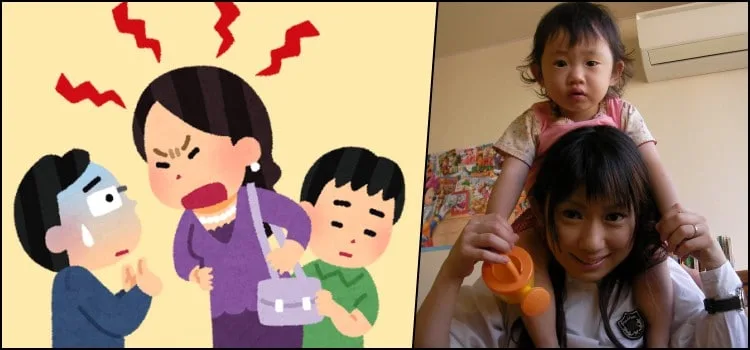
Japanese educator Yoichi Mukoyama (向山洋一), a former Tokyo elementary-school teacher, coined monster parent around 2007 for guardians who made unjustified, incomprehensible demands and berated teachers day and night. Older talk of “parent complaints” suddenly had a face, and it was not a flattering one.
In 2008 the phrase became prime-time plot. The Kansai TV / Fuji TV drama モンスターペアレント ran from 1 July to 9 September, with Ryoko Yonekura as Itsuki Takamura, a short-tempered lawyer assigned to an elementary school drowning in parental complaints and threatened lawsuits. The show did not invent the phenomenon. It gave the rest of the country a weekly reminder that the staff room had a new antagonist.
The complaints teachers still get
Some parents refuse to let their child join the daily cleaning that Japanese schools still treat as part of the day. Others explode over a tiny scratch. Some even demand that the school pay the medical bills for that scratch. Others complain that their child was bitten by an insect. And do not assume this personality retires after elementary school: some guardians keep the same heat going into their children's adult lives.
Recent coverage from Japanese schools still lists the same family of demands: a lunch menu that “failed,” cherry blossoms that did not bloom in time for the entrance ceremony, marathon phone calls after hours, a parent who will not leave the office. One unreasonable guardian can swallow the hours that should have gone to lesson prep, club duty, or the other thirty kids in the room.
The same country that lets first-graders walk to school without an adult can still produce a parent who treats the homeroom teacher as a 24-hour concierge. That contrast is the point. モンペ is not “Japan is overprotective.” It is a loud minority colliding with a school system that already asks a lot of teachers — including pay and hours that look brutal in any honest look at teacher salary in Japan.
Tokyo's two rulebooks, 2010 and 2026
By March 2010, Tokyo had already printed a handbook on dealing with monster parents and planned to put a copy in the hands of more than 60,000 public-school teachers and staff. Fifteen years later the metropolitan board came back with something sharper than a pamphlet.
An April 2025 survey of about 12,000 Tokyo public-school teachers found that roughly 20 percent had faced “words or behavior questionable by societal standards” from guardians, and more than a thousand of those respondents said the extra load spilled into overtime. The board's draft protocols, aimed at metropolitan schools and meant to be shared later with municipal boards, try to put a clock and a witness on the conversation:
- Talks after lessons on weekdays: up to 30 minutes, extendable to one hour when needed.
- Discussions, including phone calls, recorded after the guardian is told in advance; video at selected schools.
- First two meetings: more than one staff member. Third: managers. Fourth: a psychologist and a lawyer. From the fifth: lawyers handle it.
- Verbal abuse: up to five staff can join; a security firm if it continues. Physical violence or a refusal to leave: the police.
The board planned to lock the outline in December 2025 and put the guidelines into practice from the 2026 academic year or later. That is a long way from a staff-room nickname. It is the city admitting that a モンペ is now a workload and safety problem, not just a punchline.
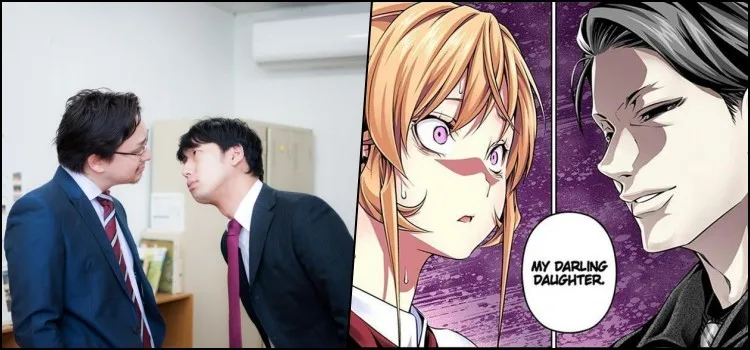
I came up with the idea for this article after watching Erina's father in the anime Shokugeki no Souma — Azami Nakiri, hovering over her palate as if the girl's tongue were school property. He is not calling the homeroom teacher about a mosquito. He is the other face of the same heat: a parent who cannot stand the child being wrong, unsupervised, or ordinary. If that kitchen still pulls you in, we already collected curiosities about Shokugeki no Souma.
Have you ever met a parent like that? We would love to hear it.


Community
Comments
0 comments
There are no published comments in this language yet.
Send comment