
Teacher salary in Japan has no single answer. A licensed teacher employed by a public school, an Assistant Language Teacher (ALT) on JET, and an instructor at an eikaiwa are working under very different pay systems. The useful question is not “what does a teacher earn?” but “which teaching job are you comparing?”
For many newcomers, the clearest benchmark is the JET Programme: its published 2025 contract lists a first-year pre-tax salary of ¥4,020,000. That does not make it the standard for every classroom. Public-school careers follow local government pay structures, while private English schools and dispatch roles set their own terms. Benefits, bonuses, contract length and location can change the value of an offer as much as the headline salary.
Contents 7
Three teaching jobs, three different pay pictures
It helps to separate the jobs before comparing numbers.
- Public-school teacher: usually a licensed educator employed by a prefecture or municipality. Pay develops through a public-sector salary structure and may include seasonal bonuses and allowances set locally.
- JET Programme ALT or CIR: a fixed-term participant employed by a contracting organization, often a board of education. The programme publishes its remuneration by contract year.
- Eikaiwa or private English-school instructor: a teacher in a commercial conversation-school setting. Pay, schedules and renewal terms vary by employer.
- Dispatch ALT: an assistant placed in a school through a private company. Conditions can differ sharply from a direct-hire or JET role, even when the classroom work looks similar.
Calling all four positions “English teacher” hides the part that matters most: who employs you and what the contract actually promises.

JET Programme salary: a clear published benchmark
The JET Program USA contract information lists the following pre-tax annual remuneration, current from April 2025:
- Year 1: ¥4,020,000
- Year 2: ¥4,140,000
- Year 3: ¥4,260,000
- Years 4 and 5: ¥4,320,000
Those figures are useful because they are published by the programme, but they are not take-home pay. Health insurance, pension and employment insurance are compulsory deductions in Japan. Rent, commuting arrangements and local taxes also affect what remains each month. A placement in a smaller town with subsidized housing can feel very different from the same gross pay in a costly city.
JET participants normally work through a local contracting organization rather than for JET itself. That is why practical details such as housing support, school assignments and paid leave should be checked in the offer, not assumed from the headline remuneration.
What eikaiwa and private-school jobs usually look like
Private English conversation schools are often the route people see first when looking for work in Japan. Recent reporting from GaijinPot places many full-time eikaiwa instructor offers around ¥250,000 to ¥280,000 per month. Treat that as a market reference, not a promise: a role with split shifts, unpaid preparation time or expensive housing may be less attractive than its monthly number suggests.
Dispatch ALT jobs need the same care. One company may cover transportation, offer a school-year contract and provide a steady weekday routine; another may pay less, limit paid holidays or leave gaps between contracts. Direct-hire municipal roles can follow a different scale again. Ask for the monthly gross salary, the number of paid months, renewal rules and every allowance in writing.
Public-school teaching can offer a longer salary path
Japanese teachers in public schools are not a single national salary category. Their pay is shaped by the local authority, experience, position and allowances. A regular licensed career can bring predictable progression and bonuses, but it also requires the qualifications and Japanese-language ability expected by that employer.
That distinction matters when comparing a public-school teacher with an ALT. An ALT may support English classes, while a licensed classroom teacher carries responsibility for teaching, assessment, homeroom duties, school events and communication with families. The work is not interchangeable, so the pay should not be compared as if it were.
To see how school life differs, read about Japanese schools and the role behind the word sensei. Salary is only one part of a job that can include club activities, meetings and responsibilities beyond the lesson itself.

Overtime rules: do not rely on the old 4% explanation
Public-school educator pay has a special legal framework. The Act on Special Measures concerning Salaries and Other Conditions for Public School Educational Personnel provides a teaching adjustment allowance instead of ordinary overtime and holiday pay for covered educators.
The old 4% figure is no longer enough to describe the law. Its transitional schedule sets the adjustment at 5% during 2026, then raises it by one percentage point each year until it reaches 10% in 2031. The rule applies to covered public-school educational personnel; it does not describe every private-school, university, dispatch or JET contract.
The workload behind this debate is substantial. Japan's 2022 survey of public elementary and lower-secondary teachers, summarized by the Japan Institute for Labour Policy and Training, found average weekday school time of 10 hours 45 minutes for elementary teachers and 11 hours 1 minute for lower-secondary teachers. A stronger salary package does not automatically mean a lighter working week.
How to judge a teaching offer in Japan
Before accepting an offer, compare these details side by side:
- Gross pay: monthly and annual amounts, plus how many months are paid.
- Bonuses and allowances: housing, transport, homeroom, regional or renewal payments can change the total.
- Deductions: taxes, social insurance and pension contributions reduce the amount that reaches your account.
- Contract length: ask whether renewal is automatic, competitive or not offered.
- Hours outside class: preparation, meetings, events, clubs and commuting deserve the same attention as contact hours.
- Location: compare rent and transport with the salary instead of converting yen to another currency and stopping there.
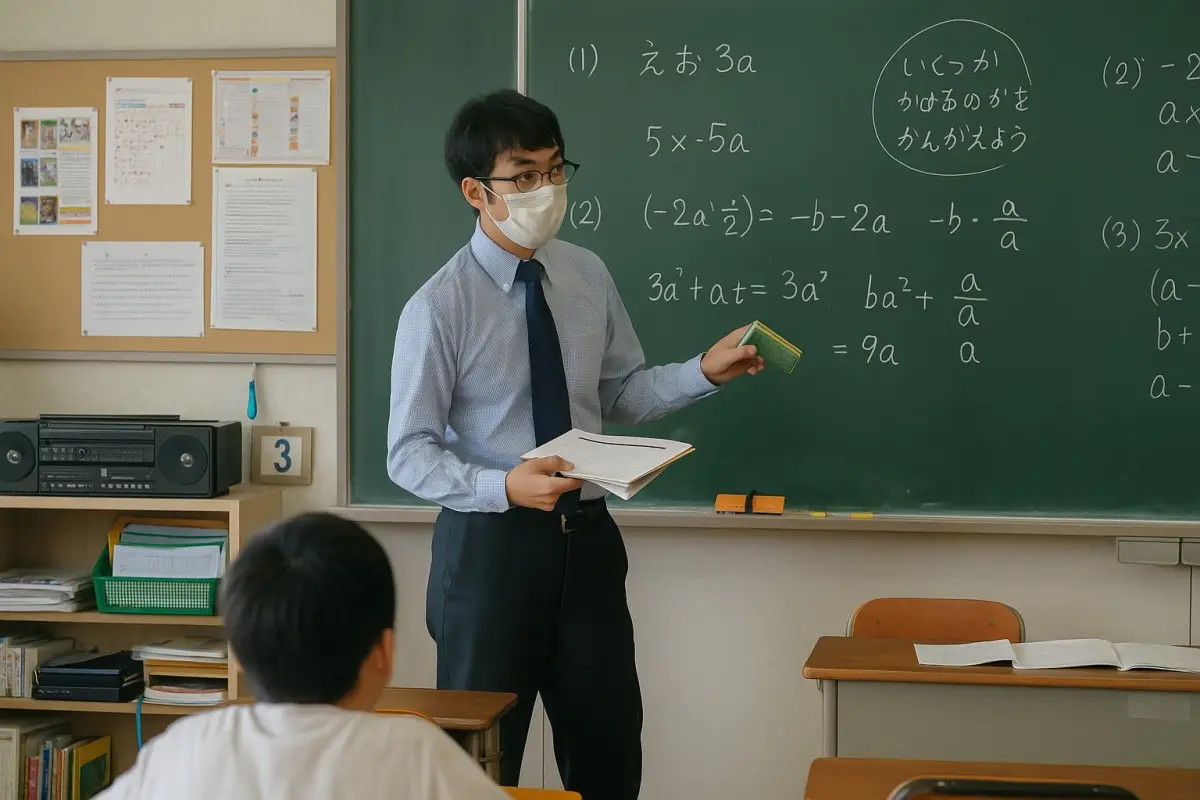
So, how much can a teacher earn in Japan?
A realistic answer starts with the employer. JET offers a transparent published scale, private English schools often advertise a lower fixed monthly range, and licensed public-school careers use local pay structures with longer-term progression. The best offer is not always the one with the largest monthly figure. Read the deductions, renewal terms, housing costs and workload before deciding what the salary is truly worth.




Community
Comments
0 comments
There are no published comments in this language yet.
Send comment