

Four names keep turning up when people talk about Asia's late-twentieth-century economic leap: Hong Kong, South Korea, Singapore, and Taiwan. And yet the country many expect first—Japan—is missing from that short list. That gap is the whole point of the story: Japan was already further along when the Asian Tigers made their jump.
This is not about the big cats on the cover photo. "Asian Tigers" is a nickname, popular from the 1980s, for economies that used exports, schooling, and industrial policy to move quickly from emerging markets toward high-income status. Japan sits right in the middle of that history—just not inside the group of four itself.
Contents 4
Who are the Asian Tigers?
The classic Asian Tigers (also called the Four Asian Tigers, and in Chinese-language contexts often the "four little dragons") are Hong Kong, South Korea, Singapore, and Taiwan. The name points to speed and force of growth, not to a neat geographic club.
For decades, the group shared a recognizable profile:
- strongly export-oriented industry;
- high savings and investment rates;
- heavy emphasis on education and technical skills;
- low wages early on, then a shift into higher-tech manufacturing and services.
Hong Kong and Singapore became global finance and trade hubs. South Korea and Taiwan turned into core nodes for electronics, vehicles, and supplier chains. Later labels such as Tiger Cub economies described places like Thailand, Malaysia, Indonesia, the Philippines, or Vietnam—paths that rhymed with the original four without fully matching the same complete leap.
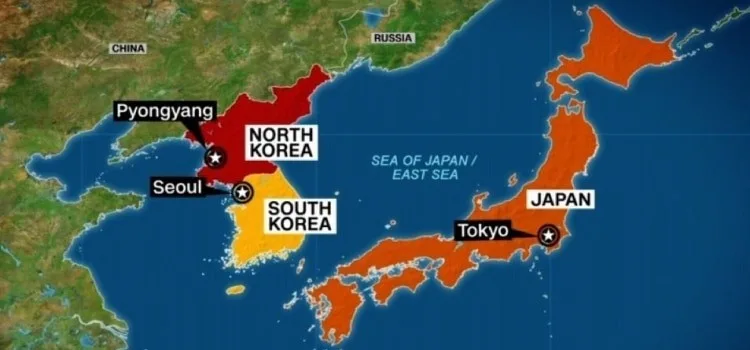
Why Japan is not one of the Tigers
Japan is left off the list because "Tiger" was coined for new high-growth economies catching up. By the time the nickname stuck, Japan was already an established industrial power—not a young tiger, but the example others watched.
After the Second World War, Japan's economy was shattered. With U.S. support, public investment, education, technology, and a tight focus on productivity, the country rebuilt what is often called the Japanese economic miracle. Building blocks included:
- land reform and policies that lifted farm productivity and rural incomes;
- heavy investment in industry and scientific research;
- imports of raw materials and energy paired with growing export strength;
- a specialized workforce and rapid adoption of modern technology;
- political priority for export markets and industrial capacity.
Development economics often frames this regional pattern as the flying geese model: Japan flies ahead; the Tigers follow in waves—first light industry and import substitution, then export promotion, then more capital- and skill-intensive production up to high tech.
How Japan shaped the Tigers
From the 1960s through the 1980s, Hong Kong, South Korea, Singapore, and Taiwan posted extraordinary growth. Japan supplied capital, machinery, intermediate goods, and—above all—a working template: state and firms coordinating, exports counting, discipline and schooling treated as production factors.
Other forces also favored the Tiger economies:
- foreign investment from Japan and the United States;
- relatively cheap labor in the early phases;
- policies with export incentives, industrial zones, and public infrastructure;
- orientation toward world markets rather than domestic demand alone;
- social norms stressing hierarchy, group cohesion, and performance pressure—often discussed with Confucian references, never enough as a single explanation.
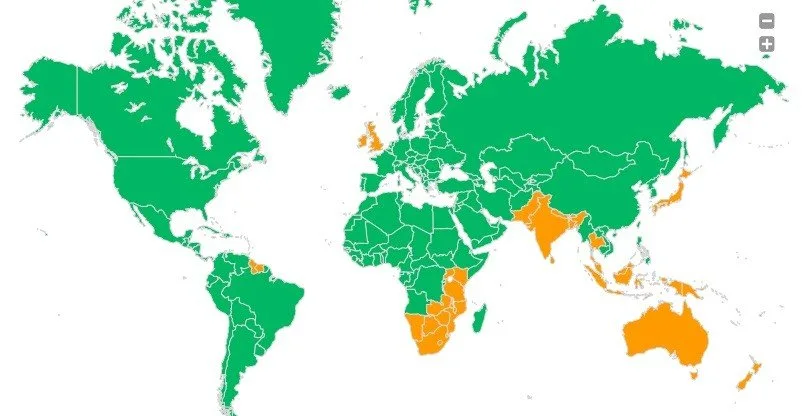
Labor–capital relations in several of these economies partly echoed Japanese patterns of firm loyalty and workplace cooperation—with the hard edges that low wages and weak bargaining power brought at the start. Later, wages and social expectations rose; cost advantages moved on to Southeast Asia and China. The 1997 Asian financial crisis hit several of these economies hard and showed how exposed the model was to capital flows and export markets.
What remains of the Tigers today
The classic Tiger economies now sit among advanced high-income systems: finance centers, chip and electronics chains, strong per-capita incomes. Japan remains the historical lead goose in the story, yet stays deliberately outside the "four Tigers" metaphor—because the narrative is sequential: first Japan's climb, then the next wave.
If you mostly meet Asia through anime, pop culture, or travel, this is the economic architecture underneath. The Tigers help explain why so many brands, factories, and financial hubs sit between Seoul, Taipei, Singapore, and Hong Kong—and why Japan in that story is the quiet teacher, not the fifth name on the list.





Community
Comments
0 comments
There are no published comments in this language yet.
Send comment