
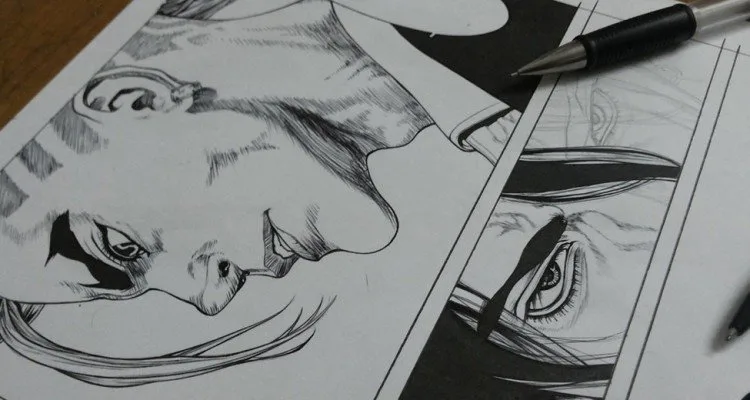
Reading manga can do more for a Japanese learner than a stack of dry example sentences. The language is often informal, the pictures carry context when a word is new, and many volumes print furigana next to the kanji. That mix is why manga shows up in so many study plans — and why the wrong title, at the wrong level, feels like hitting a wall on page one.
In Japan, people of every age read manga; there are thousands of stories for almost every taste. Below is a practical way to use that habit so it actually moves your Japanese forward, instead of turning every panel into a dictionary marathon.
Contents 4
Choosing a manga at your level
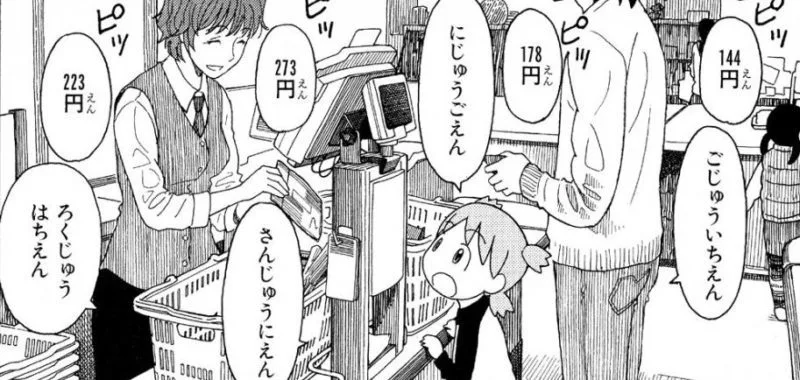
You want a volume you can read without translating every bubble. That means picking a title that matches where you are. As a beginner, start with works aimed at kids or everyday life with clear dialogue — classics for learners include Yotsuba&! (よつばと!), Doraemon, and Sazae-san. Look for furigana and short, concrete scenes: shopping, school, neighbors, food.
If you are further along, choose famous series with relatively simple dialogue and little invented jargon. Slice-of-life, school stories, and light comedies usually beat dense fantasy full of made-up terms. Knowing the plot in English first is a fair bridge: you free attention for the Japanese instead of fighting story and language at once.
Japanese manga is read right to left, top to bottom. Once the panel order clicks, you stop fighting the page layout and can focus on the text.
Read actively: mark words that actually block the sentence, look them up, and come back to the same pages later. Notes inside the volume, a dictionary, and rereads turn “consuming manga” into real reading practice.
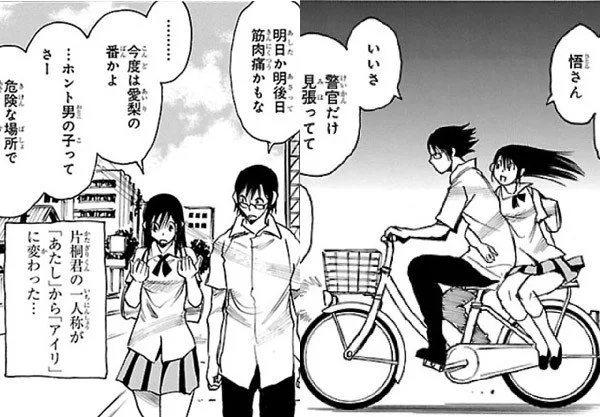
What to do — and what to avoid — when studying with manga
Do not stay on a title you barely understand — If every panel sends you to the dictionary, switch to something easier. You will only stall progress and remember almost nothing.
Read again — When you decode a word or phrase, meet it a second time. Repetition locks reading and meaning in place and speeds you up.
Keep sessions short and enjoyable — You only benefit if you want to open the book again. Prefer a few focused pages over a full chapter of frustration. Rest before your brain checks out.
Save sentences — If you use Anki or another spaced-repetition tool, copy phrases that matter to you, with meaning and context. A notebook still helps if you want handwriting practice.
Watch informal language — Manga is packed with slang, dialects, abbreviations, and casual forms. Do not paste those lines into formal situations without knowing the register. If politeness levels still feel fuzzy, prefer calmer everyday stories with clearer standard Japanese.
Tools that support manga reading
You do not need expensive gear, but a few tools save time while you read:
Jisho — A solid online Japanese dictionary (English interface) for words, kanji, readings, and example sentences. Strong when you need more than a one-word gloss.
Anki — Spaced repetition for the sentences and kanji you actually want to keep. While reading, capture what will return — not the whole page.
Capture2Text (or similar OCR tools) — Useful for digital pages when kanji lack furigana: grab text from the image and look it up. With print volumes, a pen and notebook often stay simpler.
Beyond that, a notebook, a pen, and the volume in hand are enough. If you want free graded material alongside manga, see our list of free books to study Japanese. Curious about the other side of the page — writing stories instead of only reading them — try how to become an author of books and manga.
What manga trains well — and what it does not
Manga mainly trains reading flow, context, and natural phrasing: short lines, reactions, onomatopoeia, everyday vocabulary. Furigana lowers the barrier into kanji, but it does not replace systematic study. Speaking, listening, and formal politeness still need audio, conversation, and focused grammar — a question many learners raise when they ask whether you can learn Japanese in three months.
A realistic rhythm: one title you like, at a level you can hold; look up words that block meaning; reread; and do not copy manga speech into every real-life situation without thinking. Habit beats heroics: a few pages most days with curiosity beats one heroic binge you never repeat.
Pick the story that makes you turn the page — and let the art help the Japanese, instead of fighting both at once.





Community
Comments
0 comments
There are no published comments in this language yet.
Send comment