
Imagine a country at the forefront of technology, with a world-renowned educational system, but where talking about sex in schools is still a challenge full of silences. This is Japan. While anime and pop culture may suggest liberalism, the reality of sex education in Japanese classrooms is marked by a deep cultural shyness. Why does this happen? And what are the consequences for young Japanese people?
In the following sections, we will look at how the Japanese educational system handles sex education in schools, the dilemmas faced by teachers and students, and why this matters more than it seems.
Contents 12
How does sex education work in Japan?
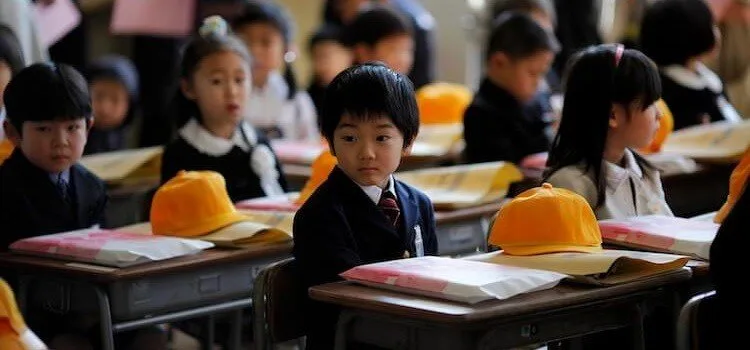
Although it has been an official part of the curriculum since elementary school, sex education in Japan operates within very narrow limits. The main focus is almost exclusively biological. Students learn about the basic anatomy of reproductive organs, the physical changes of puberty (such as menstruation and nocturnal emissions), and elementary concepts about pregnancy and childbirth.
The problem lies in what is not taught. Fundamental topics for a healthy understanding of human sexuality – such as sexual pleasure, the importance of clear and enthusiastic consent, the diversity of sexual orientations and gender identities, or even practical instructions on contraceptive methods (such as the correct use of condoms) – remain virtually absent. Many schools even avoid the very word “sex,” opting for vague expressions like “relationships between men and women,” reflecting pressure from conservative parents and a culture that values discretion above all.
The Rules of the Ministry of Education (MEXT)
The national guidelines for education, called the Curriculum Guidelines, sit at the heart of the problem. They mention sex education within subjects like Home Economics, Physical Education, and Moral Education, but in an extremely vague and open-to-interpretation way. MEXT strongly emphasizes the scientific and reproductive side, leaving little or no room to address emotional sexual health, affective relationships, or diversity.
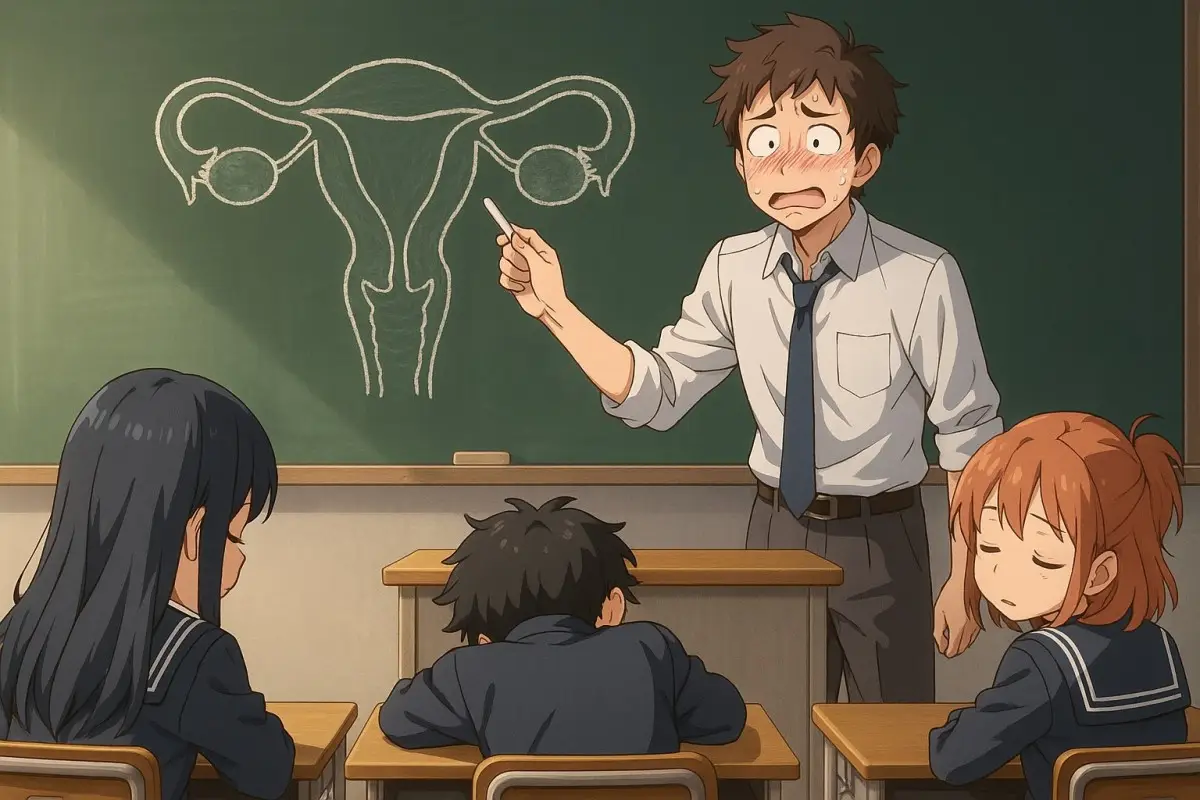
This lack of clarity puts teachers in a difficult position. Without precise guidance on what is allowed, many choose the safer route: teaching only the minimum stipulated. There is a real fear of reprisals. Cases like that of a school in Nanao, where teaching materials were censored by local authorities for “exposing too much” to students, serve as a constant warning.
Consequences of the Educational System
When the school does not speak, young people look for information elsewhere. And these alternative sources are often problematic:
- Manga and anime: often present distorted, unrealistic, or even harmful representations of sexual relationships.
- Online pornography: easily accessible, but rarely shows safe practices, respect, or the complexity of consent and mutual pleasure.
- Anonymous forums and friends: sources that can spread misinformation and dangerous myths.
The result is a generation with worrying gaps in knowledge. A survey carried out by Asahi Shimbun found that about 70% of high school students could not adequately explain what sexual consent is, even though they recognised the term. This leaves them vulnerable to abusive situations and makes it harder to build healthy relationships.
At the same time, this school taboo creates a glaring paradox with Japanese society itself, which coexists with a massive adult entertainment industry. The gap between what is shown in private and what is discussed publicly generates confusion and a lack of safe references for adolescents.

Initiatives for Change
Despite the national challenges, local winds are blowing in favour of progress. Some municipalities are taking bold initiatives:
Health Professionals in the Classroom
In regions like Aomori, Niigata, and Saitama, obstetricians, nurses, and gynaecologists are being invited to speak directly with students. They cover crucial topics such as the prevention of sexually transmitted infections (STIs), the correct use of contraceptive methods, and the importance of the HPV vaccine. The effectiveness is clear: a study published in BMC Public Health showed that this approach significantly increases students’ knowledge and vaccination uptake.
Emotional Education and Life Planning
Innovative projects, such as those implemented in Shiga Prefecture (documented in the journal Nature), focus on “pre-conception care.” The idea is to prepare young people early to think about the future, reproductive health, and the importance of relationships based on respect and mutual well-being.
The Impact of the LGBT+ Law (2023)
The approval of the LGBT Understanding Promotion Act was an important symbolic milestone. Although many activists see it as not very ambitious, it establishes, for the first time, the obligation of the government and schools to promote respect and understanding regarding sexual orientation and gender identity. It is a first step, slow but necessary, towards including these topics in the educational debate.

Frequently Asked Questions and Their Answers
How do Japanese schools teach about pregnancy and STI prevention?
The approach is minimal and mainly focused on avoiding problems, not on promoting comprehensive health. Topics such as HIV/AIDS and pregnancy are mentioned, but in a theoretical way. Practical instructions on contraceptive methods, especially the use of condoms, are rare or nonexistent, especially in the early years of high school. The emphasis is more on “don’t do it” than on “how to protect yourself if you do.”
Why are topics like consent, sexual orientation, and gender identity so neglected?
Two main forces are at play: deep-rooted cultural conservatism that views these issues as embarrassing or unnecessary for young people, and a real fear, on the part of teachers and schools, of facing complaints from parents or reprisals from local authorities. This creates an environment of self-censorship, where avoiding conflict seems safer than educating comprehensively.
Will the LGBT+ Law of 2023 quickly transform sex education?
Unfortunately, not in the short term. The law is an important step in officially recognising the need for respect, but it is more a statement of principles than a law with clear goals and penalties. Its effective implementation depends on the political will of each municipality and school, and it will still face significant resistance. It is a foundation for future changes, not an immediate solution.
What Do the Data Reveal?
According to the Japanese Association of Sex Education (2023):
- Only 12% of upper high school students (15–18 years old) reported having had sexual intercourse.
- About 23% of boys reported having had experiences such as kissing or intimate contact.
- The COVID-19 pandemic accelerated a trend of decreasing physical contact among young people (kissing reached the lowest rate since the 1970s), while masturbation and consumption of online sexual content increased.
Sex education in Japan reflects a deep tension between tradition and the urgent demands of the modern world. While the country moves forward in technology, the open conversation about sexuality and affection in schools still lags behind, and the gap tends to widen the more connected young people become online.
Informing young people comprehensively and responsibly is not just a matter of education; it is an essential investment in their health, safety, and ability to build healthy relationships throughout their lives. The cost of silence is simply too high.


Community
Comments
0 comments
There are no published comments in this language yet.
Send comment