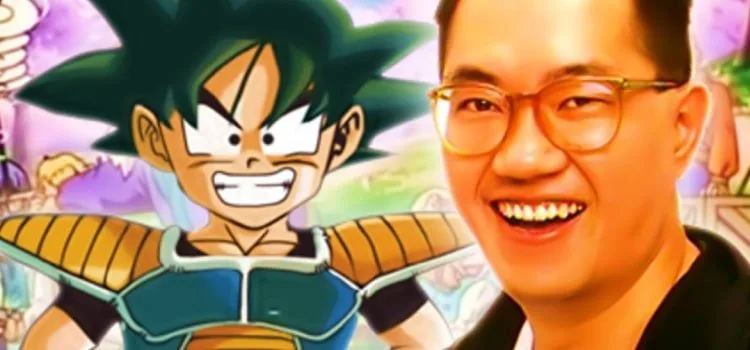
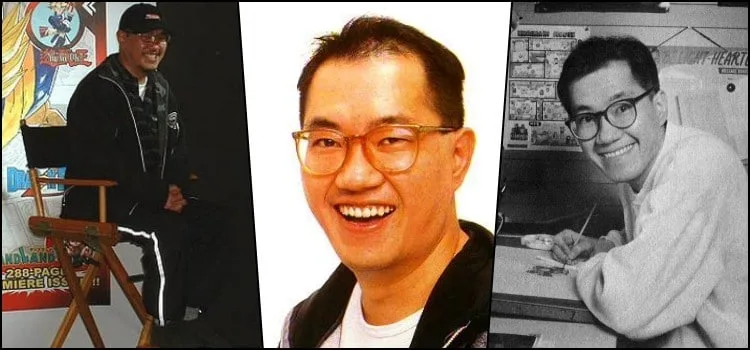
If you don't know this man by his name, you have certainly seen — or at least heard of — a character he drew. Akira Toriyama (鳥山明) was the Japanese manga author behind Dr. Slump and, above all, Dragon Ball. He died on March 1, 2024, at 68, still working on stories that never reached the page.
He was born on April 5, 1955, in Kiyosu, Aichi, and spent most of his life dodging cameras. Interviews were rare; he never treated himself as a celebrity. Stardom didn't arrive first. His debut, Wonder Island, published in Weekly Shōnen Jump in 1978, barely registered. The climb started later.
Contents5
From Wonder Island to Dr. Slump
After Wonder Island, several projects were rejected. In 1979, Tomato the Cutesy Gumshoe — the story some older translations still call Tomato Girl Detective — began to change the picture. In 1980 he found a real hit with Dr. Slump, the Penguin Village comedy starring the robot girl Arale. It ran until 1984, won the 1981 Shogakukan Manga Award, sold tens of millions of copies in Japan, and became an anime almost immediately.
Even with drawings that looked simple on the page — round faces, clean lines, jokes that didn't need a lecture — editors and game producers started calling. In 1983 he created Bird Studio, a name that plays on tori (鳥), "bird." That same year he published Dragon Boy, a kung-fu one-shot that became the seed of Dragon Ball.
The success of Dragon Ball
Dragon Ball began serialization in 1984, loosely inspired by the Chinese classic Journey to the West and by Hong Kong martial-arts films. Chapters ran in Weekly Shōnen Jump until 1995: 519 chapters collected in 42 tankōbon. What started as a gag-adventure with a monkey-tailed boy looking for wish-granting orbs turned, over the years, into the fighting saga that Western audiences often met first as Dragon Ball Z.
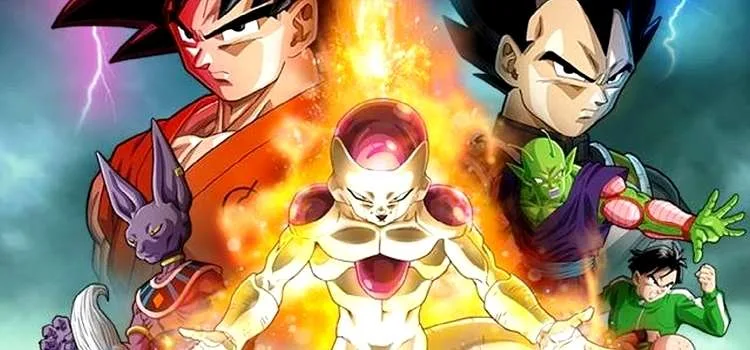
Toei Animation adapted the manga into Dragon Ball, from 1986, and Dragon Ball Z, from 1989. Later came Dragon Ball GT (1996–1997), which is not a direct manga adaptation: Toriyama contributed the title, character designs, and some early direction, not a weekly script. Dragon Ball Super, from 2015, is different again — he supplied the story outline and characters, with Toyotarou drawing the Super manga. Dragon Ball Kai recut Z with a tighter edit. Theatrical films kept coming for decades; the last one he fully worked on as a complete project was Dragon Ball Super: Super Hero, in 2022.
The 42 volumes have been reported at around 260 million copies worldwide, and the franchise did as much as any 1980s shōnen to put Japanese comics on living-room TVs outside Japan. If you want the Japanese lines the characters actually shout, there is a separate walk through phrases from Dragon Ball Z.
Dragon Quest, Chrono Trigger, and the games
The same line that sold weekly chapters also sold RPGs. From 1986 until his death, Toriyama designed characters and monsters for Dragon Quest — including the teardrop Slime that became the series mascot. He was character designer on Chrono Trigger (1995), the so-called Dream Team JRPG with Yuji Horii and Hironobu Sakaguchi, and later on Tobal No. 1 and Blue Dragon.
That game work is easy to treat as a footnote next to Goku. It isn't. A generation met his faces on a Super Famicom cartridge before they ever opened Shōnen Jump.
After the weekly manga
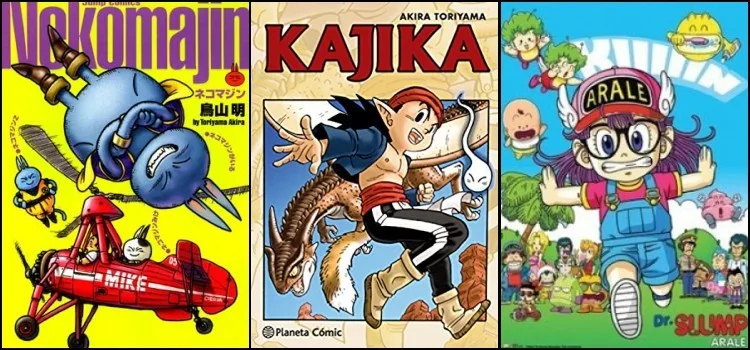
Once Dragon Ball ended, the long serials stopped. What followed were shorter pieces: Cowa!, Kajika, Neko Majin, and Sand Land. Jaco the Galactic Patrolman, in 2013, was the last manga he wrote and drew entirely himself — and it secretly sits just before Dragon Ball's timeline. In 2006 he drew Cross Epoch, a crossover with Eiichiro Oda that mixed Dragon Ball and One Piece. In 2009 he drew Ayumi Hamasaki in Goku's outfit for a CD sleeve.
He married fellow artist Yoshimi Katō — who published as Nachi Mikami — in 1982. They had two children, including a son, Sasuke, born in 1987. He kept living and working in Aichi, in the studio attached to the house, and stayed that way until March 2024.
Curiosities about Akira Toriyama and his works
He was a huge Jackie Chan fan; those kung-fu movies sit behind Dragon Ball's early fights as much as Journey to the West does.
Arale from Dr. Slump shows up in Dragon Ball, and Goku visits Penguin Village in the later Dr. Slump anime. The two worlds were never sealed off.
He was a fan of Ayrton Senna. In 1990 he went to the German Grand Prix at Hockenheim, met the McLaren driver, and later drew Goku and friends with the team's cars — plus a short manga report, Battleman F-1.
In March 2004 he made a rare European appearance at the Leipzig Book Fair: autograph sessions, a public interview, and a live drawing of Goku.
France named him Chevalier of the Ordre des Arts et des Lettres in 2019.
On Dragon Ball GT he was not the weekly author. On Dragon Ball Super he stayed on the story and designs, with Toyotarou on the Super pages.
The last years still had him on Dragon Ball Super, on Sand Land's screen adaptations, and on Dragon Ball Daima. Bird Studio announced his death on March 8, 2024: acute subdural hematoma, a private funeral, unfinished pages. For a mangaka who spent decades hiding from the spotlight, the noise that followed was the opposite of how he lived. The pages remain.
Kevin Henrique has written about the Japanese language, culture, anime, games, and travel since founding Suki Desu in 2014. He first visited Japan in 2016.
Community
Comments
0 comments
There are no published comments in this language yet.

 Toei Animation adapted the manga into Dragon Ball, from 1986, and Dragon Ball Z, from 1989. Later came Dragon Ball GT (1996–1997), which is not a direct manga adaptation: Toriyama contributed the title, character designs, and some early direction, not a weekly script. Dragon Ball Super, from 2015, is different again — he supplied the story outline and characters, with Toyotarou drawing the Super manga. Dragon Ball Kai recut Z with a tighter edit. Theatrical films kept coming for decades; the last one he fully worked on as a complete project was Dragon Ball Super: Super Hero, in 2022.
The 42 volumes have been reported at around 260 million copies worldwide, and the franchise did as much as any 1980s shōnen to put Japanese comics on living-room TVs outside Japan. If you want the Japanese lines the characters actually shout, there is a separate walk through phrases from Dragon Ball Z.
Toei Animation adapted the manga into Dragon Ball, from 1986, and Dragon Ball Z, from 1989. Later came Dragon Ball GT (1996–1997), which is not a direct manga adaptation: Toriyama contributed the title, character designs, and some early direction, not a weekly script. Dragon Ball Super, from 2015, is different again — he supplied the story outline and characters, with Toyotarou drawing the Super manga. Dragon Ball Kai recut Z with a tighter edit. Theatrical films kept coming for decades; the last one he fully worked on as a complete project was Dragon Ball Super: Super Hero, in 2022.
The 42 volumes have been reported at around 260 million copies worldwide, and the franchise did as much as any 1980s shōnen to put Japanese comics on living-room TVs outside Japan. If you want the Japanese lines the characters actually shout, there is a separate walk through phrases from Dragon Ball Z.


Community
Comments
0 comments
There are no published comments in this language yet.
Send comment