
If you spend any time around anime, otaku culture or Japanese art in general, the word kemono (獣) tends to surface sooner rather than later. You may have seen it tagged on a soft illustration of a fox girl, used as a label on an old picture scroll, printed on a phone case at a convention, or whispered in a conversation about which character someone identifies with most. The term shows up in places that look nothing alike, yet they all circle back to the same idea: animals drawn with something unmistakably human inside them.
More than a visual style, kemono works almost like a language. It lets artists and fans express mood, identity and tenderness through creatures that are part animal, part human, part something the viewer is still working out. For a lot of people, that mix is the whole point, and it is also why the topic deserves a closer look beyond the cute character on the surface.
Contents 6
What does kemono actually mean?
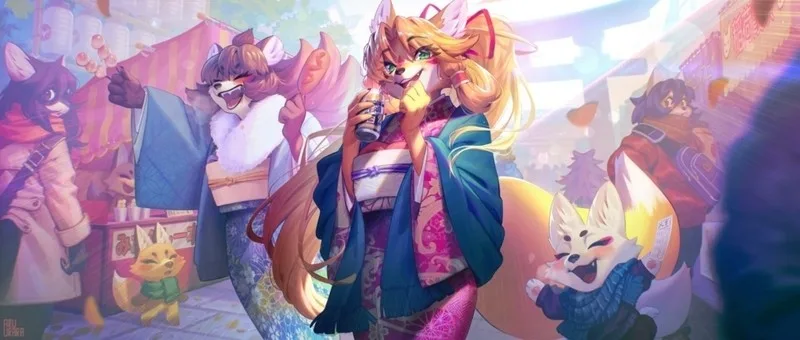
On its own, the Japanese word kemono (獣) just means “animal” or “beast.” In everyday speech, it can refer to anything from the family dog to a deer crossing a mountain road. In pop culture, though, the term has narrowed to a more specific meaning: characters with clear animal traits, such as ears, tails, fur, feathers or scales, who speak, dress, think and react like people. The word you are most likely to hear online is closer to “anthropomorphic animal character” than to “wild animal.”
That shift did not happen overnight. Japan has a long habit of treating animals as characters, from foxes who marry mortals to cats who warn their owners about storms, and modern kemono design sits on top of that older storytelling tradition. Add a heavy dose of kawaii visual grammar, large eyes, soft shapes, exaggerated expressions, and you have a recognisable look that travels easily between a Kyoto gift shop and a Tokyo doujinshi circle.
It is worth drawing a line between this pop-culture meaning and a very different product that happens to share the same word. In 2014, a Japanese visual novel titled Kemono by Illusion used the term in a sexual context, and it still shows up in search results. When fans talk about kemono as a style today, they almost never mean that title. The cultural conversation is about art, character design and storytelling, not adult content, and the rest of this article stays in that lane on purpose.
A short history of anthropomorphic animals in Japan
Animals with human behaviour are nothing new in Japanese art. They appear in the Chōjū-jinbutsu-giga (鳥獣人物戯画), a set of picture scrolls often credited to the monk Toba Sōjō and dated to the late Heian and early Kamakura periods, around the 12th and 13th centuries. The scrolls show rabbits, monkeys, frogs and a tokushe (a dishevelled figure) acting out human scenes, bathing, gambling, even parodying religious rituals. They are widely considered one of the earliest examples of manga-style humour, and you can still see fragments of them at the Kyoto National Museum.
Medieval emaki (絵巻), illustrated handscrolls, kept the tradition going. Picture scrolls of the Tsuru no Ongaeshi (the crane who returns a favour) and the Battle of the Frogs and Mice all rely on animal actors behaving like people, and the format stayed popular for centuries. By the Edo period, ukiyo-e woodblock prints put animals into everyday scenes. Utagawa Kuniyoshi in particular was famous for his warrior cats, dancing mice and other prints where animals dress, posture and fight like kabuki actors. These images were a hit with ordinary townspeople, and they are still reprinted on everything from phone straps to tea towels today.
Japanese folklore gave the visual style a deep well of characters to draw from. The kitsune, a fox with multiple tails and the power to shapeshift into a human, shows up in stories stretching back to the 8th century. The tanuki, a raccoon dog associated with mischief and good luck, is a folkloric shapeshifter in his own right. The inugami, a vengeful dog spirit, and the nekomata, a long-tailed cat with supernatural powers, all blur the line between animal and human long before any anime studio did. Modern kemono design borrows directly from that imagery, even when the final character is a cheerful mascot.
Kemono in modern pop culture
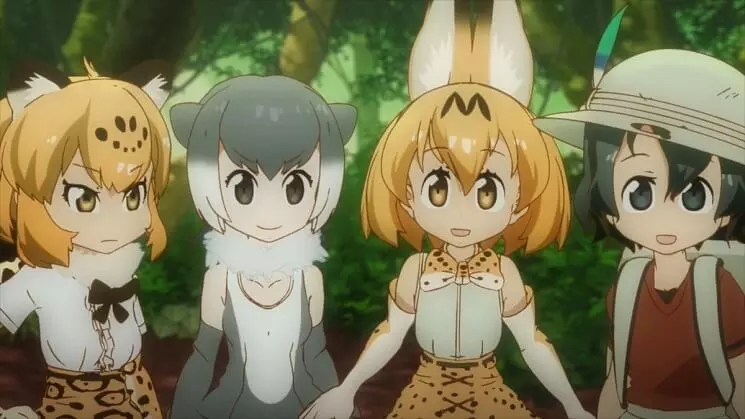
The biggest leap forward for the modern kemono look came with anime and manga. Kemono Friends (けものフレンズ), first a 2017 anime by Yaoyorozu and later a hit mobile game, built its entire world out of “Friends,” girls who turn into animal versions of themselves, including the African Wild Dog, the Fennec Fox and the Lucky Beast. The series revived the kemono style with a younger audience and made the word almost synonymous with cute animal girls in mainstream anime.
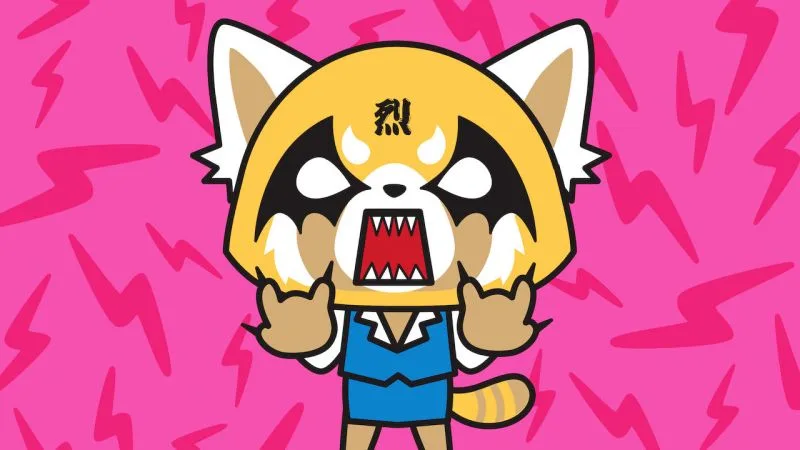
Aggretsuko (アグレッシブ烈子), created by Sanrio in 2018, takes the formula in a different direction. Its lead, Retsuko, is a red panda who works in a Tokyo accounting office and copes with bad bosses, low pay and commuter hell by singing death metal in a karaoke booth at night. The series is a hit because it grounds the kemono design in something every viewer over twenty recognises: quiet workplace frustration.
Older and newer titles have built their own corners of the style. BEASTARS (ビースターズ), the manga by Paru Itagaki that ran from 2016 to 2023 and became a Netflix anime in 2019, tells a coming-of-age story in a world of anthropomorphic animals where a wolf and a rabbit are the central couple. Brand New Animal (BNA, 2020), Trigger’s vibrant series, sets its story in “Animacity,” a hidden district where humans can turn into beastfolk. Chi's Sweet Home, Konami Kanata’s gentle manga about a lost kitten, is closer to a slice-of-life comic but uses the same feline language to talk about family and small discoveries.
Games have taken the kemono idea to a much bigger stage. The mobile hit Kemono Friends and its successor Kemono Friends: Kingdom turned the franchise into a publisher-level success in Japan. Indie titles have explored it from every angle too, from cosy shopkeeping sims with animal villagers to visual novels where the cast is mostly foxes, wolves and cats. Pixiv and Twitter (now X) are the main hubs for independent kemono art, and conventions such as Kemocon, held annually in Tokyo, and DoKomi in Germany give the style a place to meet in person.
Notable kemono works and their cultural impact
Outside anime and games, kemono design quietly runs through a huge amount of Japanese daily life. The maneki-neko (招財猫), the beckoning cat you see in shop windows and Chinese restaurants around the world, is essentially a kemono mascot with centuries of folk belief behind it. The raised left paw is meant to attract customers, the raised right paw is meant to attract money, and the painted collar and bell tie it back to the cats of Edo-period ukiyo-e.
Modern Japan took the same energy and turned it into a small industry of its own. The yuru-chara (ゆるキャラ) movement, soft, slightly clumsy mascots built around local towns, food and train lines, gave the country a parade of friendly characters. Kumamon, the black bear from Kumamoto Prefecture who became a national celebrity in the early 2010s, has been credited with pulling in a measurable amount of tourism revenue for his home region. Chiitan, the otter mascot of Susaki in Kōchi Prefecture, became a viral figure for his wild skateboarding and inflatable-pool videos. Funassyi (ふなっしー), the unofficial pear fairy of Funabashi, is another case study in how a slightly chaotic mascot can outdraw more polished ones.
You can also see the style in corporate branding. Convenience stores, regional banks and small-town tourism boards regularly use animal mascots to soften their image, and the kemono look is often the safest, most familiar choice. Critics of the trend call it a “safety blanket” for institutions that do not want to take visual risks, but the same softness is exactly why these mascots work as marketing: they are approachable, family-friendly and recognisably Japanese without feeling corporate.
Kemono vs. furry: cultural differences worth knowing
If you have spent any time in English-language online spaces, you have probably heard the word “furry” used for the same kind of art, and the two terms get tangled up in casual conversation. The reality is that kemono and furry overlap a lot, but they are not interchangeable, and the cultural context behind them is genuinely different.
Stylistically, kemono art tends to lean into cuteness. Think pastel colour palettes, soft round shapes, oversized heads, and an emphasis on kawaii influence inherited from decades of character-driven anime and games. Furry art, especially in North American fandom, often goes the other way: more realistic animal anatomy, more painterly or comic-book shading, and a wider range of body types and settings. Both styles can absolutely feature the same kind of characters, but the average reader can usually tell which side of the line a piece comes from at a glance.
Culturally, the two communities grew up in different places. Japanese kemono fan activity is mostly online, on Pixiv, Twitter, and in doujinshi circles, with in-person meetups at conventions like Kemocon. Western furry fandom has its own long history of conventions, including Midwest FurFest, Anthrocon and Further Confusion, and tends to have a more visible costume and fursuit culture. Both communities welcome new fans, but the entry points and the unspoken norms are not the same.
One more distinction matters. Furry fandom has a long-running, open conversation about adult content, while mainstream kemono art, especially the kind that shows up in anime, games and official mascots, stays firmly family-friendly. The adult side of the spectrum exists in Japan too, but it is largely separated from the casual style that most people mean when they say kemono. If you are writing about or pitching the style to a general audience, that is the version you want to talk about.
Kemono as a global cultural phenomenon
Japan is the heart of the kemono look, but the idea of anthropomorphic animals with emotional weight is much older and much wider. Aesop’s fables in ancient Greece, the trickster Coyote stories of Native American traditions, the Brer Rabbit tales of the American South, and the talking-animal novels of European literature all do the same basic work: let animals carry the story so humans can step back and listen. Kemono is one of the most recent and most stylised versions of that very old tradition.
Western animation picked the thread back up. Disney’s Zootopia (2016) is probably the best-known example in recent years: a buddy-cop noir set in a city of mammals, where the title characters are a rabbit and a fox navigating prejudice and political spin. Zootopia was a hit in Japan, with audiences in Tokyo praising its visual detail, and it is now a regular recommendation when Japanese fans talk about cross-cultural animal animation. Pixar’s Ratatouille, DreamWorks’ Spirit: Stallion of the Cimarron and the long-running Kung Fu Panda franchise all sit in the same broad family of stories.
Museums have noticed. Manga exhibitions in Berlin, Hamburg and Frankfurt have featured kemono art in recent years, and the Japan House in London has hosted pop-up shows on kemono character design. Academic writing on the style has slowly grown as well, with scholars looking at kemono through the lens of post-humanism, fan culture and identity. The takeaway is simple: kemono is no longer a niche anime subculture. It is one of Japan’s most visible contributions to the global visual vocabulary of the 21st century.
If you want a useful mental model, think of kemono the way you think of jazz or street fashion. It started local, with specific histories in picture scrolls, ukiyo-e and folk religion. It got remixed by anime studios, game designers and independent artists. It then travelled, the way all good ideas do, and is now a shared reference point for fans in São Paulo, Berlin, Seoul and New York. The cute animal on your favourite character is not just a cute animal. It is the front door to a thousand years of storytelling about what it means to be a little more human than the rest of us.






Community
Comments
0 comments
There are no published comments in this language yet.
Send comment