
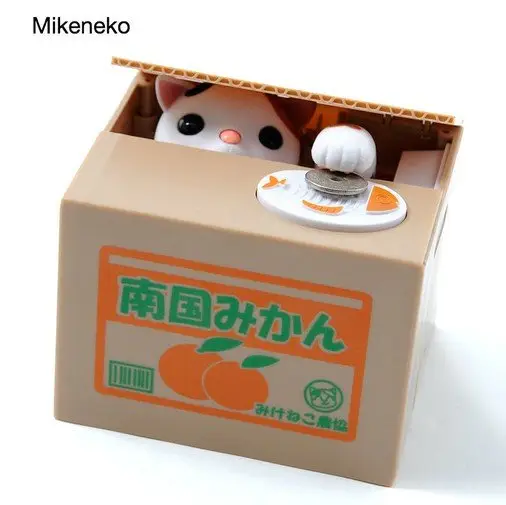
If you have ever seen a coin disappear under the paw of a meowing cat, you have already met the Itazura Bank. This small Japanese coin bank turned a simple savings toy into a desk gadget people actually remember, and the cat-in-a-fruit-box version is still the image most collectors think of first.
The name now covers a wider SHINE line of motion coin banks. Some stay close to the original kitten gimmick, while others swap the cat for characters such as Pikachu, Hatsune Miku, Hello Kitty, Snoopy, and even Godzilla. That is why the appeal is not only the joke itself, but also the variety of editions built around the same coin-stealing trick.
If you enjoy unusual finds from Japan, the same playful spirit also appears in pieces like other eccentric Japanese products that became popular for being both practical and absurd at the same time.
Contents 7
What is an Itazura Bank?
At its core, an Itazura Bank is a battery-powered coin bank. You place a coin on the tray, press lightly, and a hidden figure emerges to pull the coin inside. SHINE's official product page for the current New Itazura Bank lists two AA batteries, an age recommendation of six and up, and room for roughly forty 500-yen coins, which explains why the toy has stayed close to its original formula for years.
The classic version is the one with a cat inside a fruit-box style case. The timing is simple, but that simplicity is exactly what makes it work: you hear the sound, see the paw move, and get a tiny comic scene every time you save a coin.
What does itazura mean?
In Japanese, itazura carries the sense of a prank, mischief, or playful trick. That fits the toy perfectly, because the whole joke is that your money seems to be "stolen" by the character hiding in the box. The product is less about security than about turning a small daily habit into a gag with movement and sound.
Why the cat version became the signature model
The cat edition became the face of the series because it combines three things that are easy to understand at a glance: a familiar fruit crate, a curious kitten, and a motion that feels just believable enough to be funny. It is cute without being static, and that makes it work as both a gift and a conversation piece on a shelf or desk.
Official SHINE pages still present cat variants such as the American Shorthair model, which shows how the company kept returning to feline designs even as the catalog expanded into licensed characters and novelty themes.
Character editions: from Pikachu to Hatsune Miku
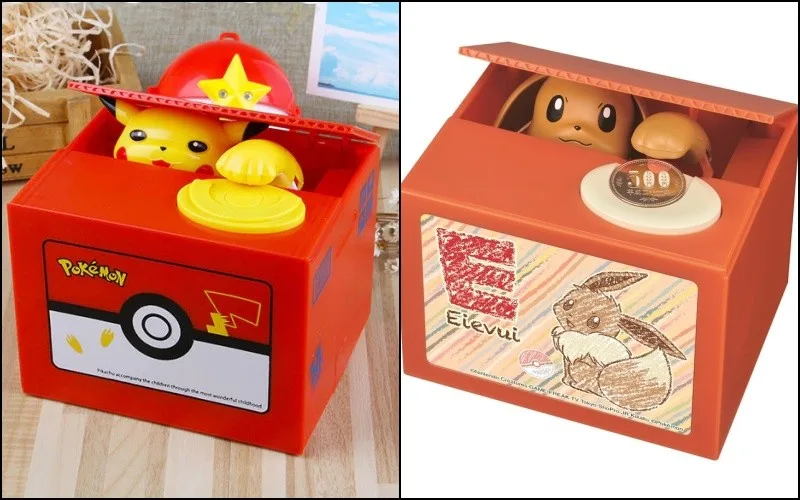
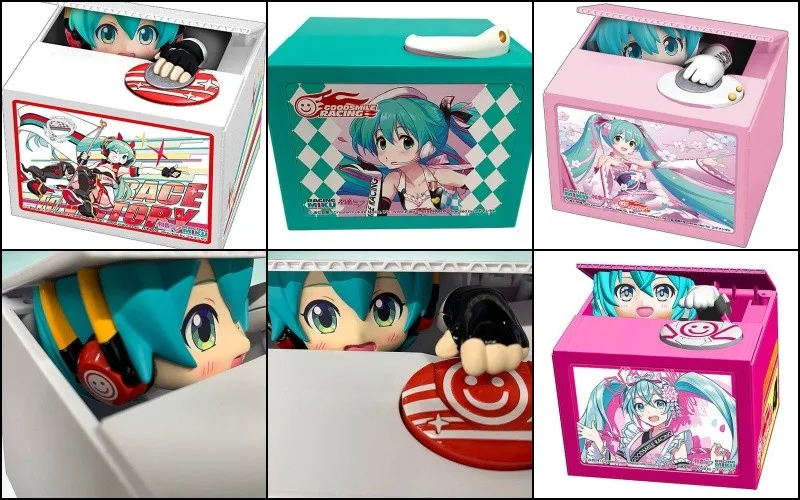
Once the basic mechanism proved popular, the obvious next step was to dress it in recognizable licenses. Pikachu versions are among the most famous because the round box and bright colors fit the playful motion naturally, while Hatsune Miku editions feel aimed more at collectors who like themed desk items than at children saving loose change.
These character models do not need to reinvent the gimmick. What changes is the mood: one edition feels kawaii, another feels otaku, and another leans into nostalgia. That flexibility is part of what kept the Itazura Bank line alive beyond a single viral cat toy.
Godzilla proves the idea is bigger than cute animals
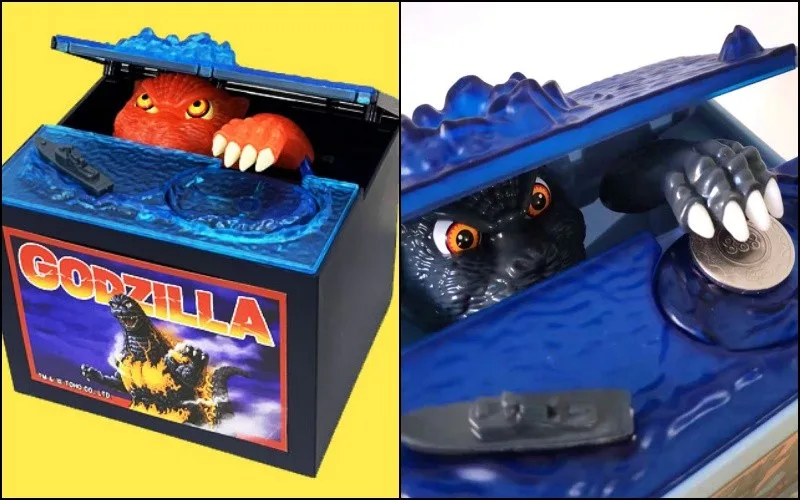
The most interesting twist in the series is probably Godzilla. Instead of hiding a kitten in a fruit crate, this version turns the same coin-snatching action into a miniature kaiju performance. MoMA's product listing describes Godzilla rising from the box, grabbing the coin with its claw, and roaring while it drops the money inside, which shows how the line can shift from cute to theatrical without changing the basic interaction.
If you like this side of the franchise, it pairs naturally with bigger monster curiosities like the long rivalry between Godzilla and Gamera, because the appeal here is not just saving coins but owning a small collectible scene.
Other Itazura Bank animals and themed banks
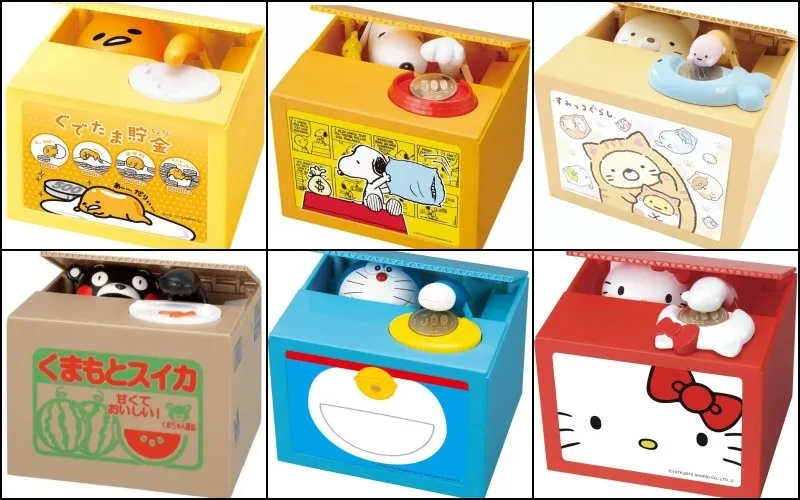
The line did not stop at cats. Over the years it spread into pandas, dogs, Kumamon, Hello Kitty, Doraemon, Gudetama, Sumikko Gurashi, Snoopy, and other character-led releases. Some stay close to the original hidden-hand idea, while others change the staging around food bowls, vehicles, or themed containers.
That variety matters because buyers are often not choosing between one bank and another based on function alone. They are choosing the version that best matches a room, a favorite character, or the exact kind of humor they want on a desk.
Is Itazura Bank still worth buying?
If you want a serious high-capacity bank, no. If you want a small Japanese novelty that actually does something memorable, the answer is much easier to defend. The Itazura Bank still works because it turns a very ordinary object into a tiny performance, and that is exactly the kind of design that survives long after the first wave of internet clips fades.
For children, it makes saving tactile and visible. For adults, it works better as a gift, a shelf toy, or a collector's item tied to a favorite character. Either way, the best versions are the ones where the gimmick and the theme feel inseparable, not just a logo printed on a box.

Community
Comments
0 comments
There are no published comments in this language yet.
Send comment