
Learners usually ask for one Japanese phrase for “I love you”, and the honest answer is that Japanese has several, and the most famous one is used less often than expected. Expressions of affection in Japanese depend on the type of relationship, the speaker's gender and age, the region and the situation. A phrase that sounds moving in a drama can sound possessive in real life, and a phrase that sounds plain in English can carry the weight of a confession in Japanese.

The list below gathers 50 lines, from everyday to dramatic, with the kanji, the romaji and a note on how each one lands. Where a phrase is poetic, formal or noticeably intense, the text says so. That way the list becomes useful rather than decorative.
Contents 58
Why aishiteru is not the everyday “I love you”
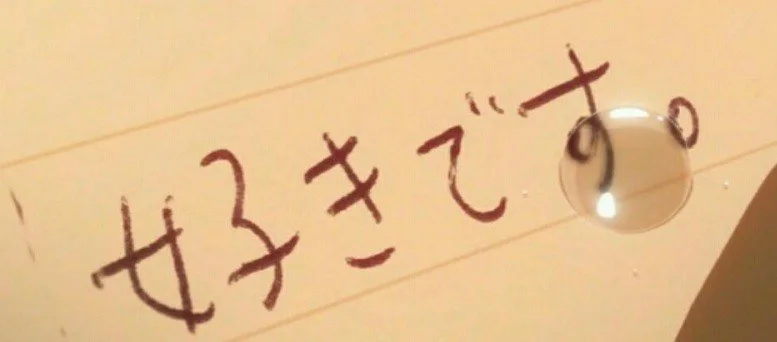
Aishiteru (愛してる) is the phrase most textbooks offer, and Japanese speakers recognise it, but it appears less often in daily conversation than learners expect. It carries weight, so it tends to appear in serious moments, in songs and drama, or between couples who have been together for years. The everyday word is suki (好き), which means “like” and also “love” depending on context.
This is not a rule with a fine, just a pattern of use. Japanese often leaves the object out of the sentence, so “suki da” can mean “I like you” or “I like this food”, and the situation does the rest. Because of that, a confession usually includes the person explicitly, as in kimi no koto ga suki da.
The light, everyday lines
1. Suki da (好きだ)
I like you, I love you. Plain and masculine-leaning. The neutral form is suki desu. This is the phrase most confessions actually use.
2. Daisuki da (大好きだ)
I really like you, I adore you. Dai adds size to the feeling. Used for partners, friends, food and hobbies, so tone decides the meaning.
3. Koi shiteru (恋してる)
I am in love. Koi is romantic passion. It suggests the feeling is fresh and still burning.
4. Aitai yo (会いたいよ)
I miss you, I want to see you. Common between couples, and softer than a declaration of love.
5. Issho ni itai (一緒にいたい)
I want to be with you. Simple and sincere, often used before a relationship becomes official.
6. Anata no koto wo omotteru (あなたのことを思ってる)
I am thinking about you. Gentle and slightly formal. The no koto construction makes the person the object of thought.
7. Taisetsu ni suru (大切にする)
I will treasure you. A promise rather than a declaration, common in serious relationships.
8. Kimi no egao ga suki (君の笑顔が好き)
I like your smile. A concrete compliment that sounds warmer than a generic declaration.
9. Kimi to iru to tanoshii (君といると楽しい)
I enjoy being with you. Low pressure and very natural in the early stages.
10. Kimi ga iru dake de ureshii (君がいるだけで嬉しい)
I am happy just because you are here. A favourite of songs, and still usable in conversation.
When it becomes serious
11. Zutto issho ni itai (ずっと一緒にいたい)
I want to be together forever. Zutto means the whole time, always. The line suggests a long horizon.
12. Kimi no koto ga daisuki da (君のことが大好きだ)
I really love you. The no koto construction adds seriousness to a phrase that would otherwise sound casual.
13. Itsumo soba ni iru yo (いつもそばにいるよ)
I will always be by your side. A reassurance more than a declaration, often said during difficult periods.
14. Kimi wa boku no taisetsu na hito (君は僕の大切な人)
You are someone precious to me. Formal enough for writing, warm enough for speech.
15. Zutto zutto suki da yo (ずっとずっと好きだよ)
I have liked you for a very long time. The repetition stretches the feeling over time and is common right before a confession.
16. Issho ni iru to kokoro ga atatakai (一緒にいると心が温かい)
My heart feels warm when I am with you. Note the kanji 温 for warmth of feeling; 暖 is for weather.
17. Zutto mamoru yo (ずっと守るよ)
I will always protect you. Offered seriously, but it can sound old-fashioned or heavy to some listeners.
18. Futari de mirai wo tsukurou (二人で未来を作ろう)
Let us build the future together. The volitional form makes it a proposal, not a statement.
19. Kimi no tame ni nani demo dekiru (君のために何でもできる)
I can do anything for you. Big promise, best used sparingly, because listeners do remember it.
20. Koko ni ite kurete arigatou (ここにいてくれてありがとう)
Thank you for being here. Gratitude works well in Japanese affection, sometimes better than a declaration.
The intense lines, and the ones that sound possessive
Several phrases on this list are dramatic rather than everyday. They belong in songs, dramas or very close relationships, and some of them sound possessive in ordinary conversation. The list keeps them because learners meet them in media, with a warning attached to each.
21. Aishiteru (愛してる)
I love you. The canonical phrase, used for deep and lasting love. Heavy in daily speech.
22. Anata wo aishiteru (あなたを愛してる)
I love you, with the pronoun spelled out. Anata can sound distant or intimate depending on tone, and the explicit object makes it formal.
23. Kokoro kara aishiteru (心から愛してる)
I love you from my heart. Written and song-like. In speech it sounds rehearsed unless said playfully.
24. Anata ga inakereba ikirarenai (あなたがいなければ生きられない)
I cannot live without you. High drama. Positive in a song, worrying in a message.
25. Ore no mono da (俺のものだ)
You are mine. Possessive and rough. Fine in fiction, risky in real life.
26. Ore wa omae ga inakya dame da (俺はお前がいなきゃダメだ)
I am hopeless without you. Male and rough, with omae as a blunt pronoun. Common in manga.
27. Omae ga iru kara ganbareru (お前がいるから頑張れる)
I can keep going because you are here. Omae signals closeness of a particular kind: familiar, sometimes coarse.
28. Boku wa kimi ni muchuu da (僕は君に夢中だ)
I am crazy about you. Muchuu means absorbed in something, so the line admits obsession.
29. Boku wa kimi ni tokimeku (僕は君にときめく)
My heart races for you. Tokimeku describes the physical flutter of a crush, lighter than love.
30. Kimi no tame ni ikiru (君のために生きる)
I live for you. Romantic in fiction, worrying in reality. Use with care.
Poetic and literary lines
31. Kimi wa boku no subete (君は僕のすべて)
You are everything to me. A complete sentence built on a noun phrase, so it lands better in writing than in speech.
32. Kimi wa boku no hikari (君は僕の光)
You are my light. Song imagery, very common in lyrics.
33. Kimi wa boku no yume (君は僕の夢)
You are my dream. Same structure, dream instead of light.
34. Kimi no koto dake mitsumeteru (君のことだけ見つめてる)
I am looking only at you. Dake limits the field of attention, which makes it a quiet declaration of loyalty.
35. Aitakute tamaranai (会いたくてたまらない)
I miss you so much I can hardly bear it. The tamaranai construction expresses an unbearable feeling, used for longing.
36. Kimi no subete ga suki (君のすべてが好き)
I like everything about you. Warm and complete, and safer than a dramatic promise.
37. Kimi wa boku no hikari to yami (君は僕の光と闇)
You are my light and my darkness. Vivid in songs, and a little theatrical in ordinary conversation.
38. Boku no kokoro wa kimi dake no mono (僕の心は君だけのもの)
My heart belongs only to you. Romantic in writing, especially on cards and in lyrics.
39. Ai wa kesshite kieru koto wa nai (愛は決して消えることはない)
Love never disappears. A statement about love in general, common in songs and speeches.
40. Kimi no subete wo uketomeru (君のすべてを受け止める)
I will accept everything about you. Uketomeru means to catch and hold, so the promise is about acceptance rather than possession.
Formal, regional, playful and the odd ones
41. Kimi ga suki (君が好き)
I like you. Kimi is a slightly masculine, intimate pronoun. Women use it in songs and affectionately, but anata is safer in neutral speech.
42. Issho ni iru yo (一緒にいるよ)
I will be with you. The yo softens the sentence and adds reassurance.
43. Suki yanen (好きやねん)
I like you, in Kansai dialect. Osaka flavours the ending with yanen. Playful, regional and very common in comedy.
44. Kimi to iru to shiawase (君といると幸せ)
I am happy with you. Shiawase describes a settled kind of happiness rather than excitement.
45. Kimi wa boku no daiji na hito (君は僕の大事な人)
You are someone important to me. Daiji na hito is close to taisetsu na hito, and slightly more conversational.
46. Kimi wa boku no kyoumi no taishou da (君は僕の興味の対象だ)
You are the object of my interest. Grammatical, but it sounds like a psychology paper. The original list included it; use it as a lesson in what literal translation does.
47. Kimi no kimochi wo taisetsu ni suru (君の気持ちを大切にする)
I will value your feelings. A mature line, common in conversations about the relationship itself.
48. Tsuki ga kirei desu ne (月が綺麗ですね)
The moon is beautiful, isn't it. A famous indirect confession. The story attributes it to the writer Natsume Soseki, who allegedly avoided the direct phrase; the anecdote is widely repeated and hard to verify.
49. Kimi to issho ni itai yo (君と一緒にいたいよ)
I want to be with you. The same wish as issho ni itai, softened with yo.
50. Kimi wa boku no nakama da (君は僕の仲間だ)
You are my comrade. Nakama means a member of the group. It works among friends and team members, not as a romantic confession.
How to choose the right line
Two rules cover most situations. First, match the phrase to the stage of the relationship: suki for early, daisuki for established, aishiteru for deep or formal. Second, match the pronouns to the speaker you are imitating, since kimi, anata and omae signal different genders, ages and levels of intimacy. A phrase copied from a song can sound strange in a message.
Confessions in Japan also work differently from the direct declarations in films. Saying suki desu to someone who has not prepared for it would put them in an uncomfortable position, and the social expectation of a clear answer, a rejection or a new relationship, is real. Indirect lines like tsuki ga kirei desu ne exist partly for that reason.
Finally, tone does more work than vocabulary. The same 好きだよ can be casual, teasing, tender or nervous. The lines on this list are tools; the delivery is the craft.
Conclusion
There are more than 50 ways to say “I love you” in Japanese, and most of them are not declarations at all. They are wishes, promises, compliments and small statements of presence, which matches the way affection is usually expressed in daily life. Learn them as registers rather than as translations, and the direct phrase in the middle will feel less arbitrary.
Read more: love in Japanese, romantic expressions and love phrases, dating and relationships in Japan, Valentine's Day in Japan and kissing in public in Japan.





Community
Comments
0 comments
There are no published comments in this language yet.
Send comment