
Minna is an expression that sparks interest among anime viewers or those living in everyday Japanese life. Perhaps you even know the meaning, but do you really know everything? In this article, we will examine the word minna [皆].
Contents 5
What does Minna mean in Japanese?
Is it something explosive? A slang term to refer to girls and young women? None of that, this word refers to everyone... That's right, minna [皆んな] literally means people, all those who are listening, everyone, and similar.
Generally, the formal version minasan [皆さん] or the more polite version for formal speeches minasama [皆様] is used. Both expressions can be found only in hiragana, mixing hiragana with kanji or just the kanji.
Another informal way to refer to everyone is by using miruna [みるな]. The ideogram can also be used as a suffix meaning all or each, usually words composed with the ideogram [皆] have the reading kai.
What is the difference between Minna and Mina?
The word can be written only with the ideogram [皆] or using an irregular okurigana [皆んな]. Originally in history, the correct term is mina [みな], but over the years, the custom of elongating the expression has developed, thus creating minna.
In other words, we generally use mina for more formal occasions and minna for informal occasions. Although the word has an elongation with [ん] turning into minna, do not try to say something like minnasan or minnasama because that does not exist.
Although it is possible to write both words only with the ideogram [皆], generally in the written part of minna hiragana or [皆んな] is used to convey feeling and emphasis, also avoiding that people read just mina.
To delve deeper into the meaning of "minna," we recommend doing a thorough search using jisho.org or some other research and dictionary tool.

Why do Japanese people say minna so much?
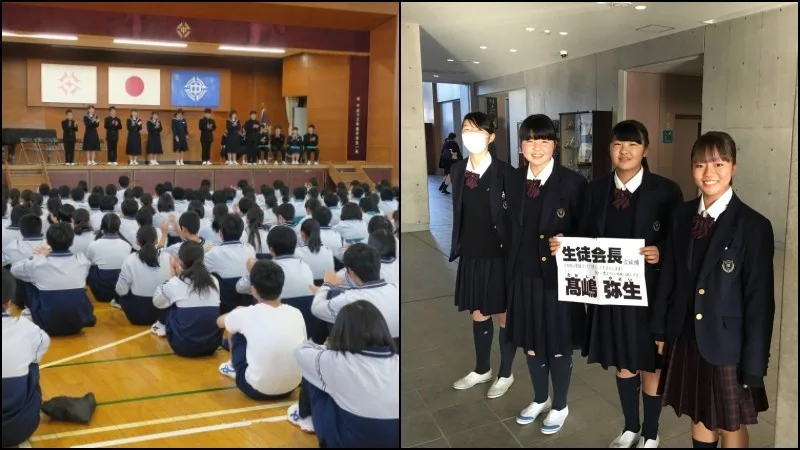
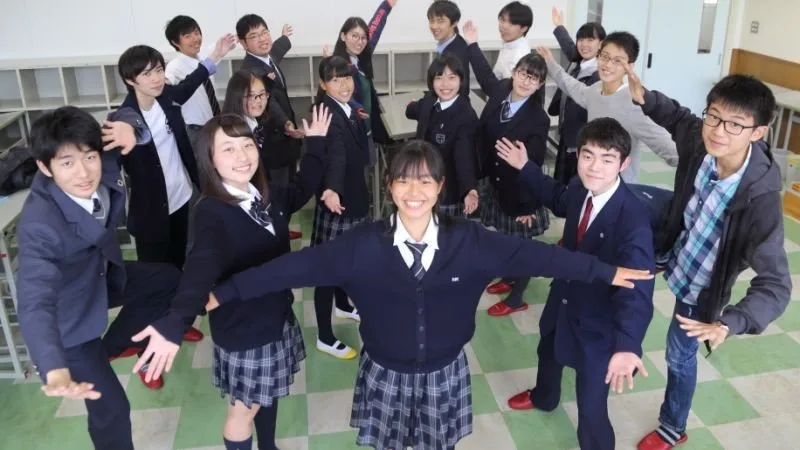
Do you know why this word is so commonly heard in anime? The reason for this is that Japanese people are highly group-oriented and unconsciously value group harmony over individual freedom, which is why many use minna.
This expression can be used for a small or large group of people, a circle of friends, or even in the absence of people to refer to a group of friends. This word holds significant importance in Japanese culture.
Minna can also be said with intent, with expression to evoke emotion in the listener. Japanese people always try to follow what minna is saying to get along well with a group. It is not just everyone; it is like a "Hey you all! Attention!".
Phrases and expressions about everyone in Japanese
Stop what you are saying
みなまで言うな
minamadeiuna
All the leaves have fallen
木の葉はみんな落ちてしまった
Konoha wa min'na ochite shimatta
Hello everyone.
皆さん、こんにちは。
mina san, konnichiwa.
Is everyone ready?
したくはいいですね、みなさん。
shitaku wa ii desu ne, minasa.
Please be quiet
みなさんじっとしていて下さい
Minasan jitto shite ite kudasai
I am not afraid if everyone crosses the red light
赤信号皆で渡れば怖くない
Akashingō mina de watareba kowakunai
Party of everyone
みんなの党
minnanotou
We recommend reading our article about Komi-san Komyushou desu where a phrase with Minna appears. We always recommend searching for the word on our site to find more expressions and understand more of its meaning.
Words related to the ideogram of mina [皆]
To conclude the article, I will leave some related words to enhance your vocabulary and understanding:
- Zenin [全員] - All members; all hands; everyone; all tribulation;
- Katagata [方々] - People; all people; everyone; ladies and gentlemen;
- Minamina [皆々] - Everyone; all; everything;
- Kaimoku [皆目] - Entirely;
- Minagoroshi [皆殺し] - Massacre; annihilation; mass murder;
- Minanomono [皆の者] - Everyone;
- Minna ga minna [皆が皆] - Each and everyone; each one; everyone;
- Kaiki [皆既] - Total eclipse; totality;
- Kaichuu [皆中] - Hit all targets;
- Mina no shuu [皆の衆] - Everyone;



Community
Comments
0 comments
There are no published comments in this language yet.
Send comment