
The Japanese language is full of homonymous words, and Inseki is one of them with considerable search interest on the internet. Today we will examine the different meanings of Inseki.
We also recommend reading:
- Kazoku – Family members in Japanese
- What is the Kanban Method?
- The habit of apologizing in Japanese society
Table of Contents
「姻戚」- Inseki can mean Relatives by Marriage
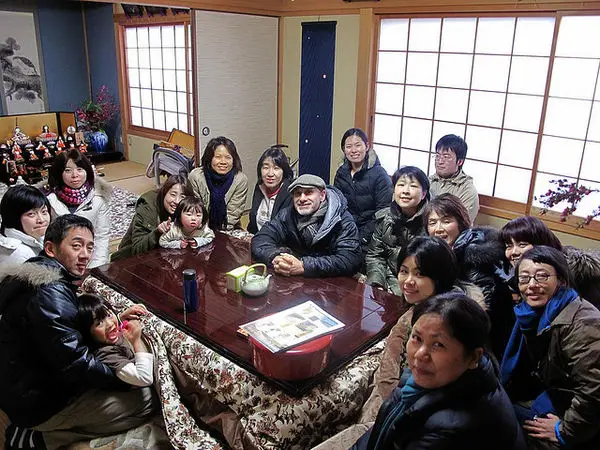
The term 姻戚 (いんせき) can be translated as “relatives by marriage”. It refers to people who are related through marriage, such as spouses, in-laws, siblings-in-law, and others, without any blood relation.
It is a common term in Japanese to refer to relatives by marriage and can be used in formal or informal contexts. It can be used to refer to family relationships in general without specifying which relationship is being mentioned.
This word Inseki is formed by the kanji [姻] (いん), which means “marriage” or “union”, and [戚] (せき), which means “kinship” or “relatives”.
The word Insekikankei [姻戚関係] can be used to refer to the relationships between relatives by marriage.

「隕石」- Inseki can mean Meteorite
The term 隕石 (いんせき) can be translated as “meteorite”. It is composed of the ideograms [隕] (いん), which means “fall” or “disintegration”, and [石] (せき), which means “stone”.
Inseki refers to a celestial body that enters the Earth’s atmosphere and falls to the planet’s surface, a term both scientific and part of popular culture. Do not confuse it with the word meteor, which is [流星].
Meteorites are formed from fragments of asteroids or comets that disintegrate in space and are attracted by Earth’s gravity. They can be made of different materials, such as stone, metal, or mixtures of both.

「引責」- Inseki means Taking Responsibility
The term 引責 (いんせき) can be translated as “responsibility” or “blame”. It is formed by the kanjis [引] (いん), which means “pull” or “bring”, and [責] (せき), which means “blame” or “responsibility”. Together, the ideograms refer to the act of taking responsibility or blame for something.
Its use is frequent to refer to the act of taking responsibility or blame for some problem or failure. Another common related word is sekinin [責任], which means responsibility.
We also recommend reading: Domo Arigato – 72 ways to say thank you in Japanese
Leave a Reply