
You will usually encounter futanari—often shortened to futa—as a tag for adult illustration, manga, animation, or games. It describes a fictional character trope, not a real-world identity. That distinction matters: it helps readers understand the tag in context without applying a fantasy label to real people.
The Japanese word has older dictionary uses, while its modern internet meaning grew through adult and fan-created media. Online usage is not perfectly standardized, so a tag can tell you the broad fictional theme without explaining every character, plot, or visual choice in a work.
Contents 11
What does futanari mean?
Futanari is a Japanese word written in forms such as 二形, 二成, and 双成. Older dictionary definitions refer broadly to two forms or to a person understood to have traits associated with both sexes. In present-day online culture, the word is most commonly used for a fictional adult-media category.
Within that category, creators often use the label for imagined characters that combine sex traits in ways that do not follow real human biology. The exact design varies by artist and community, which is why the term works better as a content label than as a precise biological description.
Futa is the short form. English-speaking fans use it frequently in tags, search boxes, and discussions because it is quicker to type, but it points to the same broad fictional trope.
How the tag is used in manga, art, and animation
Futanari is most visible in adult manga, doujinshi, digital illustration, animation, and games. On catalog and art sites, tags help readers filter for elements they do or do not want to see. That practical role is useful: a clear tag can prevent someone from opening material that is not for them.
The tag alone does not promise a particular story, tone, relationship, or level of explicitness. Some works make it central to the premise; others use it as one attribute among many. Read the rating, summary, and other content labels instead of assuming every work follows the same formula.
If you are new to adult Japanese media, it also helps to separate broad categories from individual works. Hentai and ecchi are not interchangeable terms, and a futanari tag is a narrower label inside a much larger landscape of genres and formats.
Futanari is not the same as transgender or intersex
This is the most important distinction. Futanari is a fictional convention shaped by illustration, fantasy, and adult-media tagging. Transgender describes a person’s gender identity. Intersex is an umbrella term for natural variations in sex traits or reproductive anatomy. These are different subjects and should not be treated as synonyms.
For that reason, do not use futa, futanari, or the older English word hermaphrodite to describe a real person. Those terms can be inaccurate or disrespectful outside a fictional context. When discussing real people, use the language they use for themselves and choose intersex where that is the relevant, respectful term.
Where did the word come from?
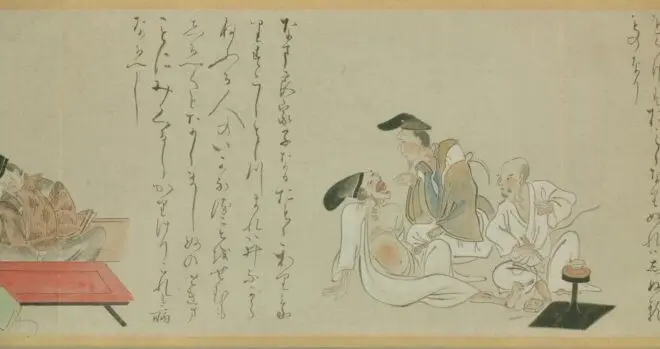
The word predates the internet and appears in older Japanese dictionary forms. Its modern popular use, however, belongs to a different context: manga, illustration, adult games, and fan communities developed it into a recognizable fictional tag. The term then traveled internationally in romanized form, especially through online art and adult-media communities.
That older vocabulary does not turn every modern claim about religion, folklore, or historic erotic art into fact. It is safer to treat the contemporary tag as a media convention unless a specific historical work or source supports a broader claim.
Common mix-ups
- It is not a gender identity. A tag for a fictional character does not define how a real person identifies.
- It is not a medical term. It cannot explain the varied realities of intersex people or human anatomy.
- It is not a universal label. Communities may use nearby terms differently, and creators may prefer more specific tags.
- It is not a quality signal. The label says little about writing, art, consent themes, or whether a work suits a particular reader.

Futanari in doujinshi and fan works
Many people first see the term while browsing doujinshi, where familiar characters can be reimagined through alternate settings or adult themes. In that setting, futanari is one possible character attribute, not a rule for the entire work. Original comics and games use the label too, often with their own world-building and content warnings.
Because fan works can vary sharply in tone and boundaries, tags and ratings deserve attention. They are more useful than broad assumptions about a genre, especially for readers trying to avoid material that does not match their interests.
Quick questions
Is futa only used in Japan?
It is a Japanese word, but futanari and futa are now common in international online communities. Meaning can shift slightly from one platform or language community to another.
Does the term always mean explicit content?
It is strongly associated with adult media and is often used as an adults-only tag. Context still matters: check the age rating and the surrounding labels rather than relying on one word alone.
Can it describe a real person?
No. Use it for the fictional media context where it belongs. For real people, respectful, self-chosen language is the right standard.
In short
Futanari, or futa, is a Japanese-derived term now used internationally for a fictional trope in adult and fan-created media. It is useful as a content tag, but it is not a gender identity, a medical description, or a word for real people. Reading it as a media label keeps the meaning clear and avoids a common mistake.






Community
Comments
0 comments
There are no published comments in this language yet.
Send comment