
Tankōbon, kanzenban and one-shot are not manga genres. They describe different points in a story’s publishing life: a bound volume, a complete-edition reissue, or a self-contained work. Knowing the distinction saves a familiar disappointment: buying a “definitive” edition expecting new chapters, or opening a one-shot expecting the first instalment of a long series.
Publishers also use these labels with some flexibility. The Japanese word gives a broad direction, while trim size, paper, extras, chapter count and binding depend on the specific project. Read the label as a clue, not as an automatic guarantee.

Contents 10
Tankōbon: the bound volume
Tankōbon (単行本) broadly means a book issued as its own volume. In manga, it usually means the paperback that collects chapters first serialized in a magazine. It is the format most readers picture as “volume 7” of a series: numbered spine, black-and-white pages and one stretch of an ongoing story.
That does not make every tankōbon identical. Local editions can change trim, paper, translation and price. A tankōbon is not automatically a luxury release, and it is not always part of a long series: a short work may fit in one volume, while a single volume may collect several separate stories.
Kanzenban: complete edition, with an asterisk
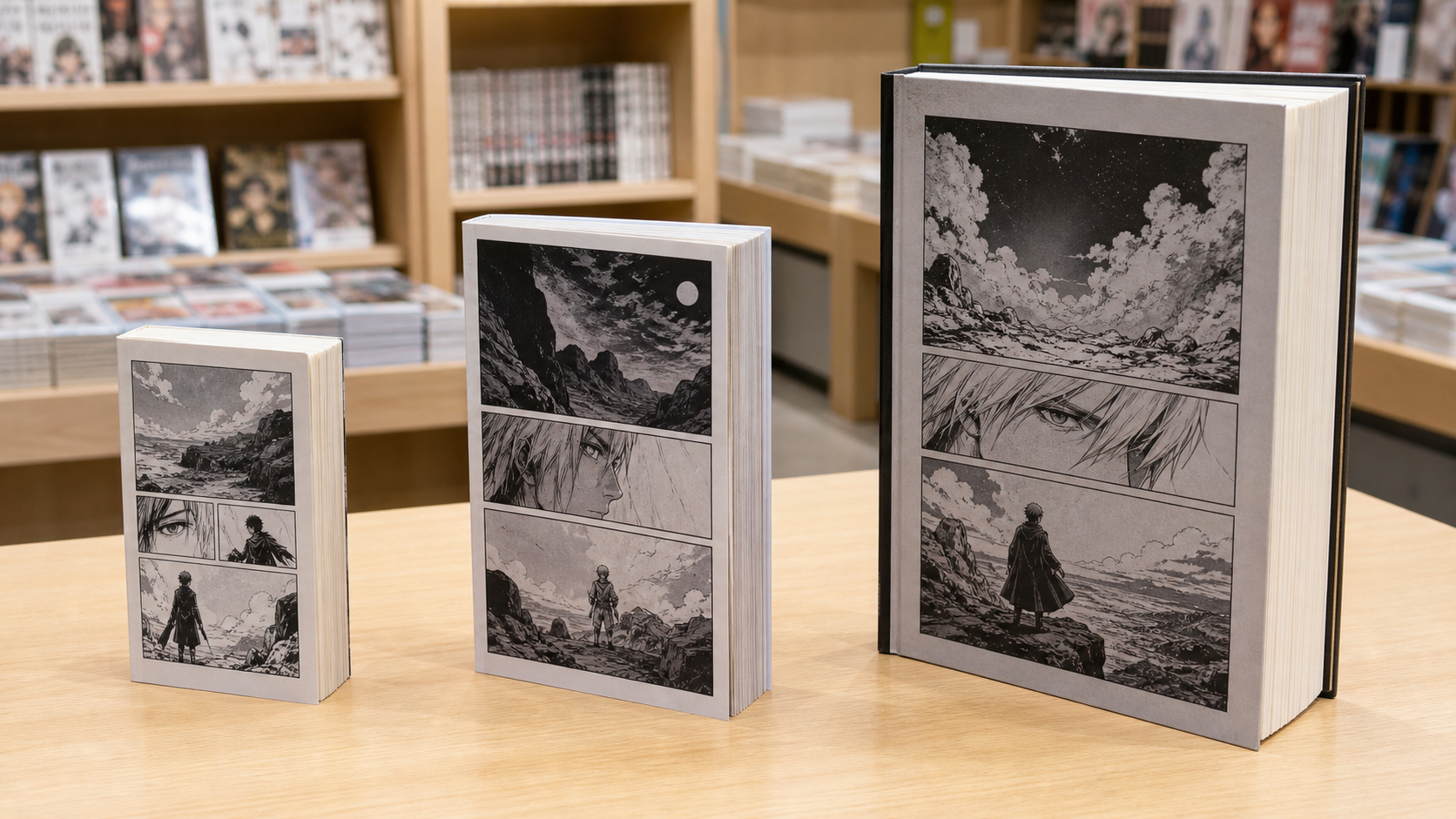
Kanzenban (完全版) literally means “complete edition”. It commonly appears on Japanese reissues of established manga. Larger trim, better paper, restored colour pages, new cover art and extra material are all possible. Some releases also place more chapters in each book and reduce the total volume count.
The key word is “possible”. There is no universal kanzenban checklist. One collection may stand out for colour reproduction; another may emphasize printing or new covers. Compare the publisher’s details and the number of books with the earlier edition before assuming what changed.
| Term | Core idea | What it does not guarantee |
|---|---|---|
| Tankōbon | A bound volume, often collecting magazine chapters | Luxury materials or bonus content |
| Kanzenban | A reissue presented as a complete edition | One identical standard across publishers |
| One-shot | A story designed to end in one reading | That it can never receive a sequel |
| Bunkoban | A compact, often catalogue-oriented edition | That it exactly matches the original tankōbon |
One-shot: a story with its own ending
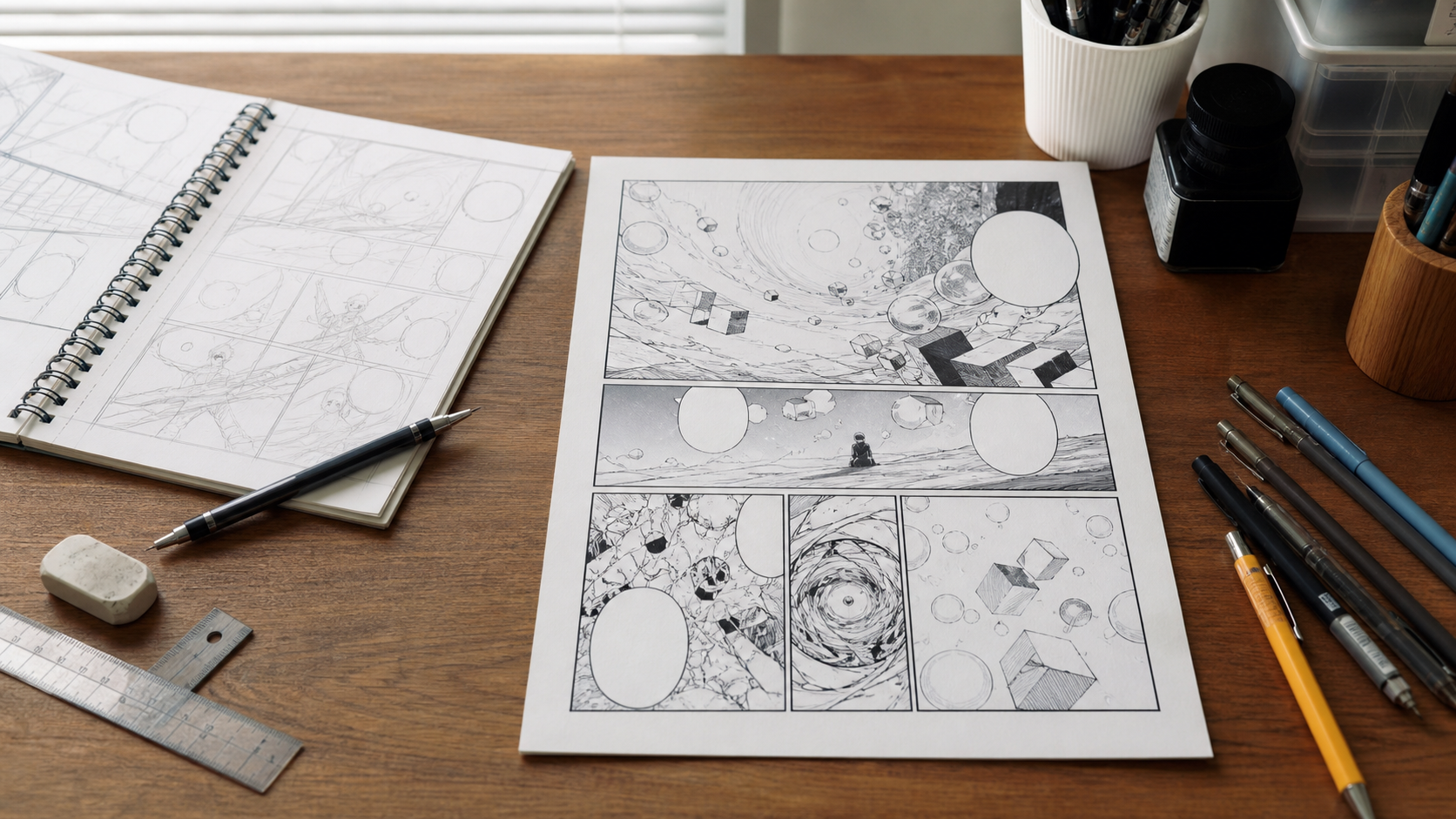
A one-shot, often called yomikiri (読み切り) in Japanese, is built to have a beginning, development and ending in one publication. It may be short or long enough to fill a magazine issue; the defining feature is that the central reading experience closes there.
A one-shot can later inspire a series, but that is not guaranteed. It may serve as a concept test, a first published work, or an early version of an idea that eventually changes shape. Treat it as a complete work at the time of reading, not as a promised franchise.
Other labels worth knowing
Bunkoban (文庫判) refers to a compact book format. Manga reissues in this size may regroup chapters and put more material in one book, although detailed art and lettering can feel smaller. Aizōban (愛蔵版) is a collector-oriented label that may suggest premium binding or paper, but again requires checking the edition’s own specifications.
In English-language catalogues, omnibus usually means several volumes collected in one book. It is not a direct synonym for kanzenban: omnibus first describes collected material, while kanzenban refers to the framing of a Japanese complete-edition reissue.
How to choose the right edition
- Compare the volume count to see whether material was condensed.
- Check for colour pages and extras instead of inferring them from the label.
- Look at physical size if detailed artwork matters to you.
- Check translation and reading direction in your local edition.
- Read the publisher’s synopsis to confirm whether a one-shot is one story or an anthology.
For the publishing side behind these labels, see this overview of Japanese manga publishers and magazines.
Frequently asked questions
Is tankōbon the same as tankoubon?
Yes. Both spellings represent the same word. The macron in tankōbon marks a long vowel; “tankoubon” is common in shop listings and catalogues.
Does kanzenban always add new material?
No. Extras are possible, but a complete-edition reissue does not automatically contain new chapters. Check the table of contents and the publisher’s description.
Does every one-shot become a series?
No. Many stay as standalone stories. A later serialization is an editorial decision, not a property of the format.
The label helps; the edition page decides
These words are useful because they show how manga moves between magazines, books, reissues and collections. The best purchase, however, depends on what that precise edition contains, how it was printed and how you want to read it.



Community
Comments
0 comments
There are no published comments in this language yet.
Send comment