

Do you know all the types of sushi that exist on the face of the earth? Do you know the difference between sushi, nigiri, maki, hossomaki, urumaki, and sashimi? In this complete guide, you will learn about all the famous sushi in Japan, Brazil, and around the world.
For those who don’t know, sushi generates over 14 billion dollars a year just in Japan. Those who think sushi is simply raw fish are completely mistaken.
There are thousands of varieties and different types of sushi, with vegetables, fried fish, meats, etc. Classifications such as nigiri, temaki, urumaki, and various other types of sushi. Not to mention the invention of some restaurants.
It is also worth noting that many sushi we eat here in the West do not exist in Japan, so the types of sushi are infinite. In this article, we will see a list of various types of Japanese sushi. We will classify them into categories.
To learn how to make your own sushi or become a Sushiman, we recommend the Sushibilidade Program.
Origin and History of Sushi
Japanese food has become so common in Brazil that few people are interested in knowing about its origins, culture, besides the fact that it came from the land of the rising sun, of course. The proliferation of temakerias and similar establishments may have trivialized the cuisine a bit, but know that everything has a reason for each of the ingredients present in the rice rolls.
The origin of cooked rice wrapping the fish, in this case, dates back to the 4th century B.C. The rice fermented and preserved the meat – because it released acetic and lactic acids, but it was discarded. It was a kind of pressed sushi, which was very tasty. Over time, the rice began to be consumed as well, along with the fish.
From the 17th century onwards, vinegar was added to the rice, and the previously fermented fish began to be consumed raw and fresh, due to improvements in navigation and the abundance of options from Japanese seas. The rice cakes made only with rice – cooked or fried – also became popular during this period.
The sushi as we know it, with nori seaweed, vegetables, meats, and roots, is a practically complete food. The benefits that each of the elements possesses – the omega-3 from fish, the zinc and iron from seaweed, in addition to vitamin C and other nutrients from wasabi, for example – are the main reasons why Japanese food is considered one of the healthiest in the world.
There are countless types of sushi. From the less healthy (like fried hot rolls) to vegetarian options, including onigiris, sashimis, etc. It takes a little time to get to know the basis of Japanese cuisine well; there are many combinations.
You can easily find all the ingredients and try to start cooking at home, but the best thing to do – if you want to get to know it well before venturing with sharp Japanese knives – is to eat at the various restaurants available in the city or order a nice delivery to enter the wonderful world of sushi.
Curiosities about Sushi
Sushi is generally made with rice seasoned with vinegar (sugar and salt) with fish, seafood, eggs, or fruits. The main ingredient of sushi is rice, not fish as some imagine. Sushi refers to the seasoned rice.
In Japan, a sushi chef apprentice spends two years learning to cook and season the rice before being allowed to work in a restaurant. Making sushi is like an art; it requires a lot of skill and technique.
The knives used by sushi chefs are direct descendants of samurai swords. The knives must be sharpened every day. The Japanese have miso soup at the end of the meal to aid digestion!
The Japanese also do not mix the sauce with wasabi, as this reduces the potency of the flavor, which can even offend some chefs. Between one sushi and another, it is advisable to taste a small slice of pickled ginger (gari) to neutralize the flavor of the previous sushi.
The philosophy applied in sushi states that the customer does not eat only with the mouth but with the eyes. Therefore, the preparation of sushi must be a constant creative exercise. Fresh fish is always used, and the sushiman often dips his hands in cold vinegar water for this purpose.

Types of Nigirizushi
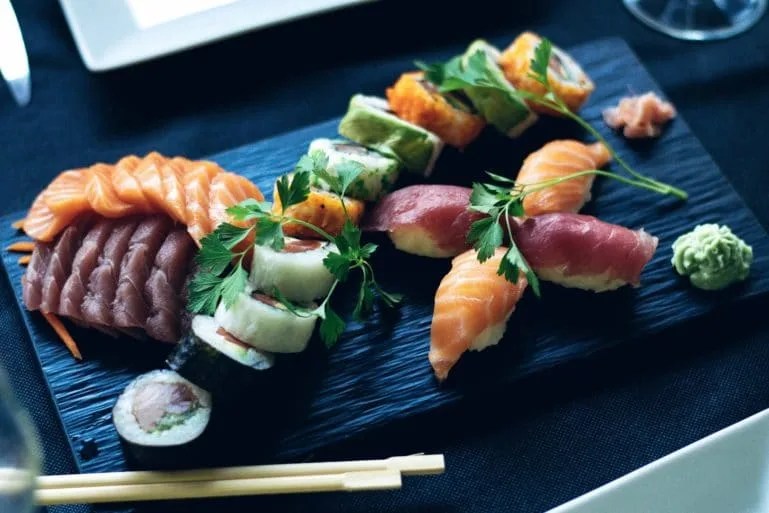
Nigirizushi are hand-made sushi that usually use raw fish to make the base or cover over a small ball of rice. Most of the time, nori (seaweed sheet) is not used. Thus, we will see sushi not wrapped in seaweed. A large part resembles those in the photo below:
There are several types of sushi that fit into this category or are similar; below is the list of sushi and their main ingredients:
- Maguro – A lean cut of tuna;
- Sake Nigiri – Salmon;
- Toro – Cut from the belly of fatty tuna;
- Amaebi – Raw shrimp;
- Ika Nigiri – Made from squid;
- Hotate Nigiri – Scallops;
- Tako Nigiri – Octopus (type of mollusk)
- Aji – Made from Jack Mackerel (a type of mackerel.)
- Saba – Made from mackerel;
- Unagi – Grilled eel with sweet sauce;
- Sanma – Made from Pacific saury;
- Kani Nigiri – Made from crab leg;
- Kamaboko kani – Those fish sausages that are said to be made from crab SQN;
- Shako nigiri – Made from mantis shrimp (looks like a centipede);
- Chutoro – Similar to toro, but less fatty;
- Iseebi Nigiri – Made from lobster;
- Matsubagani – Legs of white crab;
- Hatahata – Sandfish;
- Kimmedai – Made from the fish: Splendid alfonsino
- Kisu – Made from sillago fish;
- Kohada – Made from Japanese gizzard shad;
- Hiramasa – Made from yellowtail amberjack;
- Tsubugai – Made from shellfish;
- Torigai – Made from sea clams;
- Kurodai – Made from black sea bream;
- Gindara Nigiri – Made from Pacific coal fish;
- Namera – Made from grouper;
- Hirame – Fluke fish. (Similar to flounder);
- Hamaguri – A type of shellfish;
- Aoyagi – A type of shell;
- Ohyou – Made from flounder;
- Akami – Loin of bluefin tuna;
- Sawara – Spanish mackerel;
- Sakura Niku – Raw horse meat;
- Isaki – Striped pigfish
- Iwashi – Sardine
- Shiro Maguro – White tuna;
- Tairagai – Another shellfish;
- Kazunoko – Herring roe;
- Mirugai – Panopea generosa – A mollusk;
- Mategai – Made from razor fish;
- Mamakari – Needlefish;
- Sayori – Made from Hemiramphidae fish;
- Masu – Made from trout;
- goraz – Goraz fish;
- Akagai – Made from clam shell;
- Hokkigai – Another type of shellfish;
- Gyu Nigiri – Made from meat (not raw);
- Kuruma – Made from tiger shrimp;
- Tamagoyaki: Slightly sweet Japanese omelet, sometimes mixed with chopped fish.
- Temarizushi – Sushi in the shape of balls;
It is worth remembering that some of the types of sushi mentioned in the list above may also be available in another version makizushi wrapped in seaweed, as in the cases of unagi and tamagoyaki.


Makizushi – Types of sushi wrapped in seaweed
Now we will see sushi of the type Makizushi or similar. That is, we will see types of sushi wrapped in nori (seaweed) and other similar models. The word Makizushi [巻きずし] literally means sushi roll, and there are thousands of different maki.
There is not just one category to define maki or types of sushi wrapped in nori. Generally, people know their subcategories such as hossomaki which are thin rolls, futomaki which are large rolls, and urumaki which are rolled inside out.
This category also includes different types of sushi such as temaki in the shape of a cone and nigirizushi made by hand. We also have a fried tofu ball filled with rice called Inarizushi named in honor of Shinto Inari.
Of course, there are other categories of “makizushi” such as:
- Oshizushi – Pressed;
- Gunkanzushi – Battleship;
- Edomae chirashizushi – Scattered in Edo style;
- Gomokuzushi – In Kansai style;
- Narezushi – Super labor-intensive;
- Sasamaki – Sushi wrapped in bamboo leaf;
- Yuba Maki – Sushi wrapped in tofu skin;

Uramaki – Rolled Inside Out
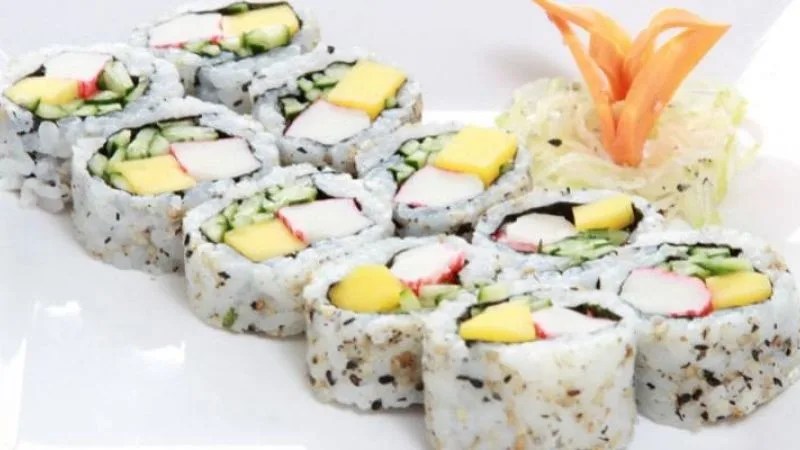
Uramaki [裏巻き] is a very popular type of sushi that consists of a makizushi or hossomaki rolled inside out. In this case, the filling is first wrapped by the seaweed and then by the rice with vinegar.
The uramaki is mainly used in Western sushi for those unfamiliar with seafood and seaweed. It can also be decorated with fish roe or sesame seeds.
Originally, the uramaki was a decorative type of sushi, but it started when many Westerners did not like the black appearance of seaweed on rice. Today, most uramaki sushi is served in sushi restaurants outside of Japan.
Types of Makizushi – Wrapped in Nori
There are several types of sushi that fit into this category or are similar; below is the list of sushi and their main ingredient.
- Kappa Maki – Filled with cucumber. (Reference to the Kappa monster)
- Ikura Gukan – Salmon roe;
- Uni – Gonad (Echinoidea) of sea urchin;
- Hamachi – Made from a fish native to the northwest Pacific Ocean;
- Tekkamaki – Filled with tuna;
- California Roll – One of the rare Western types, made with cucumber, kani (fish sausage), and avocado;
- Futomaki – Thick roll, which can have various ingredients, usually has egg, kanpyo, cucumber, and mushrooms;
- Natto Maki – Filled with Natto (fermented soybeans);
- Negitoro – Made with Negi (a type of green onion) and tuna belly;
- Umeboshi – Made from ume (pickled plum);
- Daikon Oshinko Maki – A type of long radish;
- Mentaiko – Menta + Cod roe, and other variations. It has a strong taste;
- Shirasu – Anchovy or baby sardine;
- Tsunamayo Maki – Tuna with mayonnaise;
- Tobiko Nigiri – Flying fish roe;
- Masago – Made from fish roe;
- Gunkanmaki – A mound formed by a hand of rice with nori;
- Kanpyomaki – Filled with pickled Kanpyo (dried gourd strips)
- Noresore – Filled with baby Anago (saltwater eel);
- Abokado Maki – Avocado sushi;
- Anakyu – Sea eel and cucumber;
- Namako – Sea cucumber;
- Spicy Tuna Maki – Western style made with chili and peppers plus tuna;
- Umekyu – Cucumber and Japanese plum in conversation;


Temaki – Cone Sushi
Temaki is a large hand-rolled sushi with nori in the shape of a cone. This sushi usually measures 10 centimeters in length and is eaten with hands. Personally, I don’t like it much because it has too much rice, but it is quite appreciated.
This dish has a wide variety of flavors, being able to be filled with different fish such as salmon and tuna. The name temaki [手巻き] means hand-rolled, due to its preparation and appearance similar to an ice cream cone.
It can be considered an easy way to prepare sushi without much skill, without having to cut slices or carefully handle the fish and rice. If you want to know more, we recommend reading our article about Temaki – Sushi in the shape of a cone.
There is also a course called Temaki Experience that will teach you how to make Temaki at home for little cost and even profit from delivery.

Narezushi
An older form of sushi. The fish is filled with salt after its organs and scales are removed. The fish goes through several processes, being fermented for ten days to a month.
Then it is placed in another barrel, packed in layers of steamed rice. It is then partially sealed with otosibuta and a specific stone. After a process of about 6 months, this funazushi can be eaten and can last more than 6 months.

Western Types of Sushi
Below we will see a list of Western types of sushi with their original names in English:
- California roll
- Rainbow roll
- Caterpillar roll
- Alaska roll
- B.C. roll
- Fire roll
- Dynamite roll
- Spicy tuna roll
- Spicy yellowtail roll
- Spicy scallop
- Hawaiian roll
- Ahipoki Warship
- Philadelphia roll
- Negihama
- Salmon skin roll
- Salmon roll
- Seattle roll
- Spider roll
- Tempura roll
- Dragon roll
- Godzilla roll
- Soba roll
- Las Vegas roll
- Lobster roll
- Sarazushi
- Crayfish roll
- Monkey roll
- Sushi Burrito (Sushirito)

Types of fish used in sushi
Many restaurants use the name of the fish in Japanese to refer to dishes. For this reason, we will leave a list of names of fish used in Japanese cuisine, whether in sushi, nigiri, or sashimi. Many of the fish below may be unknown:
- Ainame (アイナメ) – Fat greenling;
- Aji (鯵) – Japanese mackerel;
- Aka-yagara (赤矢柄) – Red cornetfish;
- Akami (赤身) – Fish with red meat;
- Akamutsu (アカムツ) – Pink sea bass;
- Amadai (あまだい) – Tilefish;
- Ankimo (鮟肝) – Monkfish liver (cooked);
- Ayu (鮎) – Sweetfish (raw or grilled);
- Buri (鰤) – Adult yellowtail (cooked or raw);
- Chūtoro (中とろ) – Medium fatty tuna belly;
- Dojo (ドジョウ) – Japanese loach;
- Ei (エイ) – Skate;
- Engawa (縁側) – Fluke fin;
- Fugu (河豚) – Pufferfish;
- Funa (フナ) – Cross carp;
- Gindara (銀鱈) – Sablefish;
- Hamachi (魬, はまち) – Young yellowtail (35–60 cm);
- Hamo (鱧, はも) – Daggertooth conger;
- Hata (ハタ) – Grouper;
- Hatahata (鰰) – Sandfish;
- Hikari-mono (光り物) – Blue-backed fish;
- Hiramasa (平政, 平柾) – Amberjack (Seriola lalandi);
- Hirame (平目, 鮃) – Flounder, a type of sole;
- Hokke (ホッケ) – Okhotsk atka mackerel;
- Hoshigarei (干鰈) – Spotted halibut;
- Ibodai (疣鯛) – Japanese butterfish;
- Inada (鰍) – Very young yellowtail;
- Isake (いさけ) – Trumpeter;
- Isaki (伊佐木, いさき) – Striped pigfish;
- Ishigarei (石鰈) – Stone flounder;
- Iwana (イワナ) – Char;
- Iwashi (鰯) – Sardine;
- Kajiki (梶木, 舵木, 旗魚) – Swordfish;
- Kanpachi (間八) – Greater amberjack, Seriola dumerili;
- Karei (鰈) – Flatfish;
- Kasugo (春子鯛) – Young sea bream;
- Katsuo (鰹, かつお) – Skipjack tuna;
- Kawahagi (皮剥ぎ) – Filefish;
- Kibinago (黍魚子) – Blue needlefish or round herring with stripes;
- Kihada (maguro) (木肌鮪, 黄肌鮪, きはだ) – Albacore tuna;
- Kinmedai (金目鯛) – Splendid alfonsino;
- Kisu (鱚) – Sillago;
- Kochi (こち) – Flathead;
- Kohada (小鰭) – Japanese gizzard shad;
- Konoshiro (鰶) – Fully matured gizzard shad;
- Kue (クエ) – Longtooth grouper;
- Kuro (maguro) (くろまぐろ) – Bluefin tuna, the fish itself;
- Kurodai (黒鯛) – Sea bream;
- Madai (まだい) – Sea bream;
- Madai (真鯛) – Sea bream;
- Maguro (鮪) – Thunnus (a genus of tuna);
- Makajiki (真梶木) – Blue marlin;
- Makogarei (まこがれい) – Marble sole;
- Mamakari (飯借) – Needlefish;
- Masu (鱒) – Trout;
- Matou-dai (まとう-だい) – John dory;
- Mebachi (maguro) (めばちまぐろ) – Bigeye tuna;
- Meji (maguro) (メジ鮪) – Young Pacific bluefin tuna;
- Mejina (メジナ) – Girella;
- Mekajiki (目梶木) – Swordfish;
- Nijimasu (虹鱒) – Rainbow trout;
- Nishin (ニシン) – Herring;
- Noresore (のれそれ) – Baby anago;
- Ohyou (大鮃) – Flounder;
- Okoze (虎魚) – Okoze stonefish;
- Saba (鯖) – Mackerel or blue mackerel served raw or marinated;
- Sake, Shake (鮭) – Salmon;
- Sanma (秋刀魚) – Pacific saury (autumn) or mackerel pike;
- Sawara (鰆) – Spanish mackerel;
- Sayori (針魚, 鱵) – Halfbeak (spring);
- Seigo (鮬) – Young sea bass (1-2 years);
- Shima-aji (しま鯵) – White trevally;
- Shinko (新子) – Very young gizzard shad;
- Shirauo (しらうお) – Whitebait (spring);
- Shiro maguro (白鮪) – “White” tuna;
- Suzuki (鱸) – Sea bass
- Tachiuo (タチウオ) – Beltfish;
- Tai (鯛) – Sea bream;
- Tara (鱈) – Cod;
- Toro (とろ) – Fat belly of bluefin tuna;
- Ōtoro (大とろ) – Fatty portion of bluefin tuna belly;
I hope you enjoyed this article discussing the different types of sushi. If you liked it, leave your comments and share it with friends. Are there other types of sushi not mentioned in this article?

Community
Comments
0 comments
There are no published comments in this language yet.
Send comment