
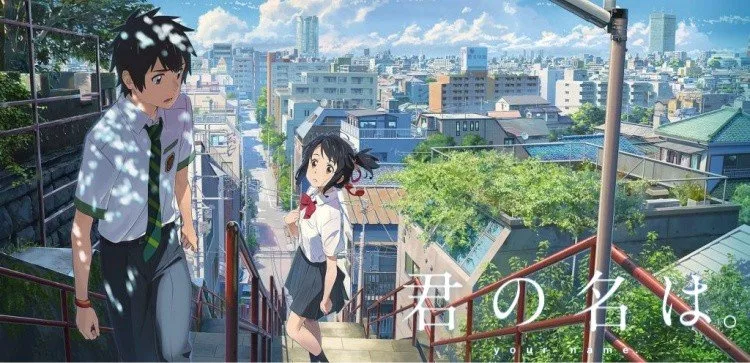
If you have watched Makoto Shinkai's 2016 film Kimi no na wa (君の名は, Your Name), you probably left the theater with the soundtrack stuck in your head. RADWIMPS wrote most of the songs for the movie, and Nandemonaiya (なんでもないや) is the emotional track that plays as the story reaches its final, bittersweet scene. Below is a full translation of the song, plus the Japanese lyrics and a romanized version, so you can read along line by line.
One quick note: YouTube removed the original music video from the official RADWIMPS channel due to copyright, so we are linking to a fan cover below. The cover captures the melody well even if the audio is not the studio master.
Contents 10
About the song and the movie
Nandemonaiya (なんでもないや) is the second main vocal song that RADWIMPS contributed to Kimi no na wa. The title literally means "It is not a big deal" or "It doesn't matter," but in context it carries a softer, more resigned feeling. The singer is reassuring someone he loves that what he is about to do (leaving, moving on, letting go) is not a big deal, even though the listener and the audience know it absolutely is.
Kimi no na wa (君の名は), released in 2016, is the anime feature that turned Makoto Shinkai into a household name outside Japan. The film follows Taki, a Tokyo high school student, and Mitsuha, a girl living in a fictional mountain town, who begin mysteriously switching bodies. The story blends body-swap comedy with body-swap melancholy, and by the time the final act arrives, the audience has spent more than an hour caring about these two characters. Nandemonaiya plays during the closing montage, which is why the lyrics feel like a quiet goodbye rather than a triumphant ending.
RADWIMPS are a Japanese rock band formed in 2001, fronted by Yojiro Noda. Shinkai asked them to score Kimi no na wa after he saw them live, and the result was a soundtrack that mixes J-rock, post-rock, electronic textures and traditional Japanese elements. The band performed most of the vocal songs in Japanese, which is unusual for a major anime film aimed partly at overseas markets.
Full lyrics, romanization and English translation
The original Japanese lyrics, the romanized version, and the English translation are below. Open the panels in any order to follow along. The translation stays close to the Japanese, so a few lines may read a little flat in English. That is on purpose: Japanese songwriting often relies on the listener feeling the mood rather than decoding poetry.
Japanese lyrics (なんでもないや)
Click to open the Japanese lyrics
二人の間 通り過ぎた風は どこから寂しさを運んできたの
泣いたりしたそのあとの空は やけに透き通っていたりしたんだ
いつもは尖ってた父の言葉が 今日は暖かく感じました
優しさも笑顔も夢の語り方も 知らなくて全部 君を真似たよ
もう少しだけでいい あと少しだけでいい もう少しだけでいいからもう少しだけでいい あと少しだけでいいもう少しだけ くっついていようか
僕らタイムフライヤー 時を駆け上がるクライマー 時のかくれんぼ はぐれっこはもういやなんだ
嬉しくて泣くのは 悲しくて笑うのは 君の心が 君を追い越したんだよ
星にまで願って 手にいれたオモチャも 部屋の隅っこに今 転がってる
叶えたい夢も 今日で100個できたよ たった一つといつか 交換こしよう
いつもは喋らないあの子に今日は 放課後「また明日」と声をかけた
慣れないこともたまにならいいね 特にあなたが 隣にいたら
もう少しだけでいい あと少しだけでいい もう少しだけでいいから
もう少しだけでいい あと少しだけでいい もう少しだけくっついていようよ
僕らタイムフライヤー 君を知っていたんだ
僕が 僕の名前を 覚えるよりずっと前に
君のいない 世界にも 何かの意味はきっとあって
でも君のいない 世界など 夏休みのない 八月のよう
君のいない 世界など 笑うことない サンタのよう
君のいない 世界など
僕らタイムフライヤー 時を駆け上がるクライマー
時のかくれんぼ はぐれっこはもういやなんだ
なんでもないや やっぱりなんでもないや
今から行くよ
僕らタイムフライヤー 時を駆け上がるクライマー
時のかくれんぼ はぐれっこ はもういいよ
君は派手なクライヤー その涙 止めてみたいな
だけど 君は拒んだ 零れるままの涙を見てわかった
嬉しくて泣くのは 悲しくて 笑うのは
僕の心が 僕を追い越したんだよ
Romanization (Nandemonaiya)
Click to open the romanized version
Futari no aida
Toori sugita kaze wa
Doko kara sabishisa o hakonde kita no
Naitari shita sono ato no sora wa
Yake ni suki-tootte itari shitanda
Itsumo wa togatteta chichi no kotoba ga
Kyou wa atatakaku kanji mashita
Yasashisa mo egao mo yume no katari-kata mo
Shiranakute zenbu
Kimi o maneta yo
Mou sukoshi dake de ii
Ato sukoshi dake de ii
Mou sukoshi dake de ii kara
Mou sukoshi dake de ii
Ato sukoshi dake de ii
Mou sukoshi dake kuttsuite iyou ka
Bokura taimu-furaiyaa
Toki o kakeagaru kuraimaa
Toki no kakurenbo
Hagurekko wa mou iya nanda
Ureshikute naku no wa
Kanashikute warau no wa
Kimi no kokoro ga
Kimi o oikoshita nda yo
Hoshi ni made negatte
Te ni ireta omocha mo
Heya no sumikko ni ima
Korogatteru
Kanaetai yume mo
Kyou de hyakko dekita yo
Ta-ta hitotsu to itsuka
Koukan koshiyou
Itsumo wa shaberanai ano ko ni kyou wa
Houkago “mata ashita” to koe o kaketa
Narenai koto mo tama ni nara ii ne
Toku ni anata ga
Tonari ni itara
Mou sukoshi dake de ii
Ato sukoshi dake de ii
Mou sukoshi dake de ii kara
Mou sukoshi dake de ii
Ato sukoshi dake de ii
Mou sukoshi dake kutsuite iyou yo
Bokura taimu-furaiyaa
Kimi o shitte ita nda
Boku ga
Boku no namae o
Oboeru yori zutto mae ni
Kimi no inai
Sekai ni mo
Nani ka no imi wa kitto atte
Demo kimi no inai
Sekai nado
Natsuyasumi no nai
Hachigatsu no you
Kimi no inai
Sekai nado
Warau koto nai
Santa no you
Kimi no inai
Sekai nado
Bokura taimu-furaiyaa
Toki o kakeagaru kuraimaa
Toki no kakurenbo
Hagurekko wa mou iya nanda
Nandemo nai ya
Ya-pari nandemo nai ya
Ima kara iku yo
Bokura taimu-furaiyaa
Toki o kakeagaru kuraimaa
Toki no kakurenbo
Hagurekko
Wa mou ii yo
Kimi wa hade na kuraiyaa
Sono namida
Tomete mitai na
Dakedo
Kimi wa kobanda
Koboreru mama no namida o mite wakatta
Ureshikute naku no wa
Kanashikute
Warau no wa
Boku no kokoro ga
Boku o oikoshita nda yo
English translation (It doesn't matter)
Click to open the English translation
Between us
A breeze passed
That brought loneliness from somewhere
After the rain, the sky
Seems clearer than ever
The words that are usually harsh from my father
Today felt warm
The kindness, the smiles, and talking about dreams
I didn't understand any of it
So I just imitated you
A little more
Just a little more
A little more is enough
A little more
Just a little more
Can we stay embraced just a little more?
We fly through time
We are climbers of time
I'm tired of
Playing hide and seek with time
The reason I cry when I'm happy
And laugh when I'm sad
Is that your heart
Overcame you
The toy I got
Wishing on a star
Is now in my room
In the corner
The dreams I want to come true
Today, I have a hundred of them
And someday, for just one
I will trade
That girl I never talk to
I was able to say to her "see you tomorrow"
It's okay to do things you're not used to
Especially
If you are by my side
A little more
Just a little more
A little more is enough
A little more
Just a little more
Can we stay embraced just a little more?
We fly through time
I knew you
Before I
Remembered
My own name
Without you
The world
Surely has some meaning
But a world
Without you would be like
Not having summer vacation
In August
A world
Without you would be like
A Santa who never smiles
A world
Without you
We fly through time
We are climbers of time
I'm tired of
Playing hide and seek with time
It doesn't matter
It really doesn't matter
I am going now
We fly through time
We are climbers of time
I'm tired of
Playing
Hide and seek with time
You cry so loudly
Those tears
I want to stop them
But
You refuse
Seeing those tears fall, I understood
The reason I cry
When I am happy
And laugh when I am sad
Is that my heart
Overcame me
Translation notes and what to listen for
Three small things help the English version land closer to the original mood.
What "なんでもないや" actually means
Nandemonaiya is a soft, slightly masculine way of saying "it is nothing" or "it is not a big deal." Japanese has several ways to express this idea. Nandemonai is the standard neutral form; the -ya ending adds a casual, almost affectionate tone, the kind of voice you use with someone close. When RADWIMPS sing it as the title and again in the final chorus, they are using the softest version of the phrase possible, which is what makes the title hit so hard at the end of the film.
"Time flyer" and "time climber"
The line bokura taimu-furaiyaa, toki o kakeagaru kuraimaa (僕らタイムフライヤー、時を駆け上がるクライマー) sounds stranger in English than in Japanese. Yojiro Noda coined taimu-furaiyaa and kuraimaa as English-style words inside a Japanese sentence, the way English speakers sometimes drop Japanese or French into a line for texture. A taimu-furaiyaa is someone who flies through time; a kuraimaa is someone who climbs up through it. The repeated refrain tokino kakurenbo, hagurekko wa mou iya nanda ("hide and seek with time, I am tired of being the one left behind") is the emotional core of the song, and it ties directly to Kimi no na wa's themes of memory, distance and missed connections.
The summer and Santa Claus images
The "world without you would be like August without summer vacation" and "Santa without laughter" lines do not translate into neat English metaphors. The Japanese builds them by repetition: kimi no inai sekai nado (a world without you, something like), followed by an image of something that should be joyful but feels empty. Keeping the translation close to the Japanese structure preserves that rhythm, even if the comparisons feel unusual to an English reader.
Related reading
If you enjoyed translating Nandemonaiya, a few other articles on the site pair well with it. Our breakdown of Sparkle, the other main RADWIMPS track in the same film, follows a similar pattern, and the real locations that inspired Kimi no na wa give you a reason to visit Japan after the credits roll. For a broader look at translating Japanese songs, the guide to Japanese translators and translation tools covers the resources we use when romanization and dictionary entries are not enough.



Community
Comments
0 comments
There are no published comments in this language yet.
Send comment