
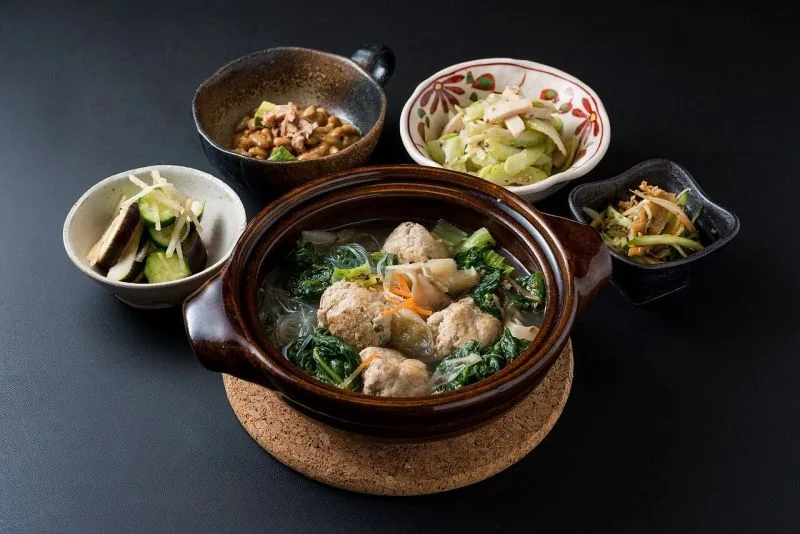
When you study Japanese, delicious almost always arrives first as oishii [美味しい]. The kanji already look like a compliment: 美 for beauty, 味 for flavor. Then someone at the table says umai, a TV host reaches for zeppin, and the textbook word suddenly feels too small.
Those extras are not decoration. Some are polite, some are casual, a few live mostly in dictionaries — and one of them is a pun about a cow losing to a horse.
Contents 6
What does oishii mean?
First we have to pin down what oishii [美味しい] actually is. The adjective is written with 美 (bi), beauty, something lovely, and 味 (aji), flavor and taste. Said together, the flavor is beautiful. You will also see it in hiragana as おいしい, which is just as correct and often more natural on a phone keyboard.
That pair of kanji, 美味, is not another spelling of oishii. Read with the Chinese readings it becomes the noun bimi [美味]: deliciousness, a fine taste. Oishii is the everyday i-adjective; bimi is a more literary noun you meet on menus, in food writing, and in older-sounding phrases rather than at a convenience-store counter.
You do not drop the noun into a sentence alone and hope. A classical-looking line such as bimi naru [美味なる] treats the food as something that has become, or is, delicious. You can also attach the place: the bimi of a certain shop or region. In ordinary talk, though, people still reach for oishii.
Because it is an i-adjective, the same word stretches without becoming a new vocabulary item. Oishisou [おいしそう] is “that looks delicious,” said before the first bite. Oishikatta [おいしかった] is the past, the one you say when the plate is already empty. Polite speech just adds です: oishii desu, oishikatta desu.
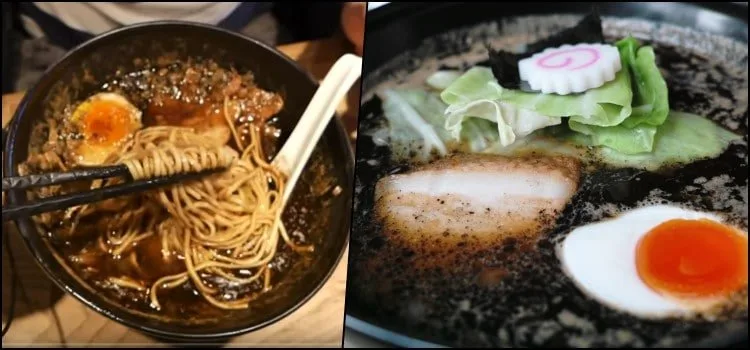
Umai [うまい] — tasty, and a little casual
This one, umai [うまい], is popular, casual, and a bit more specific. Besides “tasty,” it can carry the feeling that the food is really hitting: appetizing, flavorful, the kind of compliment you mutter over ramen with friends rather than write in a hotel review.
The writing is where learners get lost. For food, the usual kanji are [旨い] or [美味い]. [上手い] is the same sound with a different job: splendid, skillful, clever — praising the cook’s hand as much as the plate. In daily messages people often skip the debate and write only hiragana, うまい. The older food kanji [旨] still means a delicious specialty; it has not vanished, but it is no longer the default on a phone screen.
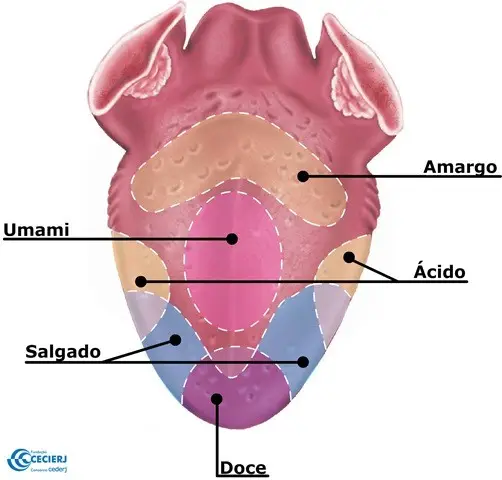
Do not confuse that with amai [甘い]. Same neighborhood of taste talk, different word: sweet, sugary, sometimes “too soft” when it is not about dessert. Using 甘い when you mean umai is a classic mix-up. Unless the dish is actually sweet, leave amai in the sugar drawer and keep umai in hiragana or 旨い. For the rest of the taste words in Japanese — sour, bitter, salty, umami — that is a separate map.
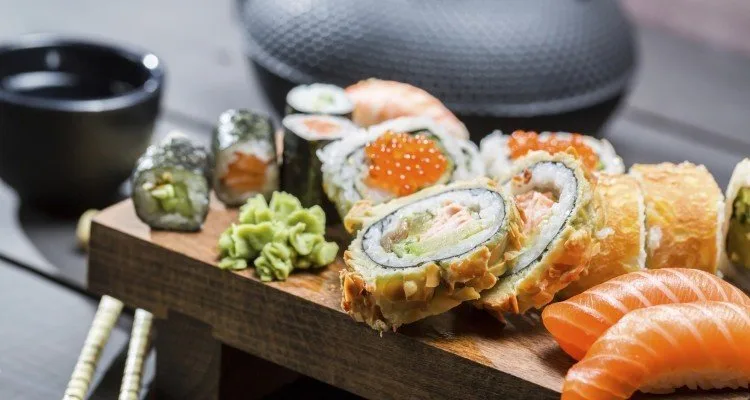
Zeppin [絶品] — when the dish is a masterpiece
The word zeppin [絶品] aims higher than “pretty good.” It points at a masterpiece, a refined item, something close to unique. [絶] carries the sense of going beyond, even of cutting off the ordinary; [品] is a refined article and also shows up as a counter around food and goods.
On TV and in ads you will hear zeppin gourmet [絶品グルメ] or a straight zeppin desu [絶品です]. It works in casual and formal speech, but it is not a random synonym for oishii. Save it for a plate that actually stopped the table — a kaiseki course, a bowl someone has been chasing, the kind of dish that makes the rest of the night a footnote. If you want the seasonal multi-course version of that praise, there is a longer walk through kaiseki.
You can also stop stacking adjectives and just talk. Say what the flavor is doing, then land on aji [味]. A short, specific comment plus aji often sounds more alive than a third oishii in the same meal.
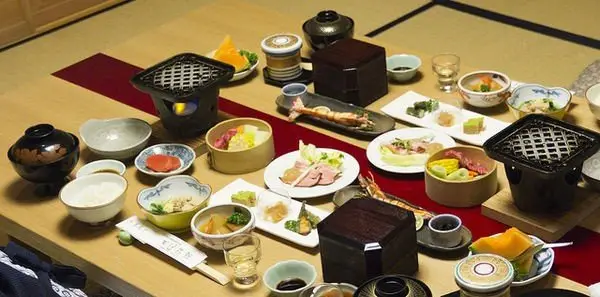
Other ways to say the food is good
Some people jump to surprise words such as saikou [最高]: the best, wonderful, supreme. You will also hear shiawase [幸せ], happy, when the dish is so good the feeling spills past the tongue. It is not a technical tasting note; it is the plate turning into a mood.
When the food is so good it becomes a habit, the line is kuse ni naru [癖になる]. Kuse [癖] is a habit, a tendency, the thing you cannot quite quit. There is also a flipped version of umai: maiuu [まいうー], slang that simply reverses the syllables of うまい. You will see まいう and まいうー in casual writing; it is playful, not polite Japanese.
Another favorite is hoppe ga ochiru [ほっぺが落ちる], literally “the cheeks fall off.” The food is so good the cheek gives up, surrenders, drops. You will also meet the slightly fuller hoppeta ga ochiru [ほっぺたが落ちる]. Same joke, same compliment.
Rarer words for delicious and tasty
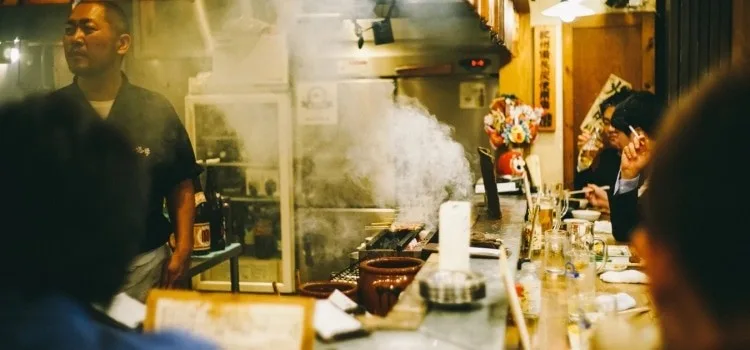
A last handful lives more in dictionaries, copy, and wordplay than in everyday orders. Useful to recognize; odd to force at a ramen counter.
Kekkou [結構] can mean “quite good” or “I’m satisfied” — and, in another tone, “I’m fine, no more, thank you.” Context does the work. Bishoku [美食] is gourmet food itself. Fuumizekka [風味絶佳] and kami [佳味] are old-fashioned praise for an excellent flavor. Chinzen [珍膳] and chinkou [珍肴] point at an uncommon, precious meal. Koumi [好味] is simply a good taste.
Then there is ushimaketa [牛負けた]. It is not a normal adjective. It is a pun on umakatta [うまかった], “that was delicious.” Write the same sound as 馬勝った and you get “the horse won”; flip the animals and 牛負けた becomes “the cow lost.” Joke first, dictionary entry second. Do not use it as your default compliment unless the table is already groaning at dad jokes.
Responsive table: scroll sideways with your finger >>
| English | Japanese | Romaji |
| Quite good / I’m satisfied | 結構 | kekkou |
| Gourmet food, fine dining | 美食 | bishoku |
| Excellent, outstanding flavor | 風味絶佳 | fuumizekka |
| Delicious flavor | 佳味 | kami |
| Uncommon, precious meal | 珍膳 | chinzen |
| Uncommon, precious dish | 珍肴 | chinkou |
| That was delicious (cow-and-horse pun) | 牛負けた | ushimaketa |
| Good taste | 好味 | koumi |
Checklist: 16 ways to say tasty in Japanese
If you have been counting along, here is the set this page actually walks through:
- Oishii
- Umai
- Zeppin
- Saikou
- Shiawase
- Kuse ni naru
- Maiuu
- Hoppe ga ochiru
- Kekkou
- Bishoku
- Fuumizekka
- Kami
- Chinzen
- Chinkou
- Ushimaketa
- Koumi




Community
Comments
0 comments
There are no published comments in this language yet.
Send comment