
Hello everyone, how are you? Almost everyone has heard that Japan is dependent on nuclear power plants. In this article, I will comment a little more on nuclear energy and the relationship Japan has with this type of energy generation, which is one of the most dangerous in this field.
An example of its danger is the major Fukushima accident that occurred after the tsunami in 2011. Despite various precautions and protective measures, the risks of radiation still incredibly affect the accident site, to the extent that parts are still completely isolated. Anyway, I will discuss the topic more calmly throughout the article.
Contents 10
Japan and its energy industry
The first commercial nuclear power reactor in Japan began operation in 1966, and nuclear energy has been a national strategic priority since 1973. This was called into question after the Fukushima accident in 2011, but it was confirmed. After all, it is not a situation that can be resolved simply by wanting and doing.
Until 2011, Japan generated around 30% of its electricity from its reactors and it was expected to increase to at least 40% by 2017. The current outlook is two-thirds of that, from an exhausted fleet.
Today, 42 reactors are operable. The first two restarted in August and October 2015, with seven more having restarted since then. 17 reactors are currently in the process of restarting approval. This leaves us with a heavy question about why they are doing this, even after the nuclear accident in 2011.
Even being the only country to have suffered the devastating effects of nuclear weapons, Japan has adopted the peaceful use of nuclear technology to generate a substantial amount of its electricity.
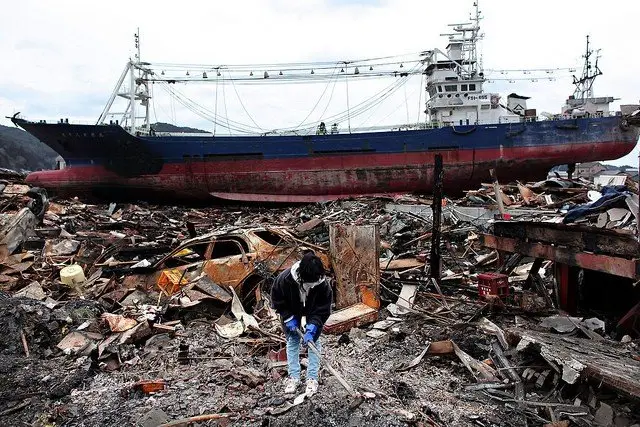
However, after the tsunami that killed 19,000 people and triggered the Fukushima nuclear accident, which, although it did not cause legal victims, left a huge trauma on the mental and physical health of the people in that area and a feeling of sorrow throughout Japan and many people around the world.
And with that, public sentiment changed dramatically, leading to widespread public protests demanding that nuclear energy be abandoned. The balance between this populist sentiment and the continuity of reliable and affordable electricity supply is being politically discussed.
Energy situation in Japan
The scarcity of minerals and energy in Japan has been a powerful influence on its policy and history in the 20th century. Nowadays, it relies on imports for over 90% of its primary energy needs. This is extremely low for a country the size of Japan.
When it recovered from the damages of World War II and grew its industrial base in a relatively short time, it needed imports of fossil fuels, especially oil from the Middle East. This geographical and commodity fragility became unstable due to the oil shock in 1973.
At that time, Japan already had a growing nuclear industry, with five reactors in operation. The reassessment of domestic energy policy resulted in measures to diversify, especially a significant nuclear construction program. A major focus was placed on reducing the country's dependence on oil imports.
However, after the Fukushima accident in October 2011, the government tried to reduce the role of nuclear energy, but it was not enough to satisfy the population, resulting in the loss of positions for many politicians in the elections.
Government after the Fukushima accident
The new government adopted the 4th Basic Energy Plan in 2014, with a 20-year progression, stating that nuclear energy is a basic load energy source and that it would still be used safely to meet its energy demands. In addition to being a preventive measure against global warming.
In 2015, the government declared that it intended for basic load sources to provide 60% of energy by 2030, one-third of which would be nuclear energy. The analysis by the Innovative Technology Research Institute for the Earth estimated that energy costs would be reduced by $20 billion per year compared to the current state.
At the same time, it was reported that 43 coal energy projects were planned or underway. Along with the resurgence of coal energy with a 20% increase in consumption, Japan's LNG imports grew from about $20 billion in 2010 to $70 billion in 2013.
Development of the nuclear program
To not leave any details blank, I have just provided a general summary so far of Japan's situation regarding the topic, but from now on I will delve into the issues and discuss them more thoroughly while trying to maintain the same level of ease in understanding.
The nuclear research program began in 1954. The Basic Atomic Energy Law, which strictly limits the use of nuclear technology to peaceful purposes, was approved in 1955. This law promoted three principles - democratic methods, independent management, and transparency - which are the foundation of nuclear research activities.
The inauguration of the Atomic Energy Commission (JAEC) in 1956 helped in the development and utilization of nuclear energy, and with that, several other institutions on the subject were created shortly thereafter.
First steps towards Japan's Nuclear Energy
The first reactor to produce electricity in Japan was a prototype boiling water reactor: the Japan Power Demonstration Reactor (JPDR), which operated from 1963 to 1976 and provided a large amount of information for later commercial reactors. I believe this has a special role in Japan's history.
Japan imported its first commercial nuclear reactor from the United Kingdom, Tokai 1 - a 160 MWe gas-cooled (Magnox) reactor built by GEC. It began operation in July 1966 and continued until March 1998.
After the completion of this unit, only light water reactors (LWRs) using enriched uranium - either boiling water reactors (BWRs) or pressurized water reactors (PWRs) - were built. By 1970, the first three of these reactors were completed and began commercial operation.
Soon Japanese companies had already acquired the ability to build these units, as they purchased designs from the U.S. and had licenses to manage the subsequent stages. Companies like Hitachi Co Ltd, Toshiba Co Ltd, and Mitsubishi Heavy Industry Co Ltd developed the capability to design and build LWRs on their own.
Measures to improve Nuclear Energy in Japan
As technologies always advance, reactors needed improvement as they fell short in various aspects and required constant revisions for their operation. Thus, the Japanese government adopted measures to help develop and improve this technology that had become very important for the country.
And in 1975, the LWR Improvement and Standardization Program was launched by the Ministry of International Trade and Industry (MITI) and the nuclear energy industry. It aimed to standardize LWR designs in three phases, by 1985.
In phases 1 and 2, existing BWR and PWR designs were to be modified to improve their operation and maintenance. The third phase of the program included increasing the reactor size to 1300-1400 MWe and significant changes in designs. These would be the Advanced BWR (ABWR) and the Advanced PWR (APWR).
Nuclear Energy Research Centers in Japan
With the same goal as the creation of the program, the Japanese government also established several research centers to assist in this sector. This shows the interest it had in advancing this technology and also the importance that nuclear energy was gaining in the country.
One of the main research and fuel cycle centers until the late 1990s was the Power Reactor and Nuclear Fuel Development Corporation, better known as PNC. Its activities varied from uranium exploration in Australia to the disposal of high-level waste.
But after two accidents and the unsatisfactory response from PNC, the government in 1998 reconstituted PNC as the more comprehensive Japan Nuclear Cycle Development Institute (JNC), whose goal was to focus on the development of fast regeneration reactors, high-burnup fuel reprocessing, among others.
But soon a merger of JNC and JAERI occurred in 2005, which was responsible for creating the Japan Atomic Energy Agency (JAEA), which is currently an important integrated nuclear R & D organization. A role it plays to this day.
Changes in energy policy
Because of the Fukushima accident, the government was forced to cease a large part of two activities involving nuclear energy, due to pressure from the population itself and also external pressure, as this accident, along with the tragedy that occurred in the country after the earthquake, became news worldwide.
For these and many other reasons, the government had to make several changes so that the country would not suffer from a massive energy crisis. Some of them I will explain from now on.
In July 2011, the Energy and Environment Council (Enecan or EEC) was created by the cabinet of the Democratic Party of Japan (DPJ) as part of the National Policy Unit to guide Japan's energy future until 2050.
This body aimed to help the National Policy focus on future dependence on nuclear energy. And its first recommendation was that the contribution of nuclear energy to electricity be directed to 0%, 15%, or 20-25% for the medium term.
The Atomic Energy Commission (JAEC) and the Central Environmental Council appeared to be under the command of Enecan in 2011, and in 2012 were restored to their previous status. Meanwhile, major Japanese companies like Mitsui and Mitsubishi began to invest heavily in LNG production capacity.
Recent events
In June 2015, the government's Electricity Generation Plan until 2030 was approved. This was nuclear at 20-22% in 2030, renewables 22-24%, LNG 27%, and coal 26%. The goal is to reduce CO2 emissions by 21.9% by 2030 compared to 2013 levels and improve the energy self-sufficiency rate to 24.3%, from 6.3% in 2012.
In July of the same year, the government approved the White Paper on Energy for the fiscal year 2014. It showed that the percentage of energy coming from fossil fuels grew from 62% to 88% over four years.
It also showed that the increase in fuel costs due to nuclear shutdowns was 2.3 trillion JPY in 2011, 3.1 trillion JPY in 2012, and 3.6 trillion JPY in 2013 (up to March 2014). Domestic energy expenses increased on average by 13.7% over the four years.
In July 2017, the cabinet approved the Basic Concept Project on the Use of Nuclear Energy, developed over two years by JAEC, including public consultation. It outlines eight priority activities to achieve the basic goals for the safe use of nuclear energy, promoting its benefits.
My opinion
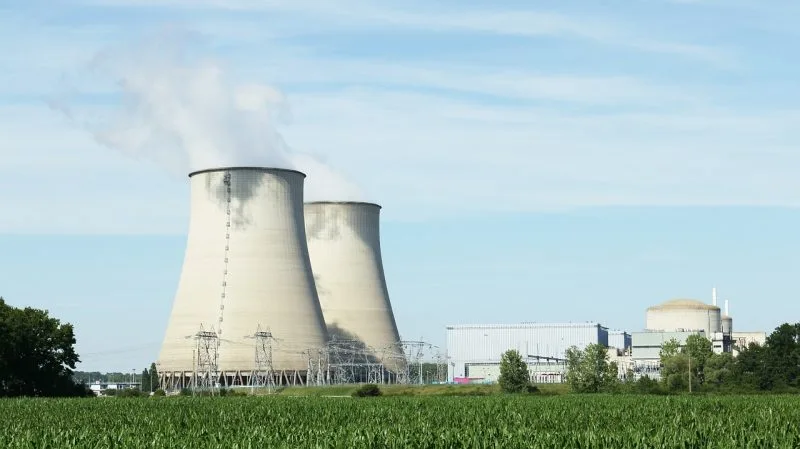
I honestly do not think that nuclear power plants are a danger to society. I would criticize much more the countries that use nuclear energy as a way to demonstrate power, such as Russia or the USA and their atomic arsenals with the sole purpose of serving as weapons of war.
Besides, Japan is not usually negligent when it comes to infrastructure and safety; they are always developing technologies to meet their needs, whether in commercial, urban, domestic, or industrial infrastructure. They are always seeking improvement, unlike negligent countries that only think about making money.
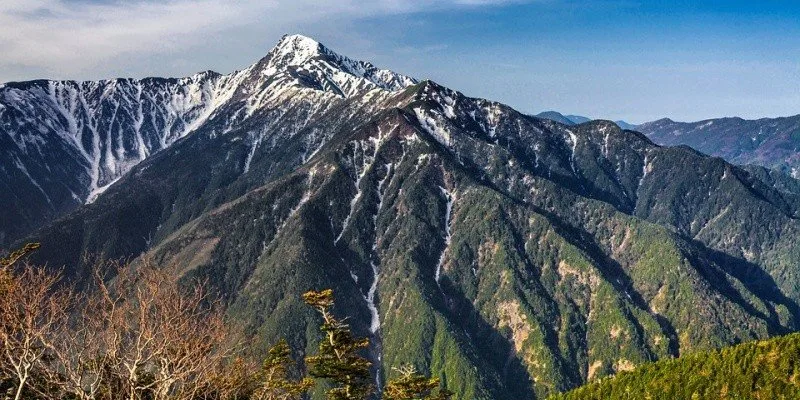
Moreover, it is not as if Japan is rich in natural resources like Brazil; on the contrary, resources are extremely limited as are its plains. For those who do not know, Japan is a predominantly mountainous country, which explains its need for space since plains are scarce.
Opinions differ on this subject; leave yours in the comments and let’s see if we disagree or agree. But first, remember that the accident only occurred because of the gigantic tsunami that hit Japan at the time, which killed thousands of people. And it was not the earthquake that caused the damage done to the plant units.
Well, that’s all for this article. If you have any questions, suggestions, criticisms, or anything of the sort, just leave your comment. Otherwise, thank you, dear reader, for reading this article up to here, and see you next time.



Community
Comments
0 comments
There are no published comments in this language yet.
Send comment