
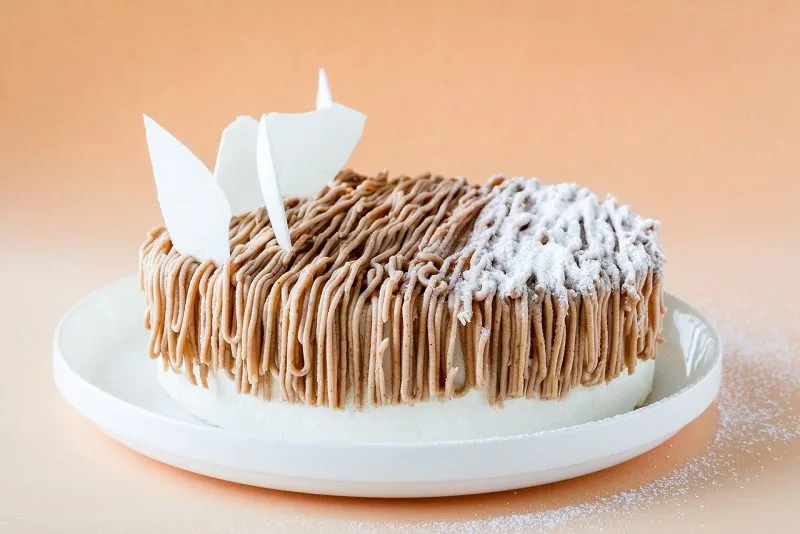
Hi everyone, how are you? Before we get to the main topic, I have a question: do you know what monburan (モンブラン) is? If the word is new to you, it is a dessert made with chestnuts and cream. Since this is a site about Japan, you might assume the recipe was born here. The name and the basic idea came from France, but the version served in Japanese cafés and pastry shops developed a character of its own.
Japan has a long history of adapting foreign recipes to local tastes. Tempura arrived from Portugal and ramen from China; over time, both became Japanese dishes in their own right. Monburan belongs to the same story. It started as a French dessert, passed through Japanese bakeries and ended up with a shape that many people now recognize as Japanese.
Contents 5
The original Mont Blanc
A Mont Blanc is a dessert made from sweetened chestnut purée pressed into thin strands and topped with whipped cream. Its name comes from the mountain on the border between France and Italy. Pale cream on top of the brown purée resembles a snow-covered peak, which explains the image.

The dessert as we know it took shape in Paris in the nineteenth century. Chestnut purées had existed in Italy for centuries, and a fifteenth-century cookbook already described a chestnut torta, but that pie was a different preparation. There, pastry cooks added the vermicelli-like chestnut strands and the whipped cream that define the Mont Blanc today.
Candied chestnuts, known as marrons glacés, are a separate specialty from France and northern Italy. They are whole chestnuts cooked in sugar syrup and glazed, and they often crown a Mont Blanc as a final touch.
How the Mont Blanc reached Japan
Western cakes and pastries arrived in Japan shortly before the First World War. Over the following decades, wartime shortages made butter, cream and sugar scarce, and many pastry shops had to close or reduce production. Ingredients became available again through import lines several years after 1945, and cafés and bakeries began adding Western desserts to their menus.
A pastry shop called Mont Blanc, in Jiyūgaoka, Tokyo, claims to have introduced the cake to Japan. The shop opened in 1933 and, according to its own account, introduced the Mont Blanc in the autumn of 1945. The exact date of that debut is difficult to verify, and the story is treated as a claim rather than a settled fact. What is clear is that the dessert found a place in Japanese cafés after the war.
Bakers added their own touches. Fumiko Sato, who has served her Mont Blanc at her café Bon Gateaux in northern Tokyo since 1976, adds sweet beans to the chestnut cream and builds her version on a shortcake base with a little custard. Her recipe has stayed unchanged since she opened, and it shows how a French pastry can take on Japanese ingredients.
In Japan, the dessert belongs to the category known as yogashi, Western-style sweets. It appears in high-end bakeries, neighborhood pastry shops, supermarkets and convenience stores. Autumn and winter are the main season, when chestnuts are at their best, though many shops sell it year-round.

The Japanese version
Monburan is simply the Japanese pronunciation of Mont Blanc. The Japanese version differs from the French original in its construction. Instead of a single dome of chestnut purée, it is usually a small cake built in layers: a base of sponge or meringue, a layer of whipped cream, and a nest of chestnut cream piped in fine threads over the top. A candied chestnut often sits at the peak.
Those layers give the cake three textures in one bite. The base stays soft, the cream adds freshness, and the chestnut strands remain light and slightly porous. Japanese pastry chefs also play with color and flavor. In autumn and winter, the pastry cases fill with versions in sakura pink, matcha green, pumpkin orange and the deep purple of Okinawan sweet potato. Strawberry and mango appear in fruit versions, and the chestnut flavor may step back to let the fruit lead.
The result is lighter than a classic chestnut cake and easier to eat after a meal. It also fits the seasonal rhythm of Japanese pastry shops, where colors and flavors change through the year. For a broader look at the sweets that fill Japanese pastry shops, see our guide to Japanese sweets and snacks.
Monburan recipe
This recipe makes four small cakes. It requires a piping bag with a fine multi-hole tip, though a small round tip or a fork can work as a substitute. Let the chestnut mixture come to room temperature so it flows through the tip without breaking.
Ingredients
- 4 small meringue nests or 150 g sponge cake
- 300 g unsweetened chestnut purée
- 100 g sweetened chestnut cream (crème de marrons)
- 100 g crème fraîche
- 300 ml whipping cream
- 30 g powdered sugar
- 1 teaspoon vanilla sugar
- 1 tablespoon rum, optional
- Candied chestnuts, to decorate
Method
- If you are using sponge cake, cut it into four rounds. Place one meringue nest or sponge round on each dessert plate.
- Mix the chestnut purée, chestnut cream and crème fraîche in a bowl until smooth. Add the rum or a spoonful of milk if the mixture needs loosening.
- Whip the cream with the powdered sugar and vanilla sugar until stiff. Spoon half of it over the bases.
- Fill a piping bag fitted with a fine multi-hole tip with the chestnut mixture. Pipe thin strands over the cream until a small mound forms.
- Finish with the remaining whipped cream and a candied chestnut. Chill for at least an hour before serving.
Keep the chestnut mixture covered while you work so it does not dry out. Whipped cream should be very cold and stiff, otherwise the strands will sink into it. If the first strand breaks, the mixture is probably too cold or too thick; a teaspoon of milk usually solves the problem.
Final thoughts
I personally do not enjoy pastry work. All those details and the constant need for delicacy are mortal enemies of a clumsy person like me. Still, I appreciate the work of pastry chefs who can turn simple ingredients into something pleasurable at the table.
That is all for this article, everyone. If you try the recipe, share your experience in the comments. Questions, criticism and suggestions are welcome there too. Thank you for reading this far, and see you in the next article.




Community
Comments
0 comments
There are no published comments in this language yet.
Send comment