

Anyone who shops, cooks or looks for a flat in Japan runs into words for shapes and measures that textbooks rarely teach. This guide collects them, groups them and adds the units that actually appear on labels and in conversation.
One note on method. Metric units sit on every package and are written in katakana, because they came into Japanese from European languages. The older units kept their own characters and survive mainly in real estate and in craft work.
Contents 6
Shapes and solids
These words form the base for geometry at school and for describing an object:
- Square: 正方形, seihōkei
- Rectangle: 長方形, chōhōkei
- Triangle: 三角形, sankakkei
- Circle: 円形, enkei; the circle as a surface is 円, en
- Oval: 卵形, rankei
- Rhombus: ひし形, hishigata
- Trapezoid: 台形, daikei
- Cube: 立方体, rippōtai; a sphere is 球, kyū, or 球体, kyūtai
- Pyramid: 角錐, kakusui; a prism is 角柱, kakuchū

Lines, angles and position
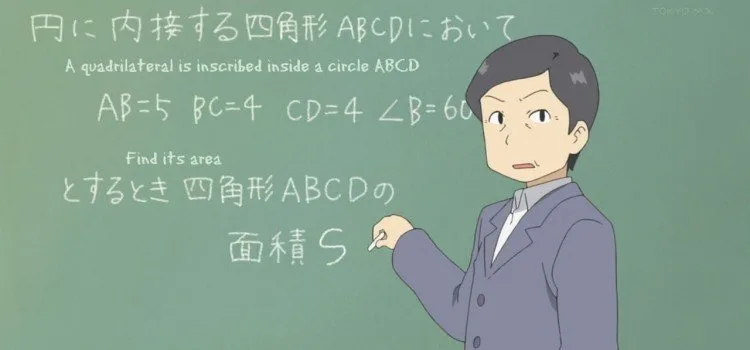
Drawings, maps and technical instructions need a second set of words:
- Line: 線, sen; a straight line is 直線, chokusen, a curve 曲線, kyokusen
- Side and edge: 辺, hen, for the side of a triangle
- Angle: 角, kaku; a right angle is 直角, chokkaku
- Vertical: 垂直の, suichoku no; horizontal: 水平の, suihei no
- Parallel: 平行, heikō
- Center: 中心, chūshin; intersection: 交点, kōten
- Radius: 半径, hankei; diameter: 直径, chokkei
- Perimeter: 周長, shūchō; the outline is 輪郭, rinkaku
The metric units
In shops and kitchens the units are the ones used in Europe as well. Japanese writes them in katakana:
- Metre: メートル, mētoru; centimetre short センチ, senchi
- Millimetre: ミリメートル, mirimētoru, short ミリ, miri
- Kilometre: キロメートル, kiromētoru, short キロ, kiro
- Gram: グラム, guramu; kilogram short キロ, kiro
- Litre: リットル, rittoru; millilitre ミリリットル, miririttoru
- Square metre: 平方メートル, heihō mētoru, in daily use often 平米, heibei
- Cubic metre: 立方メートル, rippō mētoru, short 立米, ryūbei
Old units that survive
The metric system has been in force since the nineteenth century, yet a few older measures never left. One 尺, shaku, is about 30.3 centimetres, one 寸, sun, about 3.03 centimetres, and one 間, ken, equals six shaku, roughly 1.82 metres.
The stubborn one is 坪, tsubo, at about 3.31 square metres. Look for a house or a plot in Japan and you will still see areas given in tsubo, even though the official figure appears in square metres.
Counters and numbers in use
The short forms matter. Nobody says センチメートル in a shop when センチ is enough, and on a building site the cubic metre is usually 立米. The number comes first, the unit last, and amounts under ten take no plural marker, because Japanese counters do not work that way.
Counters deserve a look too. Sheets of paper take 枚, mai, buildings take 棟, tō, and floors take 階, kai, so three sheets of paper is 紙三枚, kami sanmai, and the fifth floor is 五階, gokai.
What you hear at the counter
In a supermarket, check the small print. Prices often appear per 100 grams, drinks are marked in 500ミリリットル, and rice may still be sold by 合, gō, a volume of about 180 millilitres that survives in the kitchen.
With these three word groups you can describe a shape, compare a measurement and order an amount without opening a dictionary between sentences. For the language itself, the lists of Japanese words and numbers in Japanese are the next step, and the guide to how Japanese is written and read covers the characters.



Community
Comments
0 comments
There are no published comments in this language yet.
Send comment