
Inseki can point to three very different ideas in Japanese, and the only safe way to understand it is by looking at the kanji and the context. Depending on how it is written, inseki may mean 姻戚 for relatives by marriage, 隕石 for meteorite, or 引責 for taking responsibility after a mistake.
That is why the word appears so often in dictionary searches and language discussions. In conversation, the intended meaning usually becomes clear from the topic of the sentence: family ties, astronomy, or public accountability. If you enjoy this kind of vocabulary nuance, it also helps to compare it with Japanese family words and with expressions tied to apology and responsibility in Japanese social habits.
Contents 5
姻戚: Inseki as relatives by marriage
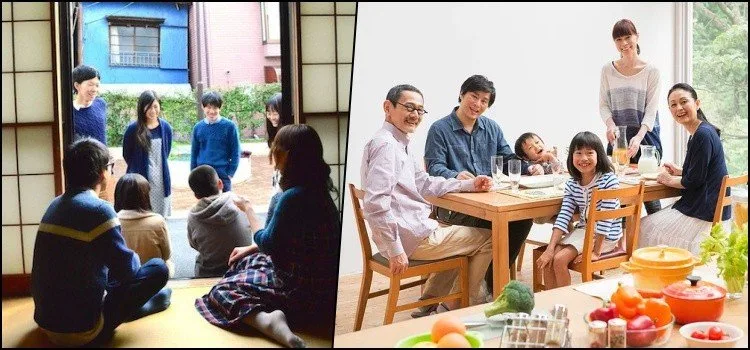
Written as 姻戚, inseki refers to family relationships created through marriage rather than blood relation. In English, the closest idea is “relatives by marriage” or “in-laws,” depending on the sentence. It is a formal word, so you are more likely to find it in writing, explanations, or legal and social contexts than in casual small talk.
This nuance matters because Japanese often distinguishes very precisely between blood relatives and people who become part of the family through marriage. When you see terms like 姻戚関係, the focus is on that connection created by marriage itself, not on a specific role such as mother-in-law or brother-in-law.
隕石: Inseki as meteorite
When the kanji are 隕石, inseki means meteorite. This is the word used for a rocky or metallic object that reaches the surface of the Earth after passing through the atmosphere. Because the same pronunciation appears in a completely different field, this is one of those classic examples that show why Japanese homophones can confuse learners at first.
You will usually recognize this version immediately from the setting of the sentence. If the topic is space, science, impact craters, or a rock falling from the sky, inseki is almost certainly 隕石. It is also a useful word to keep in mind when reading news headlines, museum descriptions, or educational material about astronomy.

引責: Inseki as taking responsibility
As 引責, inseki means taking responsibility for a failure, often in a public or professional sense. This is the reading that appears in political and corporate news when a leader accepts the consequences of a mistake. A related expression you may see is 引責辞任, which refers to resigning in order to take responsibility.
The tone here is stronger than a simple apology. It suggests that someone is not only admitting fault, but also accepting the burden that comes with it. That is why this form of inseki tends to appear in discussions about management, institutions, scandals, and formal statements rather than in ordinary daily conversation.
How to tell which inseki someone means
The easiest shortcut is to ignore the sound for a moment and look at the subject being discussed. Family matters point to 姻戚, astronomy points to 隕石, and politics or business responsibility points to 引責. Once you start reading the kanji together with the surrounding sentence, the confusion disappears quickly.
This is also a good reminder that many “same-sounding” Japanese words are only truly clear once the kanji appear on the page. If you want to go deeper into how meaning shifts with context, our article on the word kanban shows another case where a familiar Japanese term changes depending on how and where it is used.
Summary
Inseki does not have just one meaning in Japanese. It can refer to 姻戚 for relatives by marriage, 隕石 for meteorite, or 引責 for taking responsibility after a mistake. If you remember the kanji and the context, it becomes much easier to understand which inseki is being used.






Community
Comments
0 comments
There are no published comments in this language yet.
Send comment