
Arashiyama (嵐山) is a charming tourist neighborhood on the western edge of the historic city of Kyoto, Japan. Since the Heian period (794-1185), the region has drawn visitors who come for its striking landscapes and rich cultural heritage. Whether it is the iconic bamboo forest, the monkey mountain or the centuries-old temples, Arashiyama offers an unforgettable experience for anyone who wants to know a more serene and traditional side of Japan.
No matter the time of year, the neighborhood has something special to show. In spring, the cherry blossoms transform the landscape; in winter, the Hanatoro lanterns illuminate the bamboo forest and create a magical setting. Shall we explore the main tourist spots and attractions of Arashiyama?
Contents 7
Location and History
Arashiyama sits on the northern bank of the Hozu River (Ōi-gawa) in western Kyoto, only about 30 minutes by train from the city center. Already in the Heian period (794-1185), aristocrats and emperors made the trip to Arashiyama to enjoy the cherry blossoms and the autumn foliage. That atmosphere still lingers today in its lanes, temples and teahouses.
The district is often mentioned together with the neighboring Sagano (嵯峨) area. Together they form the historic heart of Arashiyama. If you want to understand Kyoto beyond the postcard, this is a good place to start — right where the mountains meet the city.
The Bamboo Forest of Arashiyama
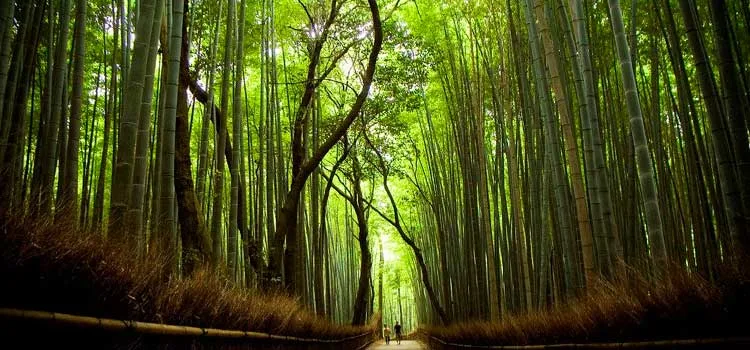
One of the greatest symbols of Arashiyama is the Bamboo Forest (竹林, Chikurin). As you walk along the main path, you will be surrounded by colossal bamboo stalks that reach up to the sky, forming a green tunnel that sways with the wind. The feeling is unique and almost hypnotic, especially in the early hours of the morning when the flow of tourists is still low.
Halfway through the grove you will also come across historic temples, starting with Tenryu-ji (天龍寺), one of Kyoto's main Zen temples and a UNESCO World Heritage site. A short walk further on, you can visit a small cemetery and a tranquil garden. The landscape contrasts with the urban pace of the city and offers a quiet refuge for reflection and contemplation.
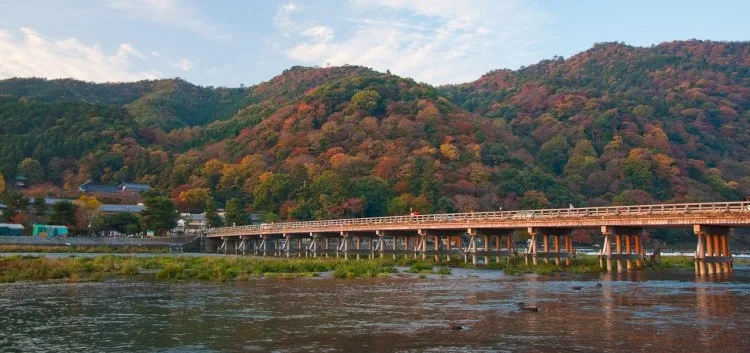
When you leave the forest, head to the Togetsukyo Bridge (渡月橋), which spans the Hozu River. Its name, "Bridge That Crosses the Moon," refers to the way the full moon seems to travel along the arch. The view of the surrounding mountains from the bridge is one of the most photographed in Kyoto, so do not miss your chance for a few good shots.
The Monkey Mountain: Iwatayama
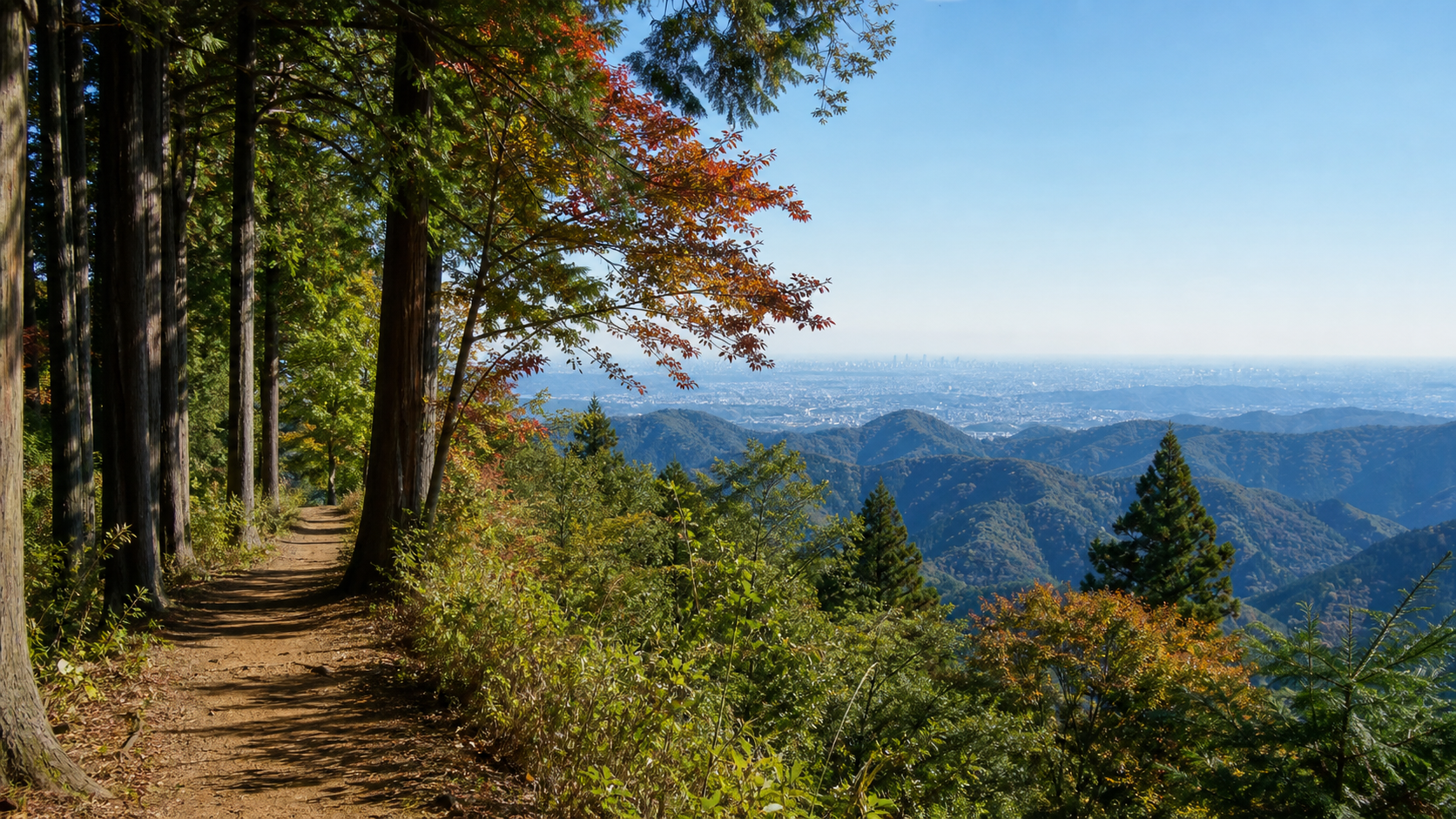
For those who like a bit of adventure, the Iwatayama Monkey Mountain (嵐山モンキーパーク) is a must. Access requires about a 25-minute walk on a moderately steep trail, but the reward at the top is twofold: a panoramic view of Kyoto and close contact with the local Japanese macaques.
The animals are used to people, but it is essential to respect the park's rules. Do not touch them or stare directly into their eyes — both can be read as a threat. At the top there is a shelter where you can feed the monkeys peanuts, sold on site. Watching family groups interact in their natural habitat is fascinating, and especially fun if you are traveling with children.
If you plan a visit, opt for clear days so you can actually enjoy the view of the city. Bring water and prepare for the climb, which can be tiring in the summer heat.
Temples and Other Attractions
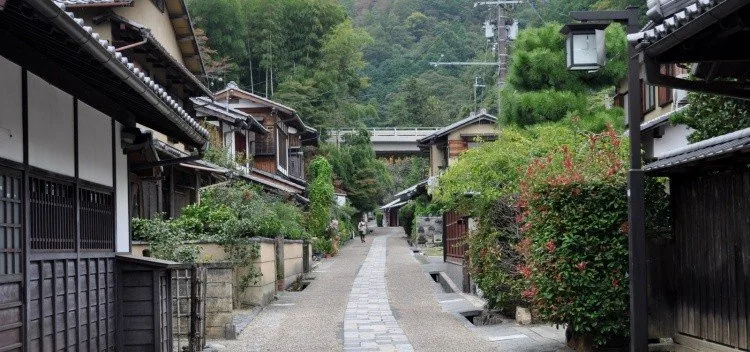
Beyond the bamboo grove and the monkey mountain, Arashiyama hides several smaller treasures. Saga-Toriimoto is a preserved lane dating back to the Meiji period (1868-1912), lined with traditional houses and small artisan shops — a quiet corner that feels frozen in time.
Among the temples, be sure to include:
- Tenryu-ji (天龍寺): the largest and most important in the area, with stunning Zen gardens designed by Musō Soseki.
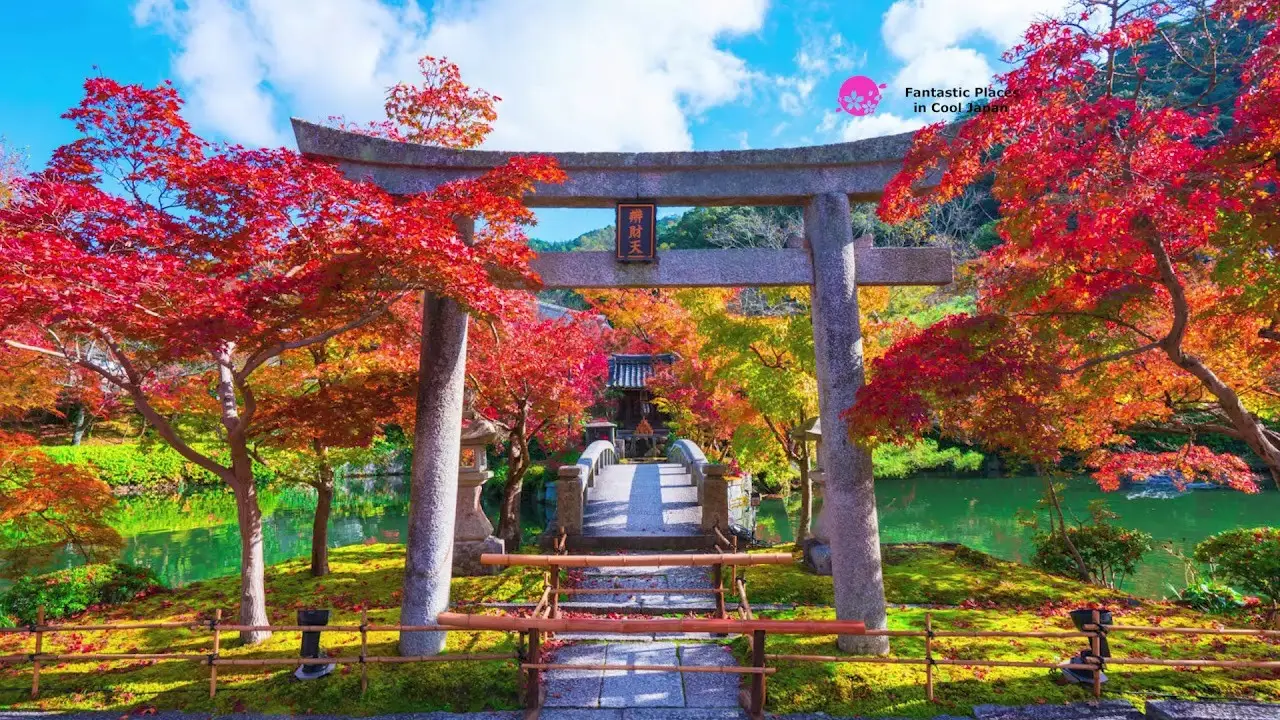
- Jojakko-ji (常寂光寺): known for its maple trees, which turn fiery red in autumn.
- Gio-ji (祇王寺): small but striking for the beauty of its moss garden.
- Daikaku-ji (大覚寺): an ancient imperial villa turned temple, with a picturesque lake at its center.
Another unmissable experience is to ride the Sagano Scenic Railway, a small tourist train that runs a scenic route between the mountains and the Hozu River gorge. The landscapes are stunning year-round, but the red-leaf season in late autumn is the most dramatic.
Culture and History
On the way back from the bamboo grove, you can stop by the former residence of actor Okochi Denjiro (1896-1962), celebrated for its beautiful gardens and traditional architecture. Nearby is the house of poet Mukai Kyorai, a disciple of the great Matsuo Bashō. Both sites offer a window onto Japanese culture and Japanese aesthetics.
If you visit in summer, do not miss ukai (鵜飼), the traditional cormorant fishing on the Hozu River. In winter, the Hanatoro event bathes the streets and trails in warm lantern light, turning Arashiyama into one of the most atmospheric places in Kyoto.
Practical Information
A few things worth knowing before you go:
- Best time: spring (late March to mid-April for cherry blossoms) and late autumn (mid-November to early December for the red leaves).
- How to get there: take the JR Sagano Line to Saga-Arashiyama Station; the Hankyu Arashiyama Line also works well if you are coming from central Kyoto.
- Recommended duration: a half-day covers the bamboo grove and Togetsukyo Bridge; allow a full day if you want to add Iwatayama, Tenryu-ji and the Sagano Scenic Railway.
- Local food: try yudofu (hot tofu) and traditional sweets such as yatsuhashi.
- Itinerary tip: if you have an extra day, combine Arashiyama with Toei Eigamura, a film-set theme park that recreates the Edo period and is popular with families.
Final Considerations
Arashiyama is a destination that combines nature, history and tradition in a way few places in Japan can match. Every corner holds a small surprise — a hidden temple, a cinematic landscape, a quiet teahouse. Set aside at least a full day to walk its paths, visit its temples and soak in the scenery, and you will come away with a much fuller sense of Kyoto.
If you are planning a trip to the old capital, do not leave Arashiyama off your itinerary. It is one of those places that stays with you long after you have left Japan.

Community
Comments
0 comments
There are no published comments in this language yet.
Send comment