
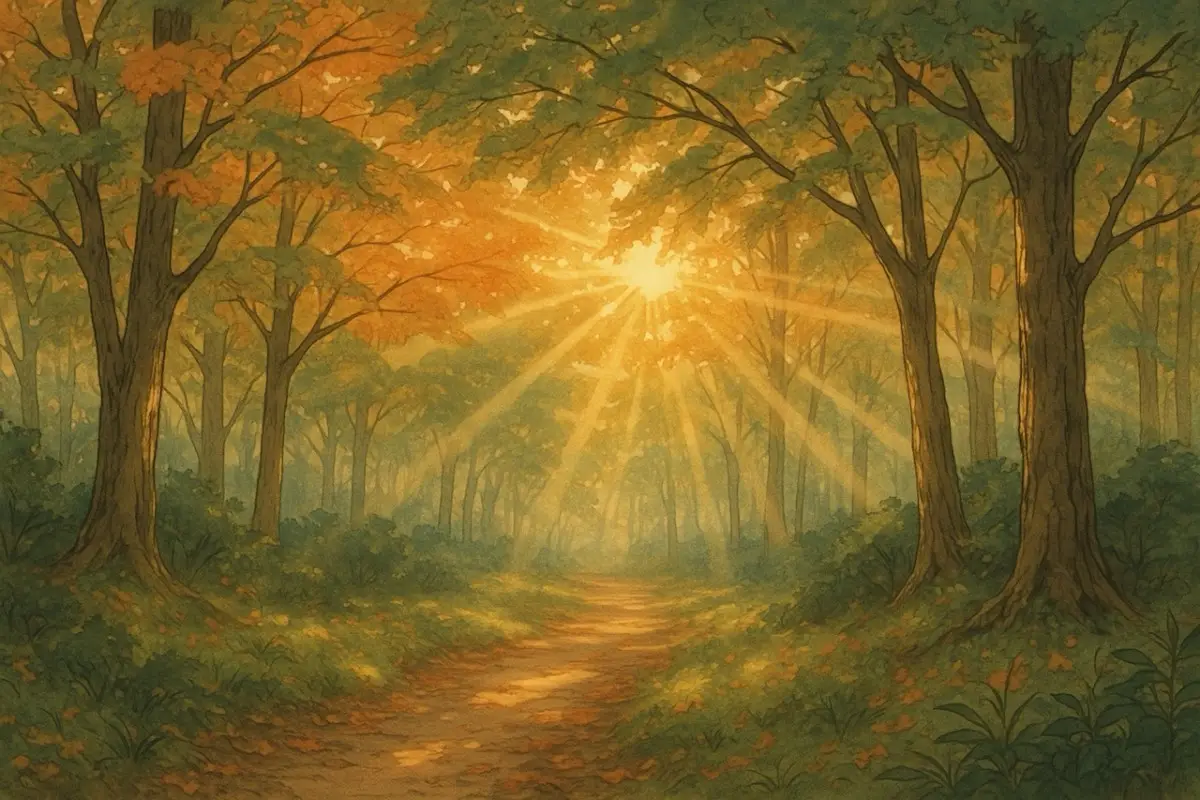
One of the most poetic and intriguing terms in Japanese is Komorebi (木漏れ日). It names a scene many people already know: sunlight that filters through leaves.
Komorebi refers to the sunlight that passes through the leaves of trees, creating luminous patterns on the ground. The kanji already pack the trees, the leak, and the sun into that one noun.
Contents 8
The Origin and Meaning of Komorebi
The word Komorebi is composed of three kanji. 木 is read ko here, the bound form of ki, "tree." 漏れ (more) is the stem of moreru, "to leak" or "to come through." 日 is hi, "sun" or "sunlight," which becomes bi by rendaku. Daijisen defines the compound as sunlight shining in through the branches and leaves of trees.
In Japanese culture, noticing that leak of light sits close to the appreciation of transient, imperfect nature, aligning with concepts such as wabi-sabi and mono no aware, which value the impermanence and gentle melancholy of fleeting things.
How to Appreciate a Komorebi?
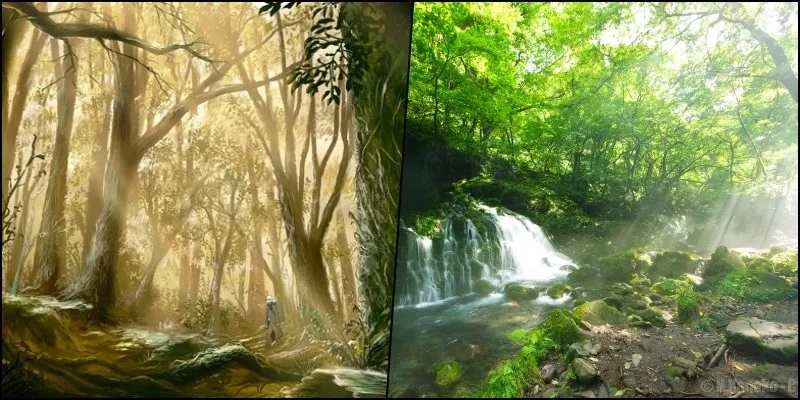
You can witness the phenomenon of sunlight hitting the leaves of trees at any time of the year or place. Komorebi is especially noticeable when the sun is low, and mist, steam after rain, or smoke can make the shafts look like a pale curtain.
Walking through a forest, komorebi can provide a fantastic experience that transforms simple trees into an inspiring and special landscape perfect for photographs and paintings. In spring that canopy may be full of blossoms, which is why a hanami walk is a natural time to look up through the leaves, though the light itself belongs to every season.
Incorporating Komorebi into Daily Life
Although deeply rooted in Japanese culture, the concept of Komorebi can be appreciated and incorporated anywhere in the world. Here are some ways to bring this philosophy into your daily life:
- Mindfulness Practice: Set aside moments to walk in nature, paying close attention to how light interacts with the environment around you.
- Interior Decoration: Use light curtains and indoor plants to recreate the effect of filtered light inside your home, promoting a calm and welcoming atmosphere.
- Photography and Art: Try to capture or portray scenes where natural light creates interesting patterns, developing a more attentive eye for the subtle details of the environment.
Komorebi in Japanese Culture and Art
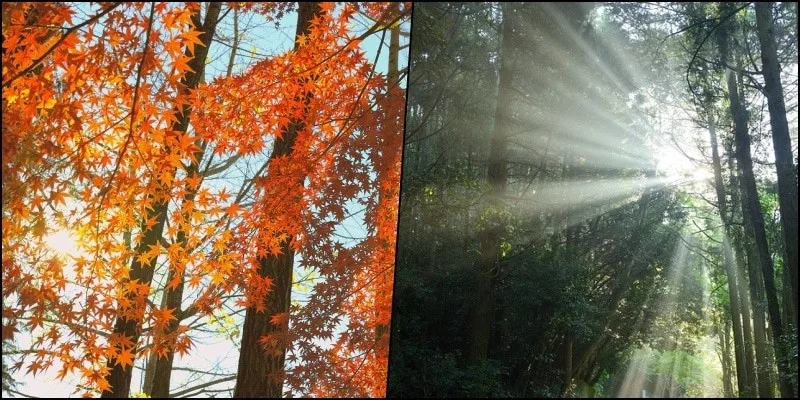
The influence of Komorebi permeates various forms of artistic expression in Japan, from literature to visual arts.
Literature and Poetry
Japanese poets have used the image for more than a century. The selected edition of the Nihon Kokugo Daijiten cites Wakayama Bokusui's 路上 (1911), with a dog sitting in the shade of komorebi. Modern haiku can still evoke that light for subtle emotions and moments of introspection, though saijiki do not treat こもれび as a kigo: the scene can appear in any month, so a seasonal poem still needs another season word. The light filtered through the leaves becomes a metaphor for ephemeral feelings and the beauty found in the details of everyday life.
Visual Arts
In painting and photography, artists seek to capture the play of light and shadow characteristic of Komorebi. Techniques such as sumi-e (ink painting) use soft brushstrokes to suggest the lightness of sunlight, while photographers patiently wait for the moment when light perfectly passes through the leaves to capture the ideal scene.
Cinema
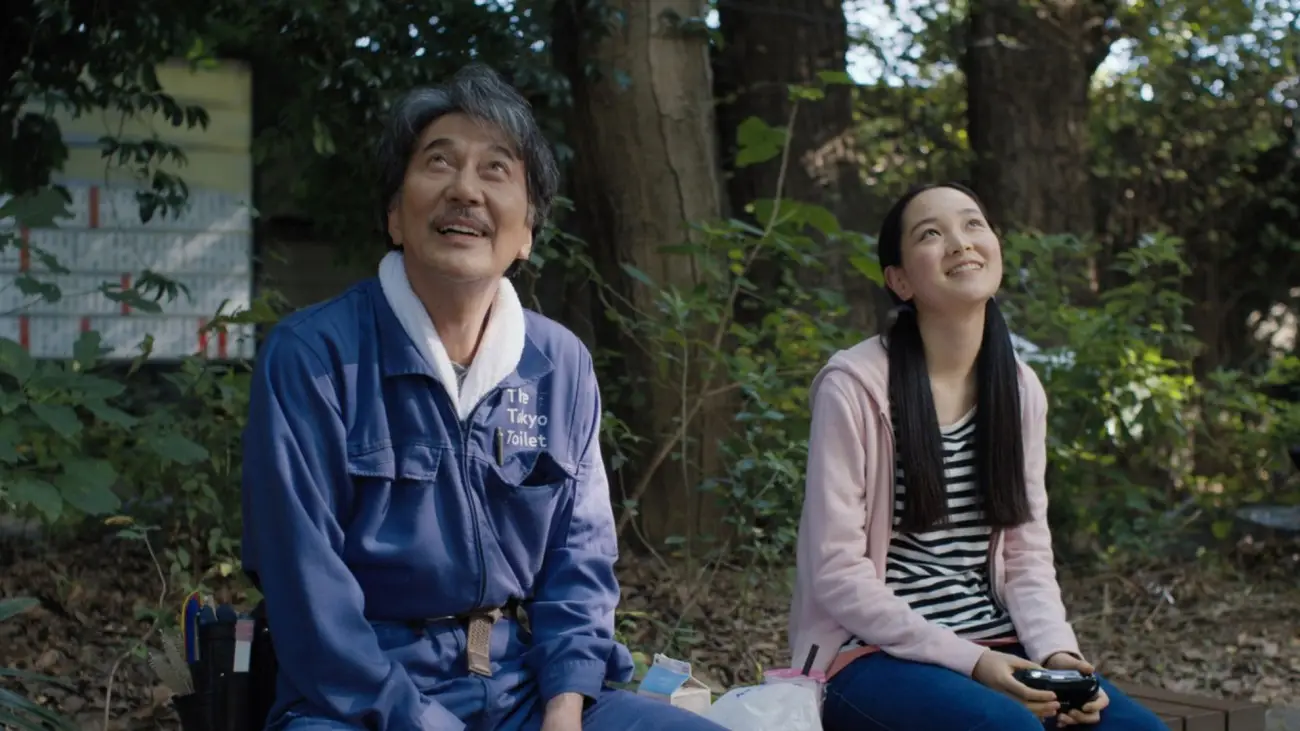
The concept of Komorebi also finds a place in cinema. In the film Perfect Days (2023), directed by Wim Wenders, Hirayama, a Tokyo toilet cleaner played by Kōji Yakusho, photographs the komorebi in the trees during his lunch breaks and treats that filtered light as part of a quiet daily routine.
Komorebi in Other Languages
Japanese can name this scene with a single noun, while English usually needs a phrase. Dappled sunlight, sunlight filtering through the trees, or sunbeams streaming through the leaves all get close; none of them is a dedicated noun the way komorebi is. That is why the word often appears in lists of words that only exist in Japanese.
In Japanese, the broader word for sunshine is youkou [陽光], which can be translated as sunshine or sunlight without pointing at the trees.

Have you ever been in a forest when the rays of light penetrated the leaves and formed those beautiful images from the article? What do you think about the Japanese language having a specific word for that?
The word is useful even outside Japan: it gives a name to a leak of sun you may already have walked through, and a reason to keep looking when the patches move.







Community
Comments
0 comments
There are no published comments in this language yet.
Send comment