

Kojin Jigyo (個人事業) is the Japanese term for a sole proprietorship, a business run by an individual without a separate legal entity. Freelancers, photographers, designers, consultants, teachers and small shop owners often work this way, simply by notifying the tax office.
Getting started is simple, but the liability is unlimited. This guide explains how registration works, which tax rules apply, what you can deduct and where the limits of this business form are.

Contents 14
What is Kojin Jigyo?
Kojin Jigyo literally means individual business. It describes the economic activity of a natural person, in contrast to a corporation, where a separate legal person is created.
The owner and the business are not legally separated. That makes founding easy, but it also means business debts fall on personal assets.
Difference from corporations
Setting up a Kabushiki Kaisha or a Godo Kaisha requires capital, notarisation and commercial registration. With Kojin Jigyo those steps do not apply.
What you give up is limited liability. Taxation also differs: the profit of a sole proprietorship is taxed as personal income, while a corporation pays corporate tax on its profit.
Who works as Kojin Jigyo?
The form is common among freelancers: translators, IT specialists, photographers, graphic designers, teachers, consultants and tradespeople. Small shops and restaurants also use it before incorporating.
Many Japanese people start a small side business while keeping a salaried job. The employment contract has to be checked, because some employers require approval for side work or restrict it.
Registering with the tax office
When you start working independently, you file the notification of commencement of business, called Kaito Todoke (開業届), within one month. The form goes to the local tax office.
This notification is not a permission. Some industries need additional licences, for example food service, construction or certain services. The address where the activity takes place must also be declared.
The blue tax return
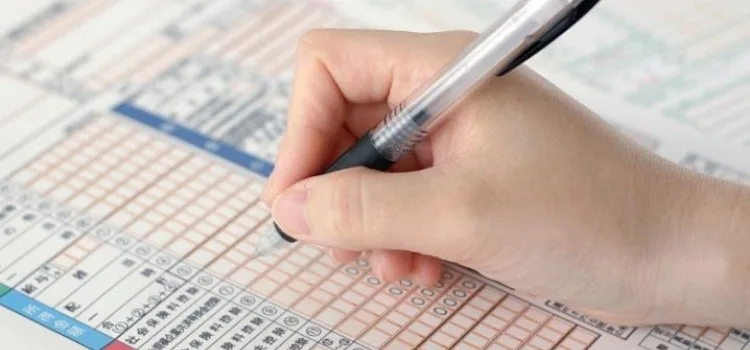
Filing the blue return application (Aoiro Shinkoku) brings tax advantages. The application must be submitted within two months of starting the business; anyone who starts in January or before mid-February can file by 15 March of that year.
The main benefits are a special deduction of up to 650,000 yen, loss carryforward for three years and simplified bookkeeping. The full deduction requires double-entry bookkeeping.
Bookkeeping and receipts
Bookkeeping is mandatory even without the blue return. Expenses must be supported by receipts, and all income has to be recorded. Records are kept for several years.
You can do the books yourself, hand them to a tax accountant or use software. Blue return filers must follow the Japanese account rules and submit the return on time.
Business expenses and a home office
All expenses necessary for the business reduce taxable profit. These include equipment, a camera or computer, specialist books, office supplies, travel and professional association fees.
For a home office, costs are allocated by floor area. The same principle applies to electricity, phone and internet when they are used partly privately and partly for work. Flat estimates are not accepted.
Consumption tax and invoices
Consumption tax is not an issue for small businesses at first. Once taxable annual sales exceed 10 million yen, a business generally becomes liable for consumption tax. Special rules ease the transition.
Since October 2023 the invoice system has applied in Japan. Registered qualified invoice issuers put a registration number on their invoices. For small operators registration can be voluntary, but business clients may ask for it.
Income tax and social insurance
Profit from Kojin Jigyo counts as personal income and is assessed under the progressive income tax. A local inhabitant tax is added on top, calculated by the municipality.
Social insurance is a separate matter. Self-employed people usually pay into the national pension and the national health insurance. Those who may stay in an employer plan often save on contributions.
Hiring employees
A sole proprietorship may employ people. Once staff are hired, obligations arise for employment insurance, workers accident insurance and, depending on size and hours, social insurance.
Employment contracts and payroll follow Japanese rules, and registrations go through the labour and social authorities. Anyone hiring for the first time should get advice and check the current forms.

Visa and residence status
For foreigners, the tax registration is not the same as a residence status. The activity must be permitted, for example through permanent residence, a spouse status or a work status with permission for the side activity.
Running a business in Japan as a foreigner requires the Business Manager status. It asks for capital, an office and a business plan. The requirements were tightened significantly in 2025, so check the current information from the immigration services.
Risks and limits
The biggest risk is unlimited liability. Loans, lease contracts and supplier agreements can reach personal assets. A corporation protects against that, but costs more to set up and maintain.
There is also the personal workload. Bookkeeping, taxes, clients and sales all sit with one person. Anyone who underestimates the administration falls behind and risks back payments.
Common mistakes
Many people register too late or skip the blue return even though they meet the rules. Others claim private costs as business expenses without documenting the allocation.
Another mistake is assuming the registration creates a residence status. It does not. Anyone selling abroad or hiring staff also has to check consumption tax and labour rules.
Conclusion
Kojin Jigyo is the lightest way into self-employment in Japan. No capital, no notary and no commercial register, but full liability and a lot of personal responsibility for taxes and bookkeeping.
For freelancers and small businesses the form fits well. Those who grow, hire staff or bring in investors later consider switching to a corporation. Knowing the rules saves money and avoids back payments.
Further reading: the guide to starting a business in Japan, the explanation of the Kakutei Shinkoku tax return, the overview of Shotokuzei income tax, the list of taxes in Japan and the article on living in Japan without Japanese ancestry.




Community
Comments
0 comments
There are no published comments in this language yet.
Send comment