

The dream of visiting the land of the rising sun often hits the same wall first: the flight ticket. Is a ticket to Japan always expensive? Not always—but the number on a search screen rarely tells the whole story until you add departure city, season, and which airport you land at.
What looks like a bargain can still leave you with a long layover, a transit rule you did not expect, or an expensive transfer from Narita after a night flight. That is why the fare alone is a weak guide.
Contents 5
How much does a ticket to Japan cost?
There is no single “correct” price. A round-trip economy flight from major Western hubs (United States, Canada, parts of Europe) often lands roughly in the $700–1,500 USD range when you book outside peak weeks. West Coast departures can dip lower on good sale days; East Coast and many European cities tend to sit higher. Airline, layover count, baggage rules, and how early you book all move the number.
Treat those figures as a planning band, not a promise. Peak sakura weeks, Golden Week, and the Christmas–New Year window regularly push fares well above the mid-range. Ultra-low teaser fares you see on aggregators often apply to limited dates, multi-stop routes, or basic economy with almost no flexibility.
How much does a one-way ticket to Japan cost?
In theory, a one-way ticket should cost about half of a round trip. In practice, that rarely happens. Many carriers price one-way Japan routes closer to 60–90% of the return fare, so you will often still see something like $400–900+ USD for a usable one-way, depending on origin and season.
If your plan is to stay in Japan for work, study, or another long-term purpose, get the right visa situation clear before you pay for non-refundable tickets. Consulates often ask for flight reservations during the process, but a paid ticket before approval can become an expensive mistake. For the broader paperwork landscape, see our guides on Japanese visa types, how long the trip to Japan takes, and how to handle jet lag after the long haul.
What is the cheapest time to travel to Japan?
When is the cheapest time to fly to Japan? Shoulder periods often win: late September through November can be friendlier on both airfare and hotel rates, and the weather is usually pleasant for walking cities. Early winter outside the New Year rush is another window many travelers watch. Exact “cheapest month” claims change by departure city and year, so compare a few flexible dates rather than trusting a single percentage off the rest of the year.
Autumn is also a strong reason to go beyond price alone. Leaves, mild days, and slightly thinner crowds make Japanese autumn (aki) one of the most comfortable seasons for a first trip. Mid-November starts to cool; real snow is more of a December story in most tourist cities.
The most expensive stretch for many routes is still late March through early May, when spring and cherry blossoms pull global demand. The scenery is spectacular—and so are hotel rates and crowded temple paths.
Year-end holidays are rarely ideal if budget is your priority. Tickets climb, hotels fill early, and major sights stay packed. If you must travel then, book earlier and accept that you are paying for the calendar, not just the seat.

Transit and flight layovers before Japan
Most long-haul flights from the Americas and many other regions still involve at least one stop—often in the United States, Canada, Europe, or the Middle East. The cheapest-looking itinerary is not always the simplest one to use.
Pay attention before you buy. Routes through the United States can look attractive on price, but many nationalities need an ESTA or other transit permission even if they never leave the airport. Missing that detail can cancel the “cheap” ticket at the gate.
Some hubs—parts of Europe and places such as the United Arab Emirates—are smoother for many passports on pure airside transit, yet the rules still depend on your nationality and whether you change terminals or collect bags. Always check the transit country’s entry rules for your passport, not a generic blog comment. Directer itineraries cost more on paper and sometimes less in stress.
Which airport in Japan should you choose?
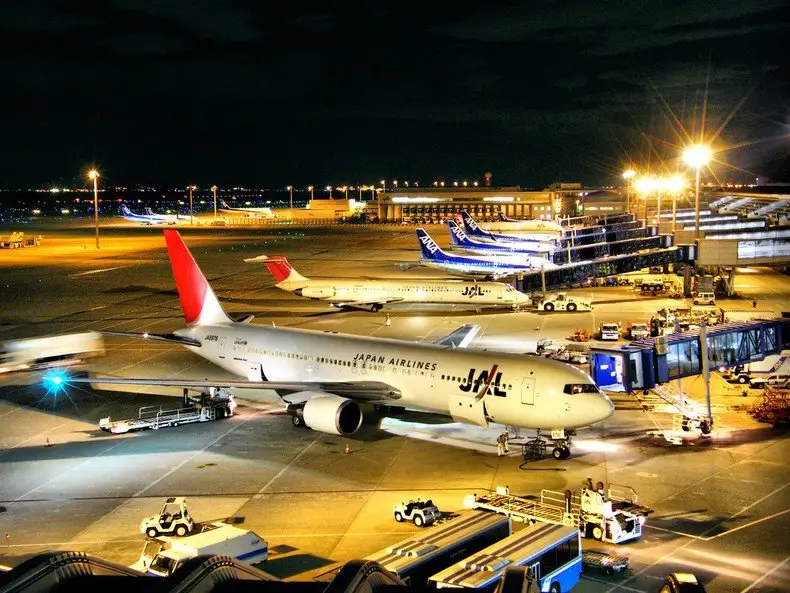
Many people still book Narita (NRT) because international deals often surface there first. It is a solid airport—but it sits far from central Tokyo. After landing, you may spend around 1–1.5 hours and often close to ¥1,500–3,000 to reach a hotel by train or bus, depending on the service and destination ward.
Haneda (HND) is usually the calmer choice for Tokyo stays. It sits much closer to the city. With a good connection to the Yamanote line and other city rails, many travelers reach central neighborhoods for under a few hundred yen, and often under ¥700 for common routes—plus travel times closer to 30–40 minutes instead of a long airport rail grind.

If the airfare gap between Narita and Haneda is small, Haneda frequently wins once you add transfer time and jet lag. If Narita is hundreds of dollars cheaper, the extra train ride can still be rational—just budget for it.
Another strong option is Kansai International (KIX) for Osaka. Personally, I prefer Osaka as a base more than Tokyo for some trips: it sits closer to Kyoto, Nara, and the path toward Hiroshima, and the city’s food-and-street energy is hard to beat. Flying into one city and out of another (Tokyo in, Osaka out, or the reverse) can also save a backtrack day without always raising the ticket price much.
In short: the ticket price is only the first line on the budget. Season, layover rules, and the airport you choose decide how expensive that “cheap” seat really feels when you finally step into Japan.




Community
Comments
0 comments
There are no published comments in this language yet.
Send comment