

After Japan held new foreign entries shut through a long stretch of the pandemic, the question in 2022 was direct: Will it be possible to travel to Japan this year? I hoped the tourist route would open again before that year ended. Other people were already counting on 2023. The tourist route did reopen in October 2022, after a winter in which new foreign entries were stopped. A short stay now follows the passport exemption.
Contents 4
Who the Omicron freeze stopped
On November 29, 2021, the Cabinet Secretariat and the ministries of Justice, Foreign Affairs, and Health published an emergency response to the Omicron variant, then labeled B.1.1.529. From 0:00 a.m. Japan time on November 30, foreign nationals were suspended from newly entering Japan. The notice applied that suspension to people who already held a visa. Anyone who had left a foreign country before that hour, and landed in Japan later, was outside the suspension.
The same notice handled returnees separately. Japanese nationals and other people allowed to come back faced quarantine. Returnees and entrants were put under 14 days of quarantine, including people who had been vaccinated. A measure dated from November 26, which would have raised the daily cap to about 5,000 entrants, was suspended. From December 1, 2021, the cap was about 3,500 people a day. The notice called the package a one-month precaution. Tourist entries had not resumed by December 2021.
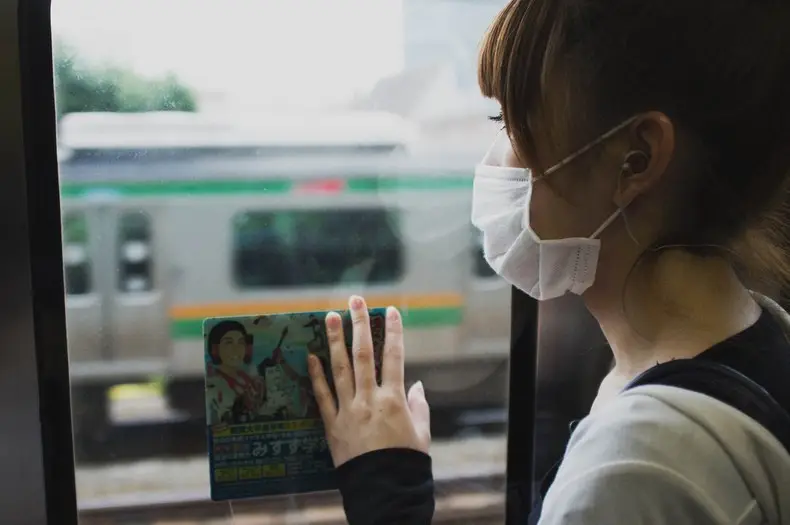
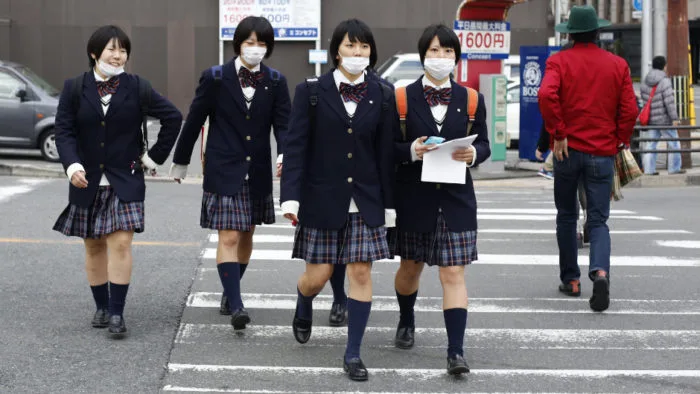
The photographs below are from Japanese trains and school streets in 2016 or earlier. A mask in them was already part of an ordinary outing. They show neither an arrival counter nor the paperwork in the November 2021 notice.
When visa-free tourism resumed
At 0:00 a.m. Japan time on October 11, 2022, visa-exemption arrangements resumed. Visas issued before December 2, 2021, which the border measures had suspended, could be used again when they were still in date. The Foreign Ministry's note of November 7, 2022, on the phased reopening, says the organization receiving someone in Japan no longer had to file an Entrants, Returnees Follow-up System application for a new short stay for tourism, business, or employment, or for a long stay. The limit that kept foreign tourists on package tours was lifted at the same time. Visiting friends, and transiting through Japan, were allowed again.
The health document outlasted the visa freeze. At 0:00 a.m. Japan time on April 29, 2023, travelers and returnees were no longer required to submit either a negative COVID-19 test taken within 72 hours before departure or a valid certificate of three vaccine doses. The Foreign Ministry's border page marks that pair as ended. The 14-day quarantine in the November 2021 notice, which covered vaccinated people, belongs to the freeze described there.
What a short stay depends on now
The Foreign Ministry's exemption list, dated September 1, 2025, names 74 countries and regions. On most rows the period granted at landing is 90 days, which is the period for the United States, Canada, Australia, and Brazil. Since September 30, 2023, Brazil's exemption applies only to an ePassport that meets ICAO standards. Without that passport, the Ministry asks the traveler to get a visa in advance and says entry can be refused.
Indonesia and Thailand are listed for 15 days, and Brunei and Qatar for 30 days, with further passport conditions on several of those rows. A few arrangements run up to six months in total, while the permission given at landing is still 90 days. Travelers in that smaller group, including people from the United Kingdom, apply to a regional immigration bureau before the first 90 days expire. The note under a country's name can matter as much as the name itself.
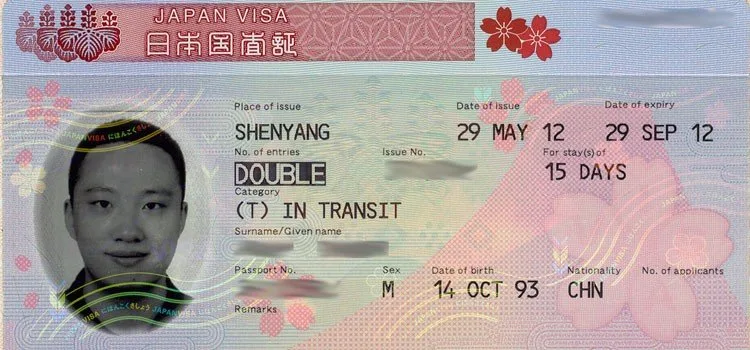
Work and study sit outside the short-stay exemption. Those routes still start with a certificate of eligibility, and the visa category has to match the reason for the stay. The tourist freeze did not replace that step, and the reopening left it in place.
Leaving Japan has its own charge. National Tax Agency guidance current as of July 1, 2026 sets the international tourist tax at 3,000 yen for each departure. The airline or shipping company normally adds it to the ticket. The tax is charged on the way out by ship or plane regardless of the reason for the trip. Children under two are exempt, and so is a connecting passenger who departs within 24 hours of entry. Certain carriage contracts concluded before July 1, 2026 keep the earlier 1,000 yen when the departure is on or after that date.
On May 29, 2026, the Diet enacted a revision of the Immigration Control Act. It was promulgated on June 5, 2026 as Act No. 32 of 2026. The Immigration Services Agency says the revision creates JESTA, an electronic system for travel authorization, and raises the ceiling on some fees for a change of residence status. The Agency's page explains the amendment and does not provide an application. For a visa-exempt short stay, the instruction the Foreign Ministry still posts is the exemption list.
What is left of the 2022 question
The hope for a tourist trip in 2022 matched the month visa-free travel returned. The test or three-dose certificate lasted into the spring of 2023. What still changes a booking is the passport row, including the note on the passport type, the reason for the stay, and the 3,000 yen international tourist tax on the way out.




Community
Comments
0 comments
There are no published comments in this language yet.
Send comment