
In Japan, October 31 has little to do with collecting sweets: it means wearing a costume, holding a camera and stepping onto a stage. The country did not adopt the American version of October 31; it rebuilt it: fewer ghosts, more performance, more street, more self-staging.
Contents 6
How Halloween arrived in Japan
The holiday did not grow out of religion but out of retail. In the 1990s, theme parks and department stores discovered the date as a seasonal campaign, with decorations, parades and merchandise. Tokyo Disneyland was among the first to build a Halloween programme of its own; shopping centres, chains and whole districts followed. In the 2010s the event shifted to adults: it became an occasion to dress up and be seen.
For context: Halloween is not a public holiday. Schools and offices work as usual, October 31 sits in no traditional calendar, and it has nothing to do with Obon, the festival for the dead. What remains is an entertainment format with a clear commercial engine behind it.
Shibuya: stage and problem zone
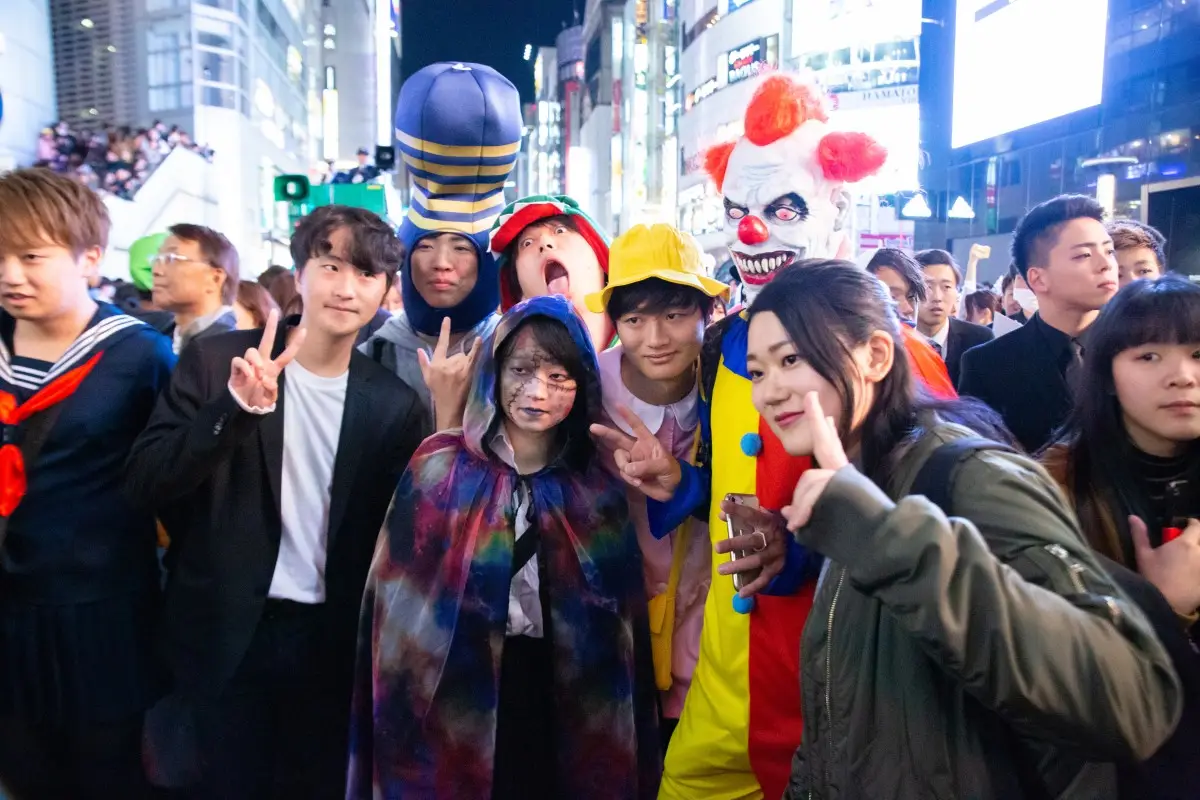
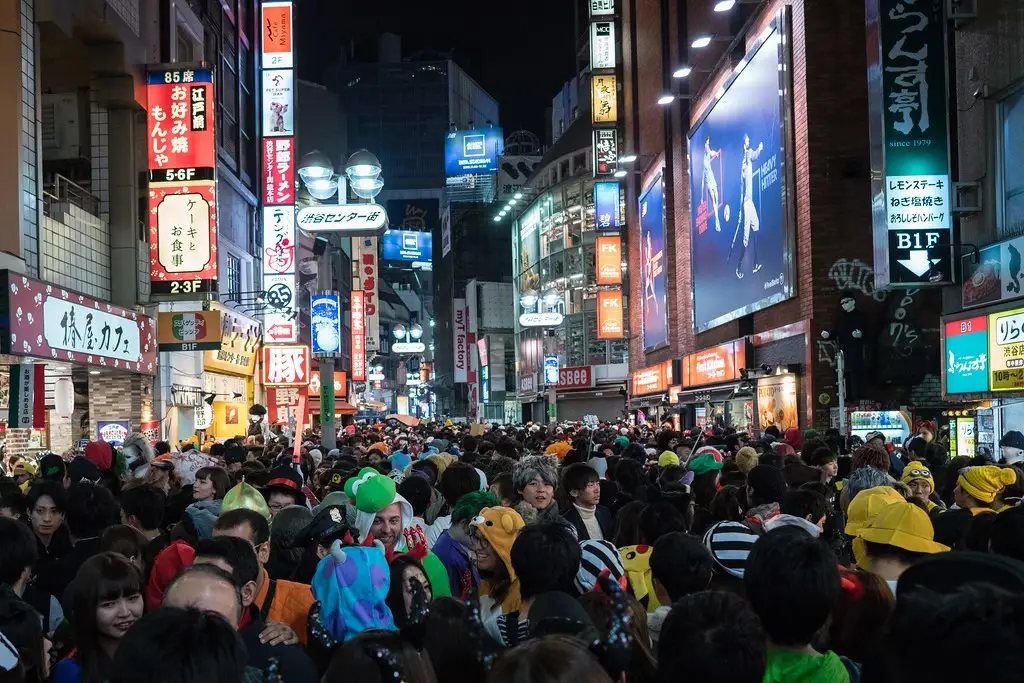
For years, the streets around Shibuya Station filled at the end of October with costumes made for a photograph: heavy make-up, contact lenses, props, whole groups sharing a theme. The crossing became a stage with no director and no safety plan.
That was the problem. After crowding, litter and incidents, the ward tightened the rules: since 2019 street drinking is banned around Halloween, later joined by road closures and appeals not to travel in. In 2023 the city explicitly asked people not to celebrate in Shibuya. Anyone who goes now finds a commercialised, controlled setting, while other districts, clubs and theme parks offer a calmer crowd.
Costume culture: from kawaii to grotesque
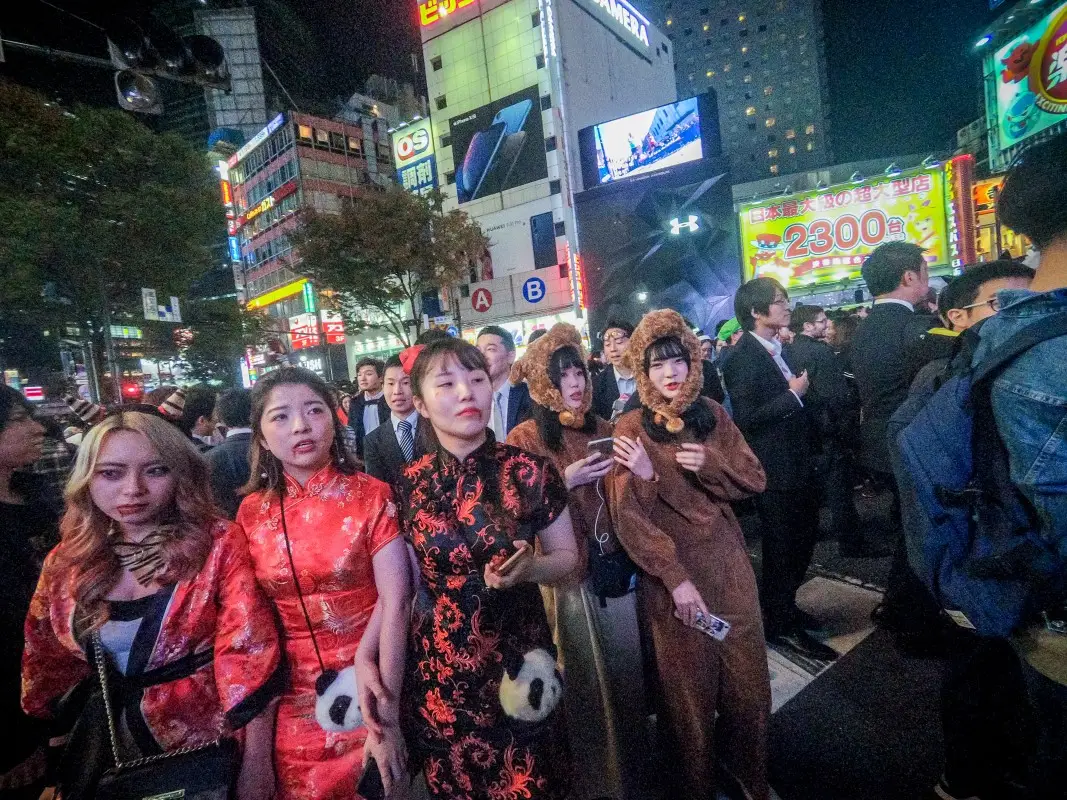
Dressing up is a discipline in Japan, and Halloween is the night it can happen without an excuse. Some people plan for weeks, sew, mould latex, rehearse movements. The range runs from cute to disturbing: an anime character, a zombie with a professional mask, an everyday scene turned into a joke.
Look closely and you see the same mechanism as in cosplay: identity as costume, costume as comment. Shops for wigs, lenses and special effects extend their hours in October, and photographers offer shoots in the district. Halloween is therefore also a trade for creatives who live on cosplay work the rest of the year.
Retail, cafés and theme parks
From September, pumpkin pastries, limited drinks and packaging with grinning ghosts fill the shelves. Convenience stores, cafés and even pharmacies join in, because seasonal goods sell. For many families, a walk through the decoration aisle is the real contact with Halloween.
The big parks play the season out over weeks. Tokyo Disneyland runs parades with characters in a "scary" version and decorates its attractions; Universal Studios Japan in Osaka brings out Halloween Horror Nights with mazes, zombie performers and special effects. Anyone staying a week can choose between street party and park, and notice that both versions serve the same need: to experience something conspicuous together.
What makes Japanese Halloween different
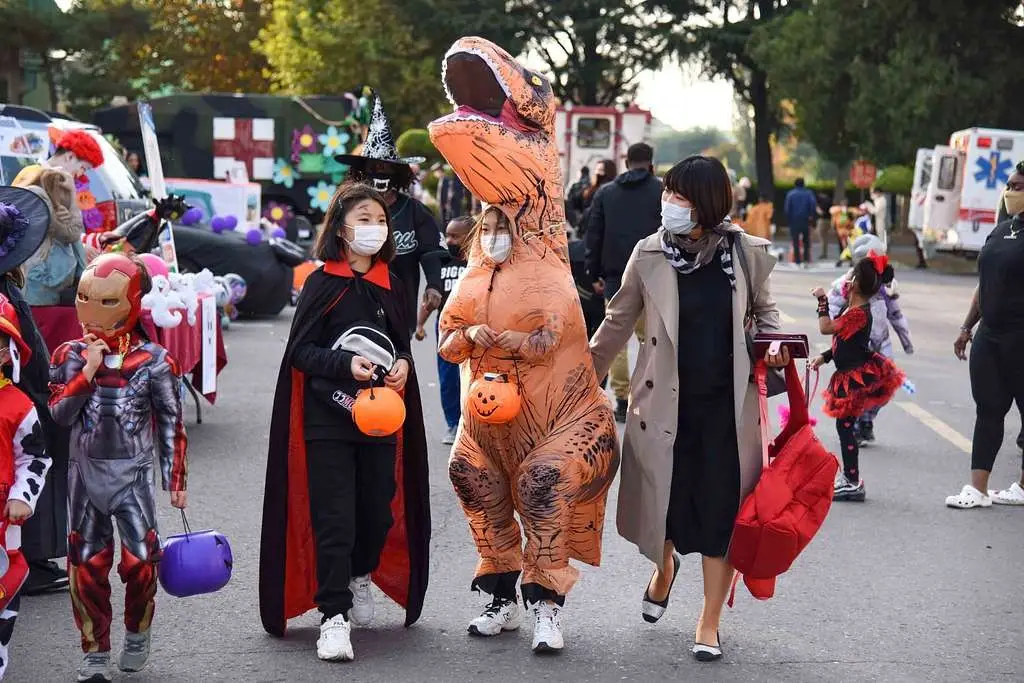
In the United States, ringing strangers' doorbells is part of the deal. In Japan that part is missing, for practical reasons: flats are small, neighbourhoods are anonymous, and a festival of children knocking on doors has no grown foundation. Instead, adults celebrate in groups, in districts, in parks. That also explains the elaborate costumes: whoever is not asking for sweets but being seen invests in appearance.
A second difference is the treatment of fear. Japan has its own tradition of ghost stories, told in summer when the point is to feel a chill. Halloween stays separate from that. What runs through the streets in October is pop culture: film quotes, anime characters, memes. The fright is a motif, not a belief.
What lasts
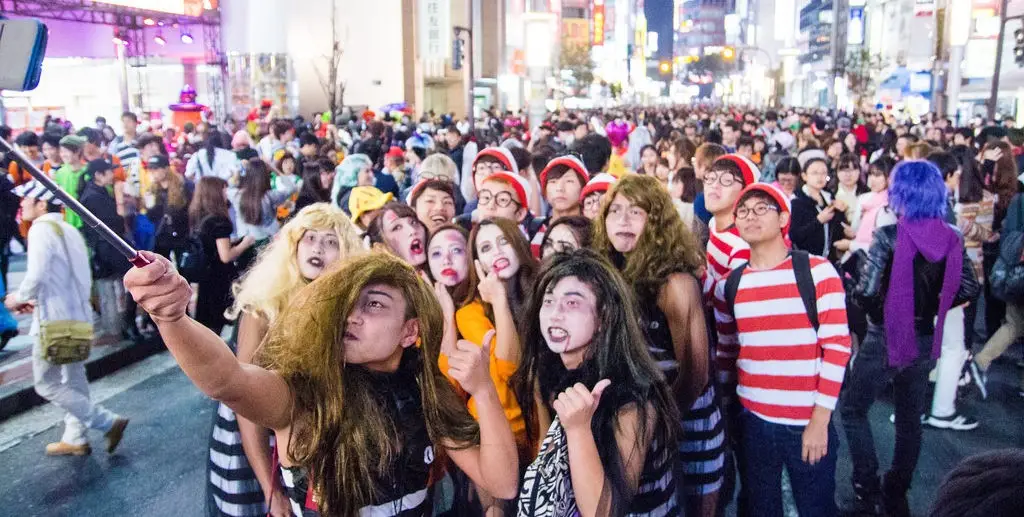
October 31 will keep growing in Japan, but no longer as a wild night in Shibuya. The rules calmed the centre and the celebration moved: into theme parks, clubs, neighbourhoods and private parties with a clear theme. What remains is a Japanese habit, taking foreign symbols and rebuilding them until they fit everyday culture. Halloween is the clearest example: not a religious feast, not a children's tradition, but an invitation to be someone else for one night. Walk the same streets in November and you barely recognise them, and that is exactly the appeal.
Further reading: Disney in Japan, what cosplay is, kawaii and its oddities and Christmas in Japan.

Community
Comments
0 comments
There are no published comments in this language yet.
Send comment