
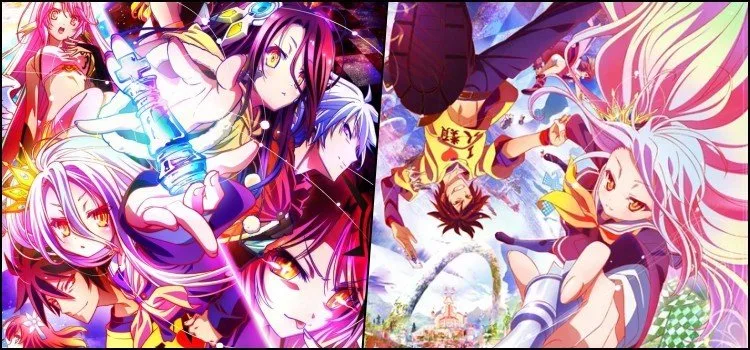
No Game No Life (NGNL) is a Japanese light novel created by the Brazilian writer Yuu Kamiya (Thiago Furukawa Lucas). The story follows two genius siblings who are hopelessly addicted to games and end up in a world where every conflict is resolved by playing.
The series was a major hit, earning an anime adaptation, a manga, and even a film. In this article we will take a look at some interesting trivia, easter eggs, and secrets about No Game No Life. As the text is full of curiosities, it may contain spoilers.
Contents 4
Curiosities about the work
The author mentioned in volume 2 that what became the second chapter of the first volume was originally meant to be the second chapter of the second volume. He did not realize that Japanese light novels were usually much shorter, and was reprimanded for trying to publish a 900-page book. He has also said that part of the early volumes of NGNL were written in Brazil.
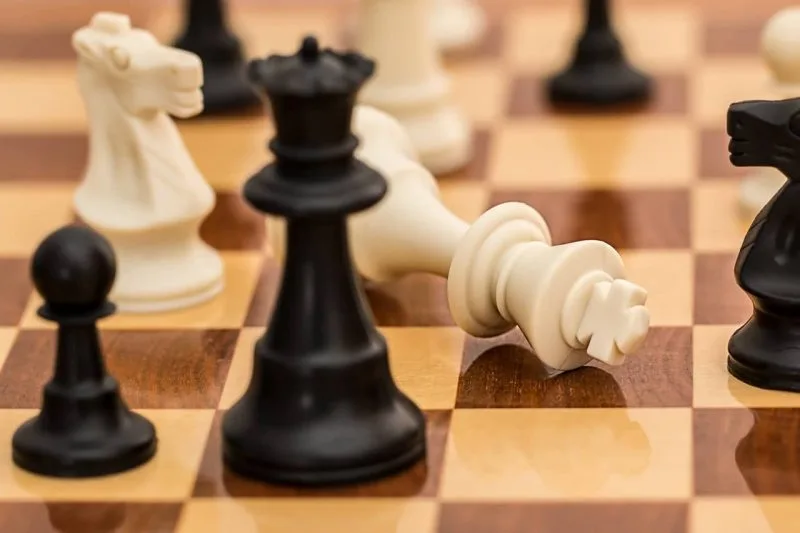
On the covers of the light novels, only Shiro in volume 1 and Tet in volume 6 hold a black chess piece. In every other released volume, the piece is white. The author was once accused of plagiarizing a fan art for the cover of volume 8, simply because of a similar pose.
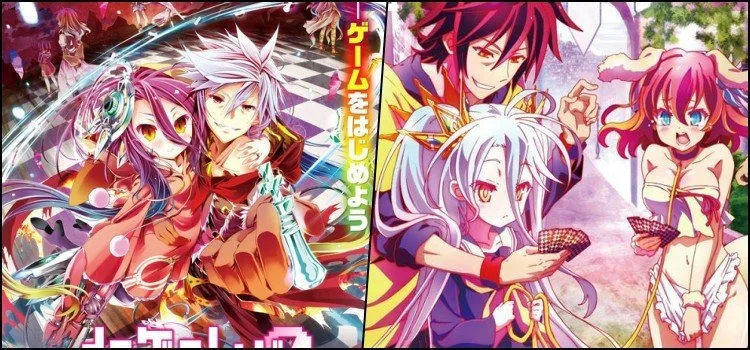
Volume 6 of the light novel tells the story of Riku, a name that means "land", which contrasts with the name Sora, meaning "sky". The protagonist Riku asks an Ex Machina her name, and she answers Schwarzer, meaning "black one" in German, which contrasts with Shiro, meaning "white". They later settle on Schwi. This volume was actually supposed to be volume zero of the series, the basis of the film No Game No Life: Zero.
The voice actor of Sora also voiced Sorata Kanda, and the voice actress of Shiro voiced Mashiro Shiina, both characters from the anime Sakurasou no Pet na Kanojo. Coincidence? Maybe not.
- The voice actress of Shiro, Ai Kayano, also sings the ending theme "Oracion".
- The voice actor of Sora is Yoshitsugu Matsuoka, famous for voicing Kirito in Sword Art Online.
- Did you know that the author of No Game No Life published a short hentai doujin?
- Mashiro Hiiragi, the artist behind the manga adaptation, is Yuu Kamiya's wife.
- The special edition of the No Game No Life Blu-ray came with a bonus: Shiro's panties.
Curiosities about the world
There are reports that an Imanity was the one who proposed the ten rules during the Great War, and the same Imanity was responsible for the death of Artosh. Judging by Azriel's age, the war probably lasted around 20,000 years. Volume 8 of the light novel states that 54,355,146 hours have passed since the end of the war, the equivalent of about 6,200 years.
Japanese does not distinguish L and R the way English does, and it has no native V. That is why "Stephanie Dola" is pronounced "Stephanie Dora" in the anime.
- The library shown in No Game No Life is inspired by the Library of Congress in Washington.
- The link that Tet sends Sora at the beginning of the anime leads to a real online trivia game.
The names Sora (空, a character that can mean "sky" or "empty") and Shiro (白, "white") already carry a puzzle. The author once said their last name is "nai", which can be read as "there is none". To make things even more mysterious, the two refer to themselves as Kuuhaku (空白), a word that literally combines their names and means "blank" or "empty".
- The name Tet is the ninth letter of the Hebrew alphabet and can also be a nod to the tetragrammaton.
- Jibril's ultimate ability is called "Heaven's Strike", powerful enough to destroy entire countries, but every time she uses it, her body regresses to that of a child.
- No Game No Life makes references to many other games and anime, including Persona 4, Neon Genesis Evangelion, Steins;Gate, Yu-Gi-Oh!, Akiba's Trip, Thermae Romae, and Fate/stay night.
What does "Aschente" mean in No Game No Life?
Whenever a game begins in No Game No Life, the participants must declare "Meiyaku ni chikatte Aschente" (盟約に誓って、アッシェンテ), where meiyaku means "pact" or "oath" and chikatte means "I swear". But what does "Aschente" actually mean?
It is a word that Riku coined to remember the friends who died during the Great War. It seems to be an invented term possibly inspired by the English word "ascend", the idea of rising, reaching the highest point, touching the sky.
It is worth noting that the ten rules created by Tet were inspired by the six rules established by Riku Dola and Schwi Dola before the end of the Great War. The original word used at the time was "Aschento", not "Aschente".
The 16 races of No Game No Life
The 16 races are known as Exceed, or Ikushīdo (十六種族) in Japanese, which literally means "16 races". They are divided into two groups: the first six are considered superior and called seimei (生命), meaning "life"; the remaining ten are called seibutsu (生物), meaning "creatures".
Many of the race names are clever wordplays: "God" is simply called "God", not "Kami" in Japanese; "Seiren" is a play on "sirens"; "Dhampir" nods to vampires; "Dragonia" evokes dragons; and "Flügel" means "wings" in German.
| Position | Name | Equivalent | Japanese | Race Emblem |
|---|---|---|---|---|
| 1 | Old Deus | God | 神霊種オールドデウス | Pawn |
| 2 | Phantasma | Ghosts | 幻想種ファンタズマ | Pawn |
| 3 | Elemental | Elements | 精霊種エレメンタル | Pawn |
| 4 | Dragonia | Dragons | 龍精種ドラゴニア | Pawn |
| 5 | Gigant | Giants | 巨人種ギガント | Pawn |
| 6 | Flügel | Angels | 天翼種フリューゲル | Queen |
| 7 | Elf | Elves | 森精種エルフ | Tower |
| 8 | Dwarf | Dwarves | 地精種ドワーフ | Bishop |
| 9 | Fairy | Fairies | 妖精種フェアリー | Pawn |
| 10 | Ex Machina | Androids | 機凱種エクスマキナ | Bishop |
| 11 | Demonia | Demons | 妖魔種デモニア | Pawn |
| 12 | Dhampir | Vampires | 吸血種ダンピール | Knight |
| 13 | Lunamana | ?? | 月詠種ルナマナ | Tower |
| 14 | Warbeast | Beasts | 獣人種ワービースト | Pawn |
| 15 | Seiren | Mermaids | 海棲種セーレーン | Knight |
| 16 | Imanity | Humans | 人類種イマニティ | King |
I hope you enjoyed this dive into No Game No Life! Do you know any other curiosity about the series? Drop it in the comments, and share the article with friends.

Community
Comments
0 comments
There are no published comments in this language yet.
Send comment