
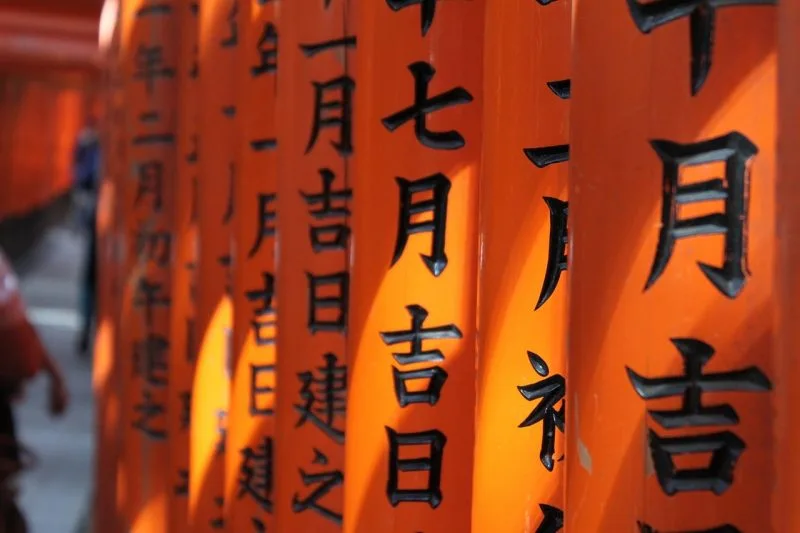
Have you ever wondered what a pictographic kanji is? How understanding the pictography of an ideogram can help learn Japanese or even Chinese? In this article, we will talk a little about the pictography of a kanji in the Japanese language. For those who are unaware, the ideograms used in Japanese originated in China and were simplified over centuries.
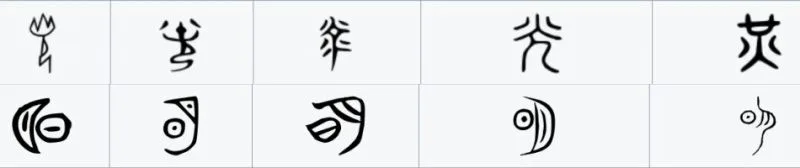
The earliest extensive records of Chinese writing are the oracle bone inscriptions of the late Shang period, around the 13th century B.C. Many Chinese and Japanese ideograms are, in fact, pictograms. That is, representations of images, drawings that represented the word and were simplified over time.
Some Japanese kanji are pictographic, thus representing some type of image that is visually similar to a real-life object. If we take this into account, it may be easier to learn the Japanese and Chinese languages.
Contents 3
Pictogram vs Ideogram
In Japanese, we call all of them kanji or ideograms, but there is indeed a small difference between pictographic kanji that can be called only pictograms. A pictogram is called shoukei [象形] where [象] means form or likeness and [形] means form and style.
An ideogram can be called shiji [指事] where [指] means to indicate and point, while [事] means matter, reason, and fact. In other words, a pictogram is literally an image, while an ideogram conveys the meaning of an idea. Ideograms are symbols that represent an idea and not an image.
A shiji-category ideogram can still convey a pictographic idea. For example, the ideograms for up [上] and down [下] are not pictograms, but they convey a very logical idea of an arrow pointing up and down.
Kanji Go Beyond Pictograms
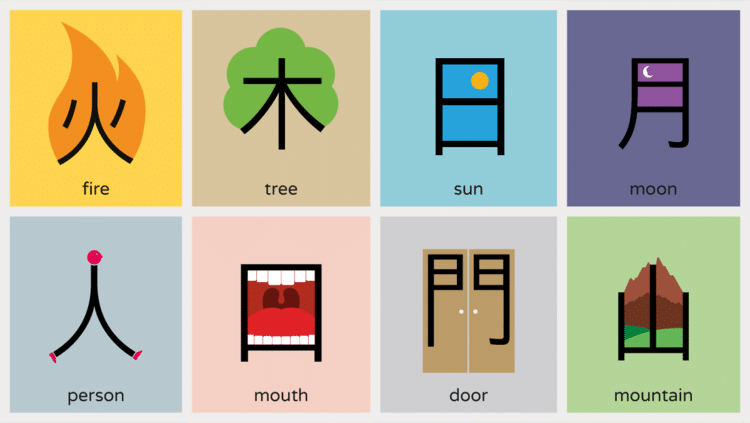
It is easy to look at a simple ideogram and see that it is a pictographic kanji (木火人). However, there are other ideograms that do not make much sense as pictograms (気言), but they all have a reason and a long history behind their representation. Others are combinations, as in the case of grove [林] and forest [森].
This pictographic concept of representing scenes and figures through complex symbols does not need to be entirely literal. The goal of the other ideograms is to express an idea through a symbolic form or alteration of pictograms. By knowing the pictograms, we will be able to understand the meaning of various ideograms even without knowing their readings or pictographic logic.
Knowing all the pictograms and the pictography of a Japanese ideogram will make our learning of Japanese and Chinese less tedious and more practical. Learning the pictograms also involves learning the radicals of a kanji, their writing order, and the numerous ideas and synonyms they want to convey.
The truth is that not every ideogram is a pictogram, but they all have some connection either by sound or by inheriting a pictographic radical. Most kanji are phono-semantic compounds. Some may not find it productive to learn the few existing pictographic ideograms, but knowing them will open the door to thousands of advanced level kanji that use pictograms in some part.
Pictographic Kanji Books
Even though our Roman alphabet is not a pictogram, many still use our letters to create books teaching children to learn words in a certain language. That often works better in Japanese and Chinese, because some ideograms or kanji are pictographic.
The RTK method (Remembering the Kanji) effectively uses the idea of pictography, even when the kanji is not a pictogram. Some use this pictographic method even to learn hiragana and katakana using real drawings as background. With this goal, I have highlighted the RTK method so you can take a look at it. Anyone who recognizes 木, 人, and 山 will see them later in compounds. The readings and the vocabulary remain the next step.


Community
Comments
0 comments
There are no published comments in this language yet.
Send comment