
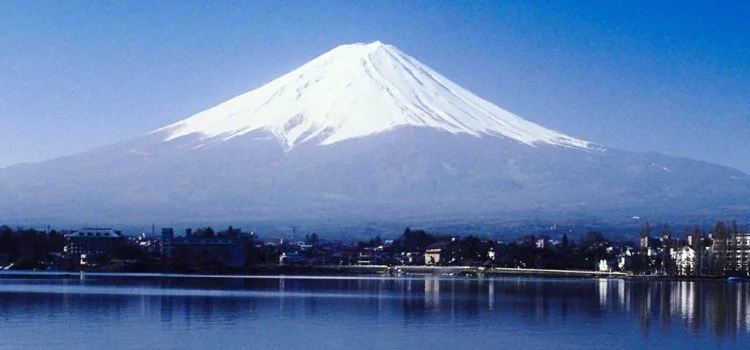
Ask someone “what time is it in Japan?” and the answer sounds simple: one zone for the whole country, nine hours ahead of UTC, no seasonal clock change. Then a TV guide says a show runs until 25:30, a train board lists arrivals after midnight on the same calendar day, and the picture stops looking like a plain wall clock.
Japan Standard Time is stable and nationwide — but daily life still bends the way hours are written, remembered, and expected. Here is how JST works, why schedules go past 24:00, how time used to be local and seasonal, and what that means when you plan a trip, a call, or a late dinner in Tokyo.
Contents 14
What time is it in Japan? Japan Standard Time (JST)
Japan uses a single national zone: Japan Standard Time (JST), in Japanese Nihon Hyōjunji (日本標準時). The offset is UTC+9 (the same as GMT+9 for everyday conversion). The legal meridian is 135° east — the line that passes through Akashi in Hyōgo Prefecture, long nicknamed Japan’s “town of time.”
There is no daylight saving time today. The whole country stays on UTC+9 all year, so you do not get a spring-forward or fall-back surprise when you convert meeting times. The same clock applies from Hokkaido to Okinawa: Tokyo, Osaka, Kyoto, Fukuoka, and Naha share one civil time.
Places that currently share UTC+9 with Japan include South Korea, North Korea, parts of eastern Indonesia, East Timor, Palau, and Russia’s Yakutsk zone. That is not the same as saying “Indonesia as a whole” matches Japan — most of Indonesia runs on UTC+7 or UTC+8.
When Japanese time goes past 24:00
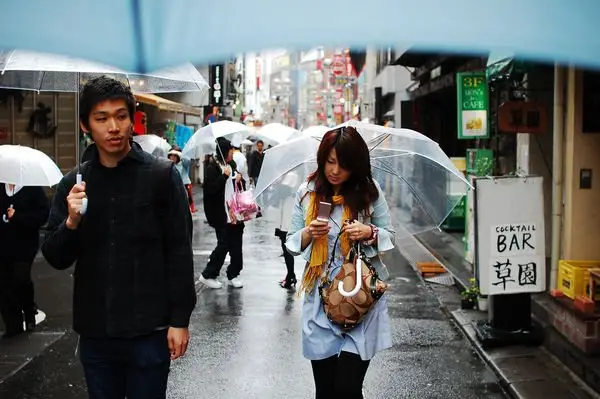
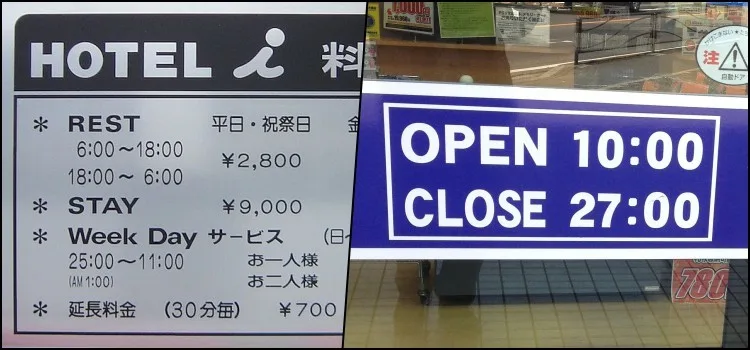
Japan uses both 24-hour and 12-hour writing in daily life. On TV guides, radio listings, theaters, some store hours, hotels, and even onsen schedules, times can continue past midnight as 25:00, 26:00, and so on. A show that starts at 21:00 and ends at 1:00 is often listed as 21:00–25:00 so the whole run stays on the same program day.
The same logic appears on late-night rail and event boards: keeping early-morning hours attached to the previous service day avoids the awkward “Sunday night at 2 a.m.” problem, when the calendar has already flipped. Other places with long business hours — including parts of the UK, Korea, Hong Kong, and China — have used similar “hours past 24” notation when services cross midnight.
A short history of time and clocks in Japan
Before the Meiji era (1868–1912), regions kept local solar time: noon was when the sun stood highest. Once trains and telegraphs linked distant cities, those small gaps became real schedule errors. Tokyo and Osaka sit far enough apart in longitude for roughly a 20-minute solar difference — enough to confuse arrivals when every town “owned” its own noon.
From 1888, Japan fixed a national standard on the 135° east meridian. In 1895 a second zone, Western Standard Time (UTC+8), covered Taiwan and parts of western Okinawa; that split ended in 1937, and the whole country returned to one central standard. During World War II, occupied places such as Singapore and Malaya temporarily used Japanese time and later reverted.
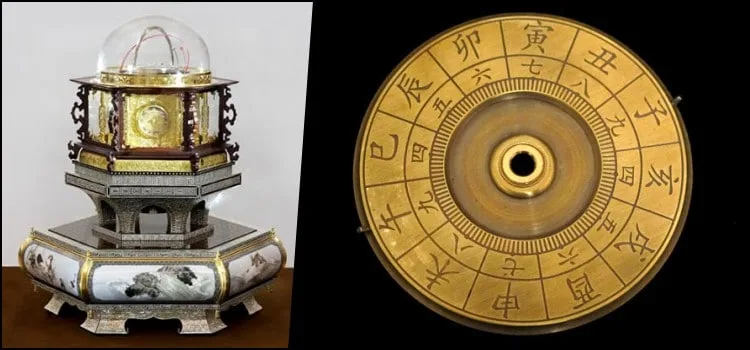
Clocks in Japan go back to water clocks in the 7th century. In the Edo period, the traditional mechanical clock called wadokei (和時計) adapted European clockwork to a seasonal hour system. Jesuit missionaries and Dutch traders helped introduce the technology; many surviving pieces are lantern clocks in bronze or iron.
Tokyo, Osaka, Okinawa: same clock, different light
There is no “Tokyo time” separate from “Osaka time.” Civil time is national. If you search for the time in Tokyo, Okinawa, or Sapporo, the legal hour is the same; what changes is daylight. Northern Hokkaido sees very early summer sunrises, while southern islands keep longer evening light — yet everyone still sets a meeting for “19:00 JST.”
Okinawa is a common source of confusion because of history, not because of a second modern zone. Between 1896 and 1937, western islands used Western Standard Time (one hour behind today’s JST). Since 1937, Okinawa has used the same Japan Standard Time as the mainland. There is no separate “Okinawa Standard Time” for travelers today.
Planning a long flight or a multi-city trip? Pair the clock with climate and season guides such as the best time to visit Japan and seasons, weather, and climate in Japanese, or check how long the journey to Japan takes before you obsess over the hour difference alone.
Traditional Japanese hours and the wadokei
Traditional Japanese time did not divide the day into fixed 60-minute modern hours the way we do now. Daylight and darkness were each split into six seasonal units that stretched or shrank with the season. Numbering often ran backward from 9 to 4; the numbers 1–3 were avoided in clock labeling for religious reasons linked to Buddhist practice. Dawn and dusk were marked as the sixth hour. Many clocks also carried Chinese zodiac animals for the double-hours.
| Zodiac (day) | Zodiac (night) | Number | Solar cue |
|---|---|---|---|
| 卯 Rabbit | 酉 Rooster | 六 6 | sunrise / sunset |
| 辰 Dragon | 戌 Dog | 五 5 | |
| 巳 Snake | 亥 Pig | 四 4 | |
| 午 Horse | 子 Rat | 九 9 | midday / midnight |
| 未 Goat | 丑 Ox | 八 8 | |
| 申 Monkey | 寅 Tiger | 七 7 |
Modern Japan no longer runs society on seasonal hours, but wadokei remain a vivid reminder that “Japanese time” once meant more than a single offset from UTC.
Why punctuality still defines Japanese time
Legal time was unified in the late 19th century; social time is still strict. Trains are famous for delays measured in seconds rather than minutes. Shops and restaurants open and close on the posted schedule. Being late is rare and uncomfortable, so people leave early, build buffer into transfers, and treat the announced hour as a promise, not a suggestion.
That culture is why the 25-hour listing and the national clock both matter: once everyone agrees on the same civil time, schedules can be dense, precise, and still readable after midnight.
What time do stores open in Japan?
Compared with countries where malls open at 8 or 9 a.m., many Japanese retail hours start later and end earlier than visitors expect. Restaurants may stop serving dinner before 10 p.m., while convenience stores fill the gap around the clock.
- Department stores and large retailers: often about 10:00–20:00, Monday to Saturday (hours vary by brand and floor).
- Street shops: commonly about 10:00–19:00, Monday to Saturday.
- Convenience stores: typically 24 hours, every day.
- Lunch restaurants: often about 11:00–14:00 on weekdays.
- Dinner restaurants: often about 17:00–22:00.
- Izakaya (Japanese pubs): often about 17:00–23:00.
- Banks: roughly 9:00–15:00 on weekdays; limited Saturday service is rare.
- Museums: often about 9:00 or 10:00 to 17:00, frequently closed Mondays.
Always check the day of the week and the last-entry time: “open until 17:00” may mean ticket sales stop earlier.
Time difference: Japan and major cities
Because Japan does not change clocks for summer, the gap with countries that use daylight saving time shifts by one hour twice a year. The table below uses standard (winter) offsets as a baseline; when the other place is on summer time, Japan is usually one hour closer.
- UTC / London (winter): Japan +9 hours (London on BST: +8)
- Paris / Berlin (winter, CET): Japan +8 hours (summer CEST: +7)
- New York (EST): Japan +14 hours (EDT: +13)
- Los Angeles / Vancouver (PST): Japan +17 hours (PDT: +16)
- Chicago (CST): Japan +15 hours (CDT: +14)
- São Paulo: usually Japan +12 hours (Brazil no longer uses DST nationwide)
- Beijing / Singapore / Hong Kong (UTC+8): Japan +1 hour
- Bangkok / Jakarta (western Indonesia, UTC+7): Japan +2 hours
- Seoul: same time as Japan (0)
- Sydney (AEST): Japan −1 hour in Australian winter; when Sydney is on AEDT, times can match
- Auckland (NZST): Japan −3 hours (NZDT: −4)
- New Delhi (IST, UTC+5:30): Japan +3 hours 30 minutes
- Dubai (UTC+4): Japan +5 hours
- Moscow (MSK, UTC+3): Japan +6 hours
For a live check, convert from UTC+9 rather than memorizing every city — and remember that Australia and the United States have multiple zones, so “the time in America” or “the time in Australia” is never one number.



Community
Comments
0 comments
There are no published comments in this language yet.
Send comment