
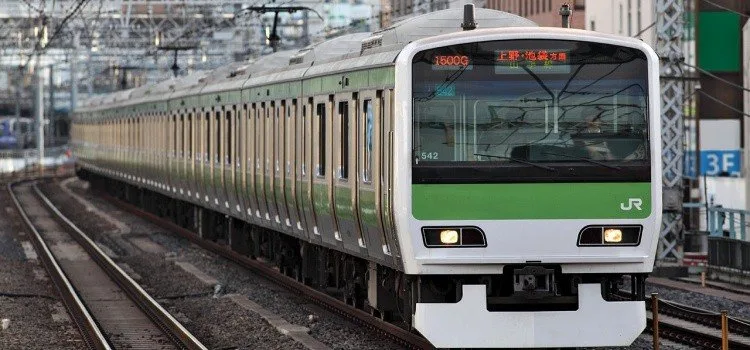
On a Japanese platform the first thing that greets you is often not a screen, but a voice. It is formal, slightly old-fashioned, and very sure of itself: mamonaku, a destination, a line number — then a reminder to step back from the edge. Once you start catching those fragments, the station stops feeling like pure noise.
Traveling by train in Japan is famous for punctuality and order, yet a big part of that order lives in the announcements. For travelers learning Japanese — or anyone who just wants to know what the speakers are saying — the common phrases below are the ones you will hear most often on platforms and inside the cars.
If you are still sorting out lines, IC cards, and which train type to board, start with our guide on how to take the train in Japan; this page zooms in on the language of the speakers themselves.
Contents 11
What the station announcements are saying
When you board or leave a train in Japan, a chain of messages guides and protects passengers. The wording follows familiar patterns, but the exact script can change with the railway company, the type of service, and even the station.
On busy urban lines in cities such as Tokyo, you will often hear a short English version right after the Japanese. On smaller local lines the Japanese may be the only audio cue — so the phrases below still earn their keep.
1. Arrival of trains at the station
まもなく、1番線に電車がまいります
Mamonaku, ichiban sen ni densha ga mairimasu
Translation: The train will arrive shortly at platform 1.
10時30分発小田原行きがまいります
Jūji sanjūppun hatsu Odawara yuki ga mairimasu
Translation: The 10:30 train to Odawara is arriving.
電車が通過いたします。黄色い線の内側にお下がりください
Densha ga tsūka itashimasu. Kiiroi sen no uchigawa ni osagari kudasai
Translation: A train is passing through. Please step back and stand on the inner side of the yellow line (away from the tracks).
2. Train destination announcements
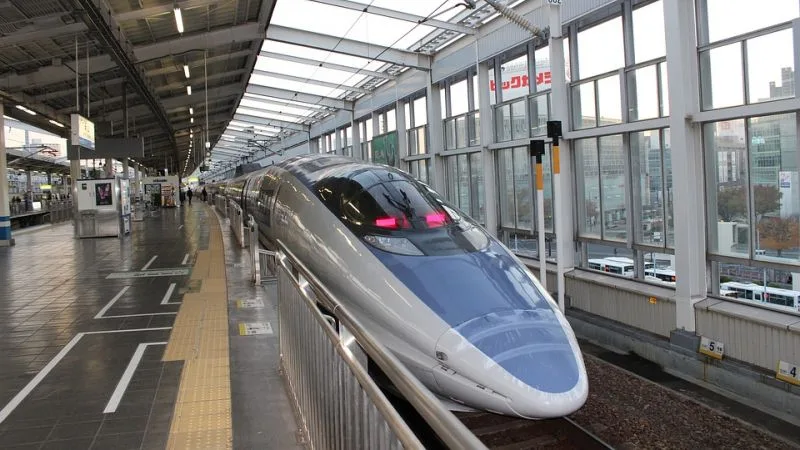
Destination announcements are the ones you will hear most. They tell you where the train is bound and what the next station is — essential for tourists and anyone still learning the map of the network.
この電車はXXX行きです
Kono densha wa XXX yuki desu
Translation: This train is bound for XXX. “XXX” is the terminal station name, such as Ueno, Shibuya, or Kyoto. (The reading of 行き as a destination suffix is usually yuki.)
次は東京、東京です
Tsugi wa Tōkyō, Tōkyō desu
Translation: Next stop: Tokyo, Tokyo.
3. Transfer announcements
Transfer calls matter in a network as tightly connected as Japan’s. They point to other lines or services you can switch to at that station.
中央線、地下鉄銀座線、新幹線は、お乗り換えです
Chūō-sen, chikatetsu Ginza-sen, shinkansen wa o-norikae desu
Translation: For the Chūō Line, Ginza Subway Line, or Shinkansen, please transfer here.
JR線ご利用のお客様はお乗り換えです
JR-sen go-riyō no okyakusama wa o-norikae desu
Translation: Passengers using JR lines, please transfer here.
These announcements usually name the available lines and, on major routes, are often repeated in English for easier access.
Safety first on the platform
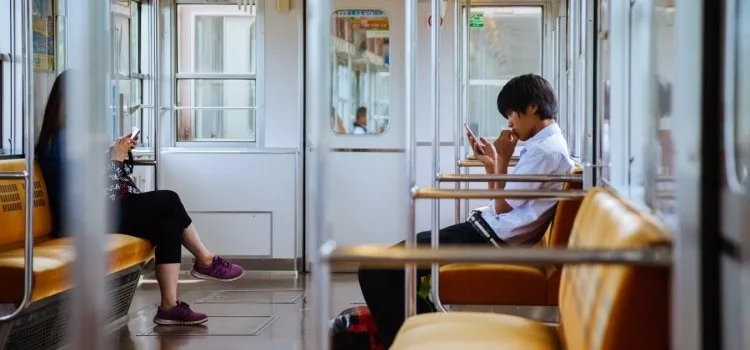
Safety is built into the script. Messages do not only warn about boarding and alighting; they keep people away from the track edge and discourage running on the platform.
1. Alighting and door-side cues
お出口は右側です
O-deguchi wa migi-gawa desu
Translation: The exit (doors) will be on the right side.
足元にご注意ください
Ashimoto ni go-chūi kudasai
Translation: Mind your step / watch your footing.
2. Platform precautions
列車に乗る際は、必ず黄色い線の内側にお待ちください
Ressha ni noru sai wa, kanarazu kiiroi sen no uchigawa ni o-machi kudasai
Translation: When boarding, always wait on the inner side of the yellow line.
白線/黄色い線まで下がってお待ちください
Hakusen / kiiroi sen made sagatte o-machi kudasai
Translation: Please step back as far as the white or yellow line and wait there.
危ないですから、黄色い線の内側までお下がりください
Abunai desu kara, kiiroi sen no uchigawa made o-sagari kudasai
Translation: It is dangerous, so please move back to the inner side of the yellow line.
ホームで走らないように、ご注意ください
Hōmu de hashiranai yō ni, go-chūi kudasai
Translation: Please be careful not to run on the platform.
ベビーカーをご利用のお客様はご注意ください
Bebīkā o go-riyō no okyakusama wa go-chūi kudasai
Translation: Passengers with strollers, please take care.
Inside the train
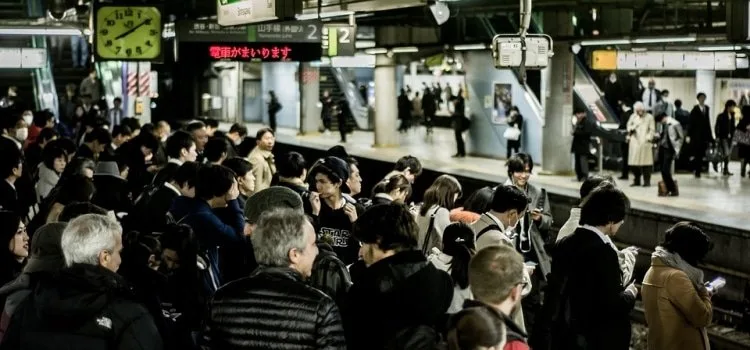
Riding a Japanese train mixes efficiency with a kind of everyday hospitality. The onboard announcements are practical, but they also show how carefully the service is staged. Listening closely is a free Japanese lesson between stations.
Common phrases on board
ドアが開きます。ご注意ください
Doa ga akimasu. Go-chūi kudasai
Translation: The doors are opening. Please be careful.
ドアが閉まります。ご注意ください
Doa ga shimarimasu. Go-chūi kudasai
Translation: The doors are closing. Please be careful.
今日もJRをご利用くださいまして、ありがとうございます
Kyō mo JR o go-riyō kudasaimashite, arigatō gozaimasu
Translation: Thank you for using JR again today.
この列車をご利用いただき、誠にありがとうございます
Kono ressha o go-riyō itadaki, makoto ni arigatō gozaimasu
Translation: Thank you very much for riding this train.
ご利用いただきまして、ありがとうございます
Go-riyō itadakimashite, arigatō gozaimasu
Translation: Thank you for using our service.
Take care of your belongings
Another recurring line helps passengers leave with everything they brought — useful with luggage, shopping bags, or a long day of transfers.
お忘れ物のないように、ご注意ください
O-wasuremono no nai yō ni, go-chūi kudasai
Translation: Please take care not to leave anything behind.
Why these phrases stick
Learning the announcements you hear at stations and on trains in Japan does more than polish your trip. It turns the platform into a listening classroom: polite verb forms, fixed safety scripts, and the same destinations repeated until they stick. Next time a voice says tsugi wa… or asks you to mind the yellow line, you will already know what it wants from you — and you may catch a new word at every stop.





Community
Comments
0 comments
There are no published comments in this language yet.
Send comment