
The term Segaki [施餓鬼] refers to a ritual traditionally associated with Japanese Buddhism. Commonly associated with other countries on the Asian continent, such as China and Sri Lanka. The origin of the term Segaki brings it as the “feeding of the hungry ghosts.”
Originally, it served to end the torment of certain ghosts who suffered from insatiable hunger. They were the gaki and muenbotoke, the dead who faced sufferings beyond what a human could tolerate or who had no living relatives.
The rite can force them to return to their places of hell and torment, or to free them from the burden of insatiable hunger. The ritual can be practiced at any time of the year, but tradition recommends that it be done during Urabone.
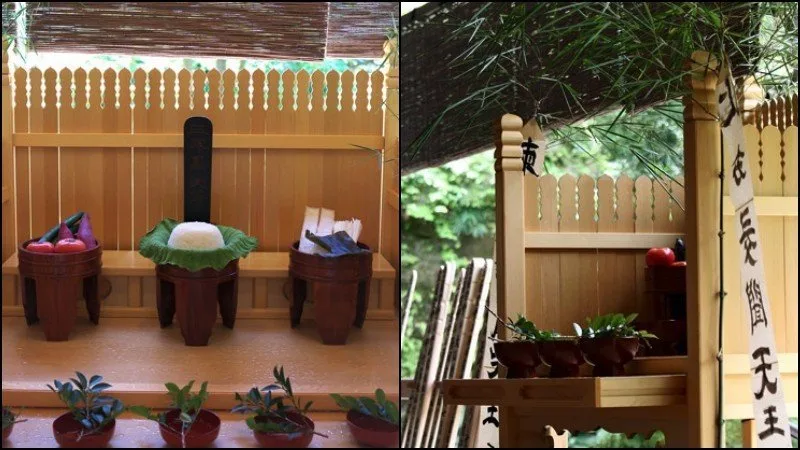
Urabone occurs annually in July and is known as the Festival of Ghosts, or also the Festival of Hungry Ghosts. During it, ceremonies are held to remember the dead, as well as to offer souls to the gakis and muenbotokes who are not ancestors of anyone.
The segaki takes place in Buddhist temples, but the tradition is also brought into homes. In them, racks and shelves for the gakis are usually set up, which are filled with offerings, especially water and rice.
The word Segaki [施餓鬼] literally means service for the benefit of suffering spirits. Composed of the ideograms [施] which means to give or alms along with [餓] which means hungry or thirsty and ending with [鬼] which means demon and ghost.
The emergence of the Segaki ceremony
The origin of segaki dates back to Moggallana, one of the closest disciples of Buddha Sakyamuni. Legend has it that in order to free his mother from the dominion of the gaki, Moggallana seeks a way out.
Instead, he is forced by the Buddha to proclaim the Lotus Sutra, which resulted in all the gakis fleeing to the human world. To correct what happened, segaki emerges as a way to return them to their domain.
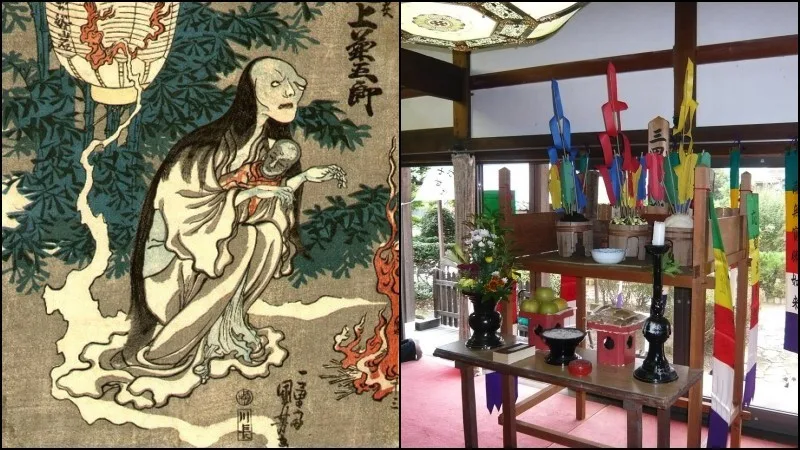
Another legend tells that the student Ananda, one of Buddha's ten main disciples, received a visit from a gaki who told him that Ananda would also become a gaki within three days. To break the prophecy, he needed to offer food to strangers, in an effort to avoid the transformation.
In reality, the most compelling evidence indicates that segaki is an adaptation of an even older Chinese festival, which was held in memory of the dead. Currently, the ceremony in temples is accompanied by drums - Taiko, and choirs of religious leaders and visitors.




Community
Comments
0 comments
There are no published comments in this language yet.
Send comment