
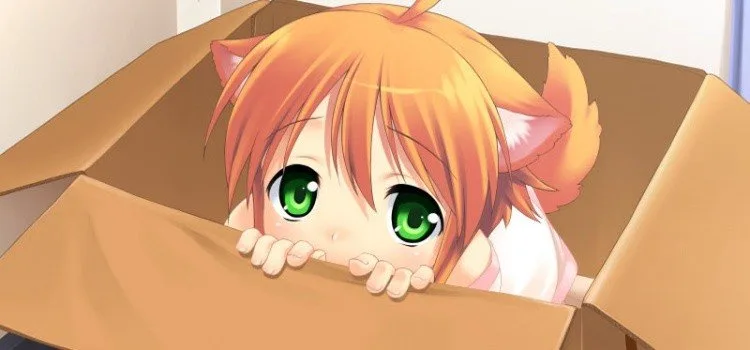
Have you heard an anime character say moe moe? Have you heard of the moe anime genre? In this article, we will conduct an in-depth study of the origin and meaning of moe, as well as recommend and discuss some curiosities about the subject.
In this article, we will also explore the origin of one of the most famous viral memes called moe moe kyun, pronounced by maids in maid cafés throughout Japan. In addition to a list of moe anime and characters.
Table of Contents
What is the meaning of Moe?
The Japanese word moe [萌え] is often used to indicate that a female character is cute, innocent, and adorable. The origin of the word refers to something that is germinating or sprouting, indicating youth in the bloom of life.
The slang is typically used exactly when an anime character or a real-life person exhibits or exudes cuteness, reinforcing the notion of germination. The term can also indicate feelings, fascination, and passion.
The word moe can be used to refer to something that is adorable and beautiful, whether for imaginary characters, idols, people, animals, etc. The word carries a childlike and innocent tone similar to the term kawaii.
Thus, the word has come to be used to refer to feelings of affection for any subject, which can even lead to sexual feelings and desires. Many believe that moe is nothing more than innocent and pure cuteness.
Generally, moe animes have a distinct characteristic based on the traits and reactions of the characters. Moe animes usually feature characters with a somewhat chibi appearance and a light story focused on pure cuteness.
What is the Origin of moe?
The word moe emerged in the late 1980s in Japan, possibly through Japanese media. The word became popular along with the term kawaii, becoming a significant contributor to the Japanese economy.
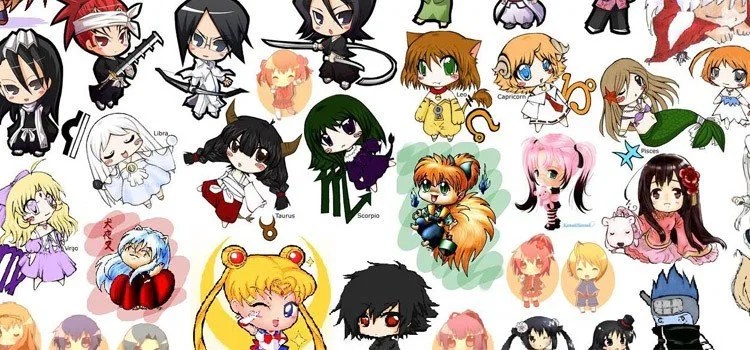
Some believe that this expression arose because of the character Hotaru Tomoe (土萌) from Sailor Moon, who has the same ideogram. In addition to the verb moeru (萌える), which means to sprout, the word has a homonym (燃える) that means to burn.
Both make sense; burning indicates the feeling of burning the heart or passion, while sprouting is when that feeling is created. There are various interpretations of the concept of “moe,” and the subject is heavily discussed.
Some believe that the word moe should be used only for pure beauty without perverted thoughts, indicating innocent, sweet, and adorable girls. Others believe that this word involves, generates sexual attraction, and even excitement.
K-On was one of the first animes to popularize and viralize the concept of moe in the West. It was through this anime and the character Yui that many learned the famous phrase oishiku nare moe moe kyun.

What does moe moe kyun mean?
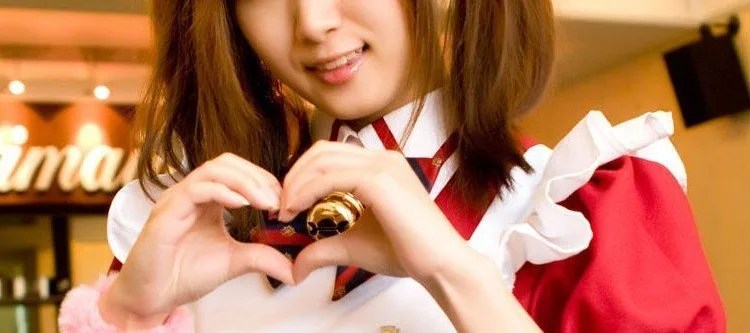
There is no meaning beyond what has already been mentioned about moe. Except that it is something similar to a ritual or magic word that maids use when serving food in a maid café. Like a life’s abracadabra.
Kyun is an onomatopoeia that conveys the idea of being choked by emotion, a heart-twisting moment, a tightness in the chest caused by powerful feelings. As if she were hitting an arrow in your heart with moe.
It may not seem like it, but kyun is something equivalent to crush in English. However, it is not usually used in the same sense as senpai to refer to a person you like; it only demonstrates the feeling of crushing in the heart.
Moe Moe Kyun is something moving that enchants the heart and can be seen in maid cafés and in animes where maids appear. Sometimes some use kyun or kyan as a suffix for names; it has no relation but conveys the same feeling.
Generally, before moe moe kyun, the maids also say oishiku nare [美味しくなれ], which means something like become tasty, be delicious, and things like that. It’s as if they were saying: make this food taste delicious.
What makes a character moe?
Today, girls with certain characteristics are labeled as moe. The word is often used for girls or characters that primarily exhibit the following characteristics:
- Shyness;
- Kindness;
- Beauty;
- Innocence;
A character can be called moe because of her appearance or behavior. Often, characters are dressed as maids, nurses, wearing cat ears, etc.
In addition to appearance, there are situations where characters are in a “cute” or “romantic” mood, most often when they feel embarrassed about something. One should not be limited to just these characteristics, as there are no strict requirements.
The intention of moe is to awaken the inner passion of a man. If a girl evokes feelings of passion, protection, and admiration, she is your moe character. It doesn’t matter if the person has a strong, annoying personality or if she is a tsundere, yandere, or kuudere.
Even men are often referred to using the word moe. This happened in episode 23 of the anime Ouran High School Host Club, to represent a supposed homosexual relationship. The term is widely used when it comes to more fragile characters or those appealing to the female gender.

The best moe animes
We have already written an article discussing the best cute, kawaii, and moe animes of all time. Still, I want to mention some of these moe animes below in this article. We won’t go into details; just watch if you want to understand the meaning of moe:
- K-On
- Usagi Drop;
- Himouto!
- Umaru-chan;
- Lucky Star;
- Ichigo Mashimaro;
- Mikakunin de Shinkoukei;
- Love Live and other idol animes;
- Hanamaru Youchien;
- Acchi Kocchi;
- Yuyushiki;
- Minami-Ke;
- Hetalia Axis Power;
- Yuru Yuri;
- Gochuumon wa Usagi Desu ka?
- Suzumiya Haruhi no Yuuutsu;
- Non Non Biyori;
- Hibike! Euphonium;
- Shinryaku! Ika Musume;
- Hibike! Euphonium;
- Shinryaku! Ika Musume;

What are the most moe characters?
Moe is not limited to animes and dramas; it can be found in games, novels, books, dramas, and real life. Feel free to research each one and comment on a character you consider moe.
To conclude the article, we will leave a list of the most moe moe characters of all time, chosen through online voting.
- Mami Tomoe – Madoka Magica;
- Shizu Murasame – Para amar ru;
- Mikoto Misaka – Toaru Index / Railgun;
- Mio Akiyama – K-On;
- Mikuru Asahina – Suzumiya Haruhi;
- Meiko Honma – Anohana;
- Mirai Kuriyama – Kyoukai no Kanata;
- Fuuko Ibuki – Clannad;
- Kosaki Onodera – Nisekoi;
- Ayumi Otosaka – Charlotte;
- Tsukiko Tsutsukakushi – HanNeko;
- Shiro – No Game No Life;
- Rikka Takanashi – Chuunibyou;
- Rem – Re: Zero;
Leave a Reply