
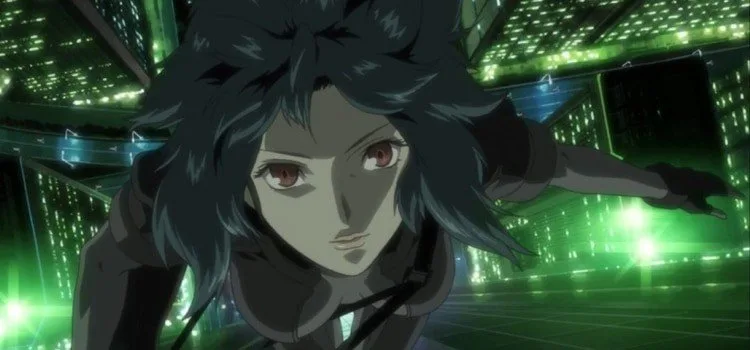
Anime has been a success since the 1960s, but most people do not know the older series. Today we will look at six from the last century that shaped the Japanese animation industry at home and abroad. They can still be watched for the stories, and Astro Boy, Kimba, Star Blazers and Ghost in the Shell all left Japan.
Contents 7
Astro Boy, the half-hour series
There were already animated films and short Japanese cartoons on television. Astro Boy was the first television anime series to air in a 30-minute slot, and that weekly shape defined and segmented the Japanese animation market.
This anime is the work of the mangaka nicknamed the god of manga, Osamu Tezuka. Mushi Production made the Fuji TV series. It opened on January 1, 1963, and closed on December 31, 1966, 193 episodes in all. In Japan the character is as well-known as Mickey Mouse is in the Americas. The English-language version used the title Astro Boy, kept 104 episodes, and often aired them out of order.
The anime takes place in a world where robots live alongside humans. In the story, Dr. Tenma creates a humanoid robot named Astro with the aim of replacing his son Tobio, who had died in a car accident.
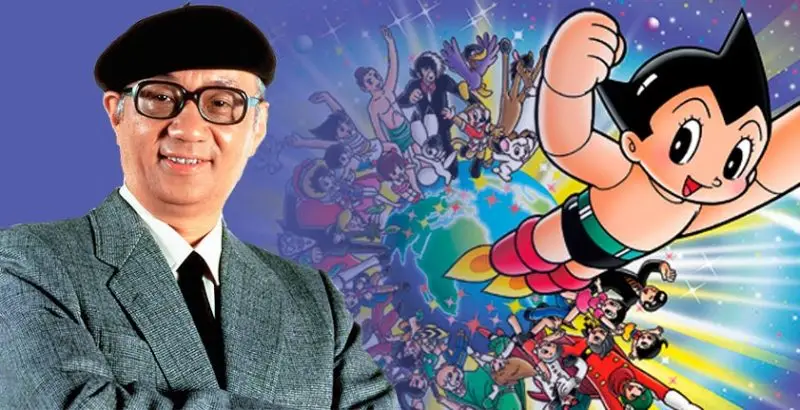
Jungle Taitei - Kimba, the White Lion
Another series based on a manga by Osamu Tezuka, and this one also came from Mushi Production. In Japan the title is Jungle Emperor. Viewers in English know the cub as Kimba the White Lion. Fuji TV aired 52 episodes from October 6, 1965, to September 28, 1966, and a feature followed on July 31, 1966. A three-episode color experiment on the same network had already been cancelled. This is the series counted as the first full-color Japanese television anime, and NBC later carried it in the United States.
The anime tells the story of a lion cub on a journey after the loss of his parents. Does this remind you of any Disney movie? Yes, there are claims that Disney was inspired by Kimba to create Simba. Disney has denied that The Lion King came from this series.
There are other successful old anime by the same author. We can mention Princess Knight, Ribon no Kishi, which reached television in 1967, but we don't want to go into too much detail; let's give a chance to other authors in this article.
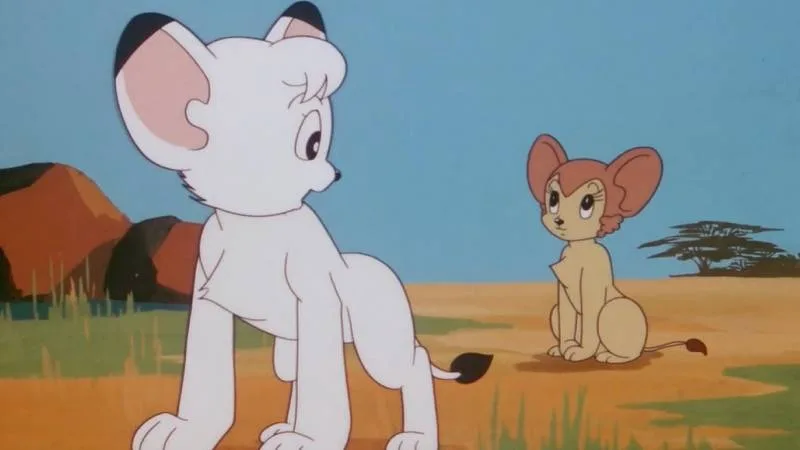
Sazae-san - The Infinite Anime
We have already written about Japan's biggest television success, Sazae-san, in another article. It is a family anime with simple drawings. Fuji TV has shown it every Sunday at 6:30 p.m. since October 5, 1969, and that hour has stayed put. Each broadcast is three short stories. On September 27, 2026, the weekly program reached broadcast 2,871. People sometimes quote a total in the thousands because they count those short stories one by one. The show holds the Guinness record for the longest-running animated television series.
Sazae-san describes the ordinary life of the wife and mother Sazae Fuguta and her family. It is probably the oldest long-running example of what viewers now call slice of life in anime. Unfortunately, Westerners do not pay attention to it.
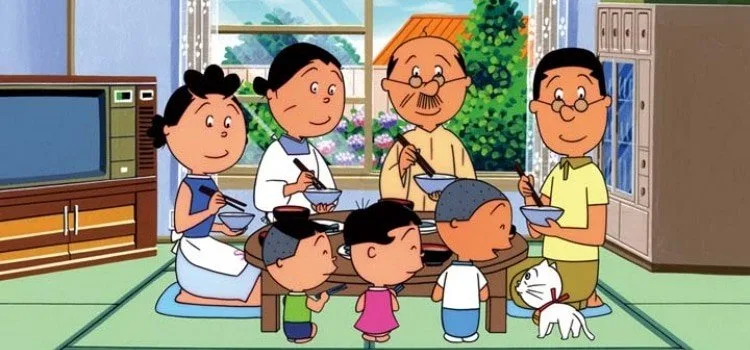
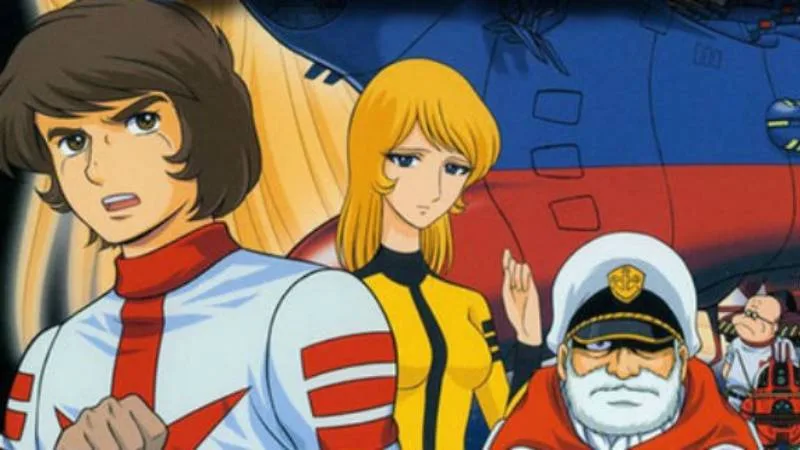
Space Battleship Yamato
Leiji Matsumoto designed the characters and reworked the story in 1974. Yoshinobu Nishizaki produced the series. Yomiuri TV aired it from October 6, 1974, to March 30, 1975, 26 episodes. A longer plan was shortened, and a Captain Harlock appearance written for the cut stretch never made the broadcast. Harlock and Galaxy Express 999 are other space stories by Matsumoto. The broadcast series follows its own voyage, the trip to Iscandar.
In the United States the same story aired as Star Blazers, starting September 17, 1979, in the San Francisco Bay Area. It was the first popular English-language anime whose plot had to be watched in order. Space Cruiser Yamato is the overseas title of the 1977 compilation film.
Detective Conan - Meitantei Conan
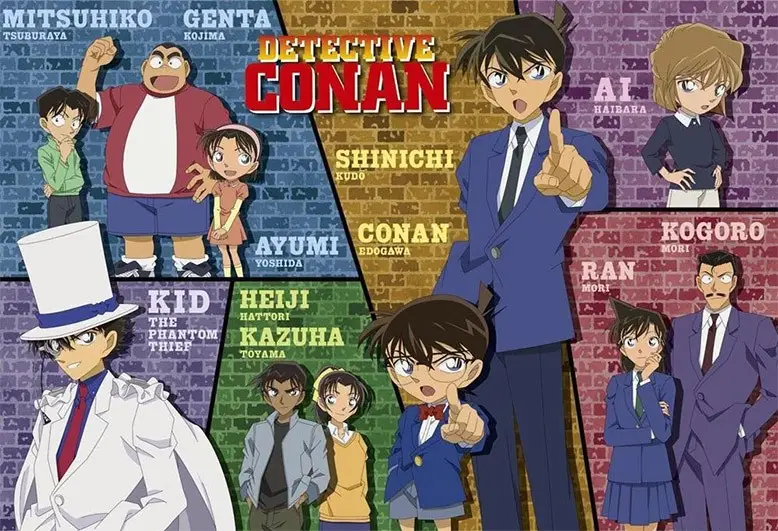
Without a doubt, my favorite anime! It premiered on Japanese television on January 8, 1996, on Yomiuri TV and Nippon Television, and it is still ongoing, with more than 1,200 episodes. It is a criminal investigation anime in the style of CSI and Sherlock Holmes.
The story follows a high school detective, Shinichi Kudo, who has his body transformed into a child by a secret organization. He must keep his true identity a secret, so he lives as Conan Edogawa with his childhood friend Ran and her father, the detective Kogoro Mouri.
The anime is perfect for the whole family; even my mom watches and enjoys this anime. Besides the long television run, the series has 29 theatrical films. The latest, Fallen Angel of the Highway, opened in Japan on April 10, 2026. The show still has separate arcs, a large cast, and a lot of action and suspense.
Ghost in the Shell
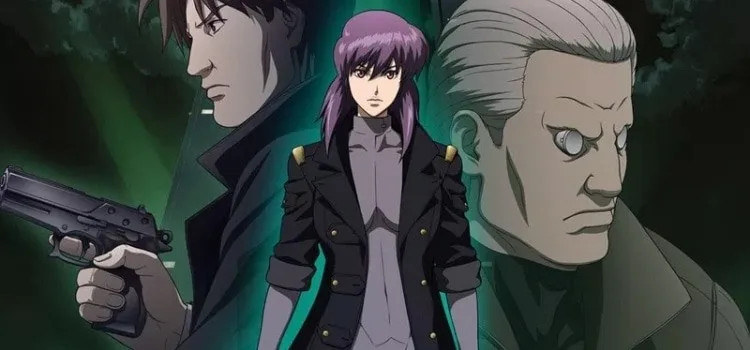
Ghost in the Shell is one of the films people still name when they talk about anime reaching viewers in the West during the 1990s. Mamoru Oshii's 1995 adaptation of Masamune Shirow's manga remains one of the most celebrated anime films of that decade.
Set in a futuristic and cyberpunk version of Japan, the story revolves around the cyborg police officer Motoko Kusanagi as she struggles with her own sense of identity in an artificial body.
James Cameron has called the film a stunning work of speculative fiction. Producer Joel Silver has said the Wachowskis showed it to him and told him they wanted to do that for real. They used that screening when they pitched The Matrix.
Honorable mentions from the last century
These are the other titles I believe belong with the best anime of the last century. Each one gets a name and a year here, and that is all the room this article has.
- Star of the Giants (1968)
- Neon Genesis Evangelion (1995)
- Daicon III and Daicon IV (1981 and 1983)
- Kinnikuman (1983)
- Akira (1988)
- Dragon Ball (1986)
- Tetsujin 28-go (1963)
- Pokémon (1997)
- Sally the Witch (1966)
- Rurouni Kenshin (1996)
- Hunter x Hunter (1999)
- Trigun (1998)
Daicon III and Daicon IV are opening films, and Akira is a film. Every other name on the list is a television series.

Community
Comments
0 comments
There are no published comments in this language yet.
Send comment