
It's not just in Japan, but mascots are spread across various areas of the world. Companies use mascots, football teams have mascots, and even games have their mascots. Japan, on the other hand, uses mascots in practically any situation. It is common to use mascots that represent places, cities, regions, TV stations, events, organizations, airports, anime, tourist attractions, government, and even street signs.
Have you ever wondered why there are so many mascots? The main focus of mascots is to market a certain thing, place, or product. The stronger intention, though, is to give an identity and personality to whatever they represent. People feel more comfortable talking, associating, and buying from something that feels like a person; companies and cities with dry names need a face that shows personality, which is why they use mascots.
We already know that Japan is influenced by kawaii culture, and that taste for cute, slightly clumsy designs is one reason so many local mascots catch on. They also give a town a way to show a specialty, a legend, or a new train line without handing out a brochure.
To better understand this, we need to look at Japanese mascots. The most common term is yuru-chara (ゆるキャラ), also written yuru-kyara. It comes from yurui, “loose” or “laid-back,” plus character. Various things are created around these mascots, such as songs, games, performances, TV shows, and dance routines.
The most popular and cute Japanese mascots
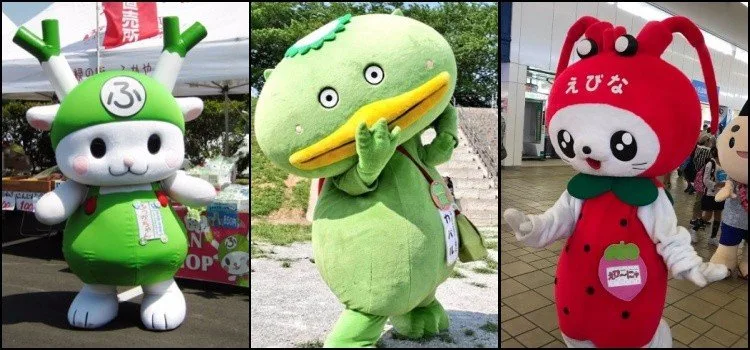
At the beginning of the article, we have images of some mascots. First, Fukka-chan, which is a cross between a deer and a rabbit that represents the city of Fukaya, in Saitama, with Fukaya green onions for antlers. The second is Kaparu, a version of the kappa yokai from the city of Shiki. And the third is Ebinya, a cheerful mascot from the city of Ebina, with its shrimp (ebi) hat and strawberry body.
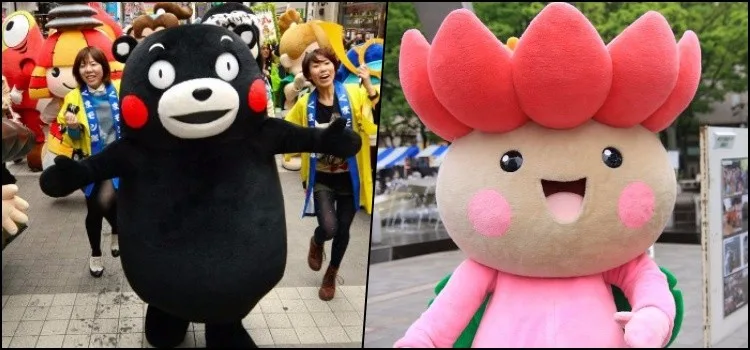
The most famous mascot is Kumamon, which represents Kumamoto Prefecture. It was created around 2010 for the opening of the Kyushu Shinkansen. Kumamoto licenses the image for free when it promotes the prefecture, and officials put sales of Kumamon-branded goods at about 1.62 trillion yen from 2011 to 2024. Another cute mascot is Chihana-chan, which represents Chiba City and the Ōga lotus, the city flower behind her pink fairy design.
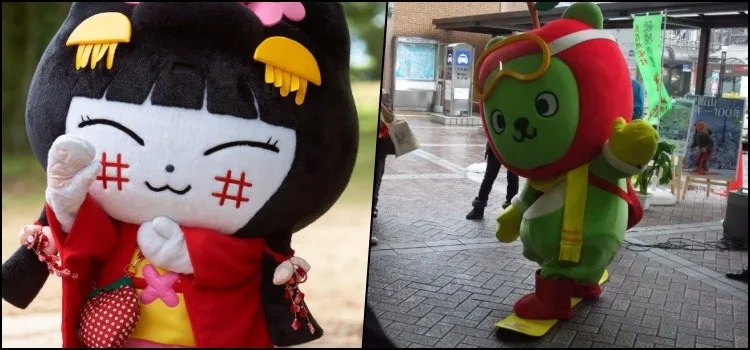
Next, we have the cute Yachinyan, a kitten created to attract tourists to the shopping street and Yonbancho Square, located in Hikone, Shiga. She was designed after Princess Yachiyo of the Ii clan. Followed by the green bear called Arukuma. It was created with various hats to represent different specialties of Nagano, each hat represents something, such as apples, chestnuts, persimmons, mushrooms, lettuce, soba, and wine.
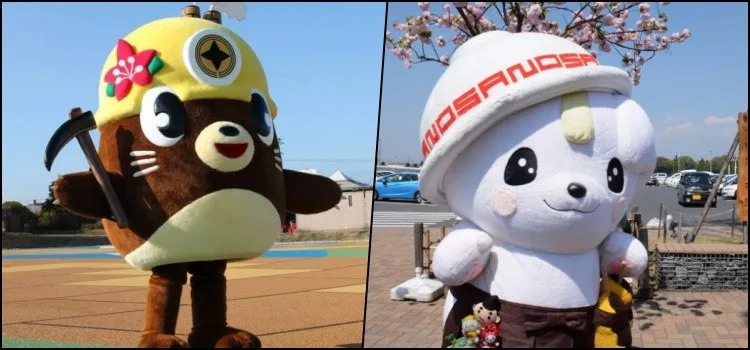
Tagatan is a mole that represents the mining and construction industries of the city of Tagawa. Sanomaru is a cute samurai created to promote the city of Sano, which is near Tokyo. He has a bowl-shaped hat and some accessories that represent the city's specialties, such as Sano ramen, and he won the Yuru-chara Grand Prix in 2013.
For me, Yachinyan is the cutest mascot...
Musubimaru was designed to represent the rice farms of Miyagi. He has a samurai armor based on that of Date Masamune and a rice ball onigiri head. Gunma-chan, as the name suggests, is the mascot of Gunma since 1983, but its current design was made in 2008. He has a horse face because the character 馬 (horse) is already in the name 群馬. Lastly, we have Domo-kun, the famous official mascot of the NHK TV station: a professional character rather than a city yuru-chara, but still one of the faces people outside Japan actually recognize.
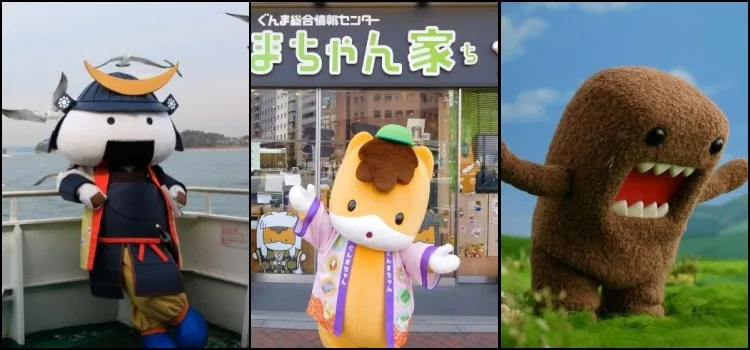
These are some popular mascots. There are thousands of other mascots in Japan, some even much more popular than those mentioned in this article. The ones that last usually do a simple job well: they turn a leek, a castle, a train line, or a bowl of ramen into a character you can actually meet on the street.

Community
Comments
0 comments
There are no published comments in this language yet.
Send comment