
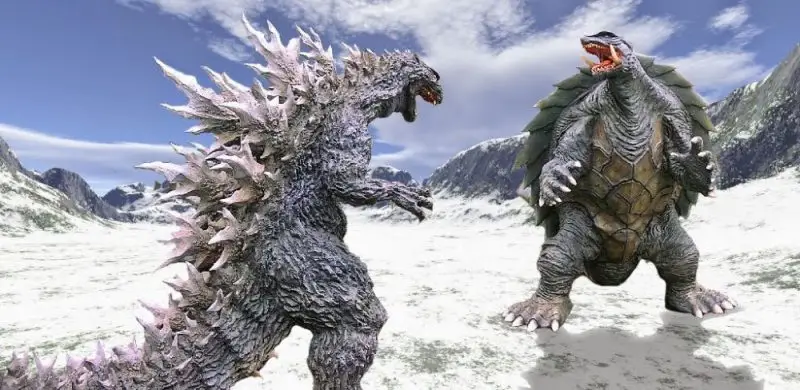
Gamera is one of the most famous monsters in Japanese cinema, even if he usually stands in Godzilla's shadow outside Japan. He first appeared in 1965 as Daiei's answer to the boom created by Godzilla, and that is why fans still describe him as Godzilla's rival. The rivalry is mostly between franchises and studios, not between two characters who regularly meet on screen.
That distinction matters because Gamera developed a very different identity over time. Godzilla often represents destruction, anxiety or raw force, while Gamera gradually became a guardian figure. In many films he protects children, battles invading monsters and feels closer to a heroic kaiju than to a pure force of nature.
Contents 8
Who created Gamera?
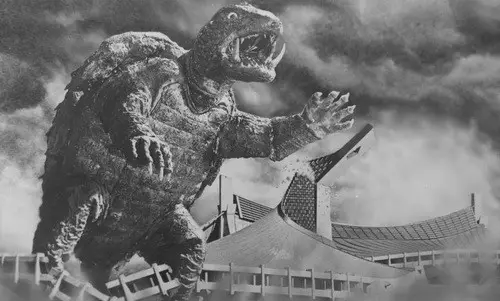
Gamera debuted in Gamera, the Giant Monster in 1965. Daiei created the character after seeing how successful Toho's Godzilla films had become. Instead of copying Godzilla exactly, the studio built a new monster around a giant turtle design, practical suit effects and a tone that could appeal to younger audiences without abandoning large-scale destruction.
The earliest version of Gamera is still dangerous, but the series soon pushed him toward a more sympathetic role. That change became one of the franchise's defining traits. By the end of the Shōwa era run, Gamera was no longer just a threat stomping through cities. He had turned into a defender of Earth, especially in stories where children form a direct emotional bond with him.
Why do people call Gamera Godzilla's rival?
The nickname is accurate if you think in terms of film history. Gamera was created to compete with Godzilla in the same monster-movie space, and both belong to the broader kaiju and tokusatsu tradition. If you want more context on that style of filmmaking, this guide to the history of tokusatsu helps explain why giant monsters, miniature cities and practical effects became so important in Japan.
At the same time, Gamera is not simply a turtle version of Godzilla. Godzilla changes a lot from era to era, but his image usually carries more menace and symbolic weight. Gamera, by contrast, leans harder into adventure, loyalty and crowd-pleasing monster battles. That is why the comparison works best when discussing tone, studio rivalry and fan culture rather than a canonical feud.
There have also been years of rumors, jokes and aborted crossover ideas, which kept the rivalry alive in fan conversations. Even without an official film putting both monsters in the same story, the comparison never disappeared.
What makes Gamera different from other kaiju?
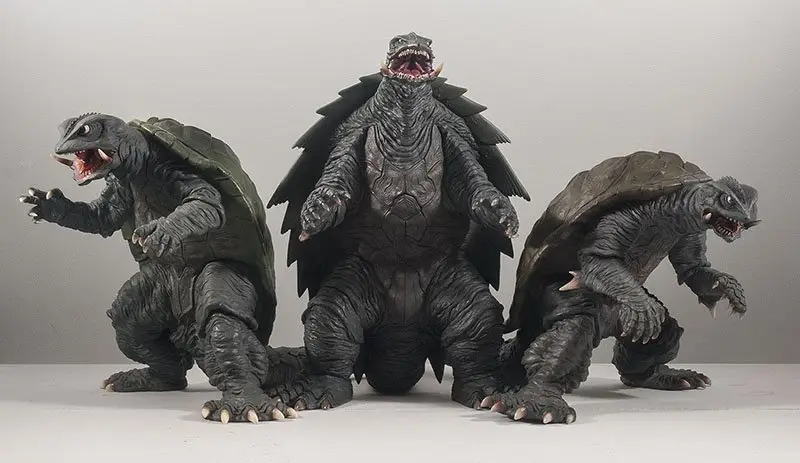
Gamera has a design that is instantly recognizable: a giant turtle shell, tusk-like facial features, heavy limbs and the ability to fight in ways no other major kaiju really does. Depending on the era, he can rotate in flight, retract his limbs, unleash fireballs and absorb energy. Those powers make him visually distinct even for viewers who only know the most famous Godzilla monsters.
- Flight: Gamera is famous for flying by spinning or using jet-like propulsion from his shell.
- Fire attacks: he can launch flames or fireballs from his mouth, giving him a ranged attack that feels different from Godzilla's atomic breath.
- Defensive strength: his shell is not just visual flair; it shapes how he blocks, crashes into enemies and survives brutal fights.
- Heroic role: unlike many classic monsters, Gamera is often written as a protector rather than a destroyer.
That heroic side became especially important in the 1990s, when the franchise was rebuilt for a slightly older audience. The Heisei trilogy gave Gamera a more serious tone without stripping away what made him memorable.
Where should new viewers start with Gamera?
If you only want one answer, start with the 1990s trilogy. Gamera: Guardian of the Universe (1995), Gamera 2: Attack of Legion (1996) and Gamera 3: Revenge of Iris (1999) are usually the best entry point for modern viewers. They keep the core idea of a guardian monster but give the battles more weight, better pacing and stronger visual identity.
The older Shōwa films still have charm if you enjoy practical effects, campy monster cinema and the child-friendly side of kaiju storytelling. Meanwhile, Gamera the Brave from 2006 offers a softer reboot, and GAMERA -Rebirth- brought the character back to global audiences in 2023 through a new animated series.
The Shōwa era appeal
The original run is the best place to see how Gamera became popular with younger audiences. These films are lighter, stranger and sometimes wonderfully eccentric, which is part of their appeal today.
The Heisei trilogy
This is where many fans believe the franchise reached its peak. The trilogy treats Gamera with more seriousness, introduces stronger opponents like Legion and Iris, and gives the hero a mythic scale that still feels impressive.
GAMERA -Rebirth- and the modern revival
The 2023 animated series proved that Gamera still has room in modern kaiju culture. It reintroduced the character to viewers who may know Godzilla far better, while keeping familiar elements such as child protagonists, giant-monster spectacle and Gamera's protective instinct.
Why Gamera still matters
Gamera matters because he shows how broad the kaiju genre can be. He began as a commercial rival to Godzilla, but he survived by becoming something more specific: a flying turtle monster with a loyal fan base, a heroic streak and a filmography that swings from childlike adventure to some of the most respected kaiju movies of the 1990s.
So if someone asks whether Gamera is really Godzilla's rival, the best answer is yes, but not in the simplest way. He is the rival franchise that built its own mythology, its own audience and its own place in Japanese monster history.

Community
Comments
0 comments
There are no published comments in this language yet.
Send comment