

With persistent violence in countries like Brazil, the question of firearm ownership frequently dominates debates on public safety. Many believe that easing access to firearms, similar to the United States, is the primary way for citizens to protect themselves. Looking at Japan, however, presents a very different perspective on whether civilian firearms are truly necessary for a safe society.
Every nation has unique historical and social circumstances that shape its relationship with weapons. In Japan, firearms once played a decisive role during civil conflicts, yet the country eventually chose a path of comprehensive disarmament.
Personally, I am against firearms. At the same time, when innocent people suffer under rampant crime while criminals remain armed, the urge to demand self-defense is understandable. Before assuming that widespread gun ownership is the solution to insecurity, we need to examine how Japan built one of the safest societies on Earth almost entirely without guns.
Contents 5
How many people die from firearms in Japan and around the world?
In Brazil, firearm homicides have historically exceeded 40,000 to 50,000 deaths annually, while in the United States, gun deaths consistently hover above 30,000 each year when accounting for homicides and suicides. In Japan, by contrast, annual deaths caused by firearms rarely exceed single digits in a nation of over 125 million people, and in several recent years, the National Police Agency recorded only one or two gun fatalities nationwide.
The contrast in gun distribution is equally stark. Civilian firearm possession is widespread in the United States, whereas in Japan, civilian handguns are completely prohibited by law. Even among law enforcement officers, weapons are strictly accounted for and rarely discharged in public. While firearms account for the vast majority of violent homicides in the Americas, Japan maintains an overall homicide rate near zero, with gun violence almost non-existent outside rare clashes involving organized crime, while mental health and suicide rates are addressed through social and medical channels rather than lethal firearms.

Looking at global statistics reveals that firearm ownership alone does not dictate crime rates. Countries like South Korea and Singapore enforce strict firearm bans and enjoy remarkably low rates of violent crime. On the other hand, nations such as Iceland maintain relatively high rates of registered hunting rifles per capita while experiencing virtually no gun violence. Public safety depends fundamentally on how a country functions, including the strength of its institutions, social cohesion, and the rule of law.
Is it very difficult to obtain a firearm in Japan?
Many people assume that owning a firearm in Japan is outright impossible for any citizen. In reality, Japanese law does permit private ownership under extremely narrow conditions, specifically for licensed hunting and sport shooting. However, the legal requirements established by the Firearm and Sword Possession Control Law (Jūtōhō) are among the most demanding in the world, accompanied by substantial financial costs and continuous police oversight.

Handguns are entirely forbidden for civilian ownership. A citizen seeking a permit for a shotgun or air rifle must attend full-day safety lectures, pass a comprehensive written examination on regulations, and achieve a high passing score on a practical shooting range test. Beyond technical competence, applicants must submit to medical examinations at certified hospitals to rule out psychological conditions and drug abuse.
The police background check is remarkably exhaustive. Officers investigate the applicant's criminal history, employment stability, debt, and personal ties, frequently interviewing neighbors, relatives, and coworkers. If approved, the firearm and ammunition must be stored in separate, heavy-duty locked safes anchored to the wall, which are subject to annual on-site inspections by local police.
Regulatory oversight continues every time a licensed hunter uses the firearm. Owners must notify the police regarding their hunting schedule and the exact amount of ammunition taken into the field. After the hunt, they must account for every spent cartridge, recording how many shots were fired and where the rounds went. Licenses must be renewed every three years, requiring the applicant to repeat the examinations and background checks from scratch.

While illicit weapons do exist within criminal networks, they are exceptionally rare. Criminal penalties for possession of an unregistered firearm or ammunition are so severe that even organized crime members actively avoid using firearms in routine disputes, knowing that any shooting triggers immediate nationwide police crackdowns.
The history of firearms in Japan and how they were banned
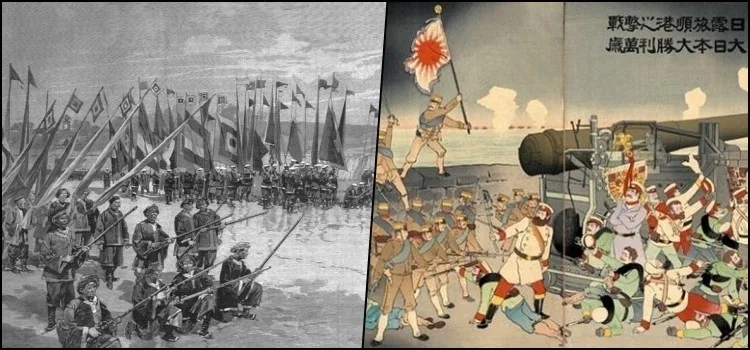
Japan's current stance against firearms stands in contrast to its feudal history. In 1543, Portuguese traders arrived on the southern island of Tanegashima aboard a Chinese vessel, introducing matchlock arquebuses to Japan for the first time. Known locally as tanegashima or hinawajū, these weapons rapidly spread across the country during the turbulent Sengoku period (Warring States era). Japanese blacksmiths quickly mastered the manufacturing process, and within decades, Japan was producing more firearms of superior craftsmanship than many European nations of the era.
Matchlocks transformed medieval warfare by allowing commanders to arm peasant foot soldiers (ashigaru) with lethal weapons that required only weeks of training, unlike the lifetime of discipline needed for traditional swordsmanship and mounted archery. Military leaders such as Oda Nobunaga famously revolutionized battlefield tactics with massed volley fire, notably at the Battle of Nagashino in 1575. Together with Toyotomi Hideyoshi and Tokugawa Ieyasu, these leaders used military innovation to overcome rival clans and unify the nation, establishing the Tokugawa Shogunate and initiating more than two centuries of peace during the Edo period.

Disarmament soon followed unification. In 1588, Toyotomi Hideyoshi issued the famous Sword Hunt edict (Katanagari), confiscating weapons from farmers and Buddhist monasteries to prevent agrarian uprisings and solidify social classes. Under Tokugawa rule, firearm production was centralized and heavily restricted, while the samurai class gradually transitioned from warriors into peacetime administrators.
Following World War II, Japan enacted comprehensive demilitarization laws that culminated in the modern 1958 control framework. In recent decades, sustained legal crackdowns against organized crime syndicates like the Yakuza have driven gang membership and illegal firearms down to historic lows, removing virtually all weapon presence from civilian life.
How do the Japanese view firearms?
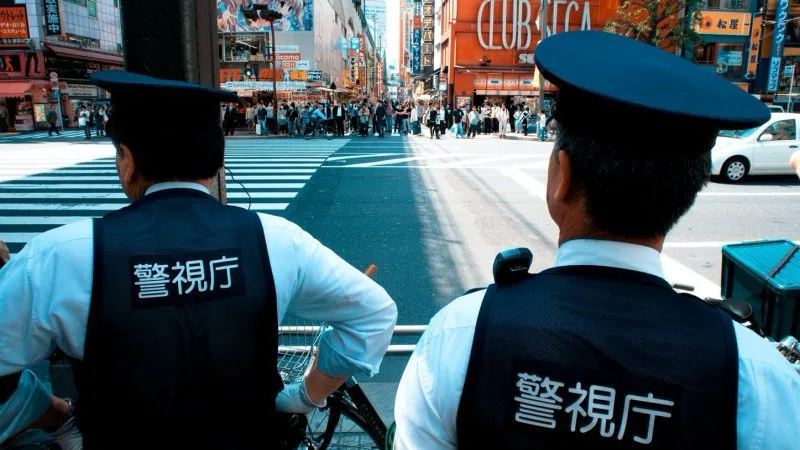
For the vast majority of Japanese citizens, firearms are completely absent from everyday reality. Most people live their entire lives without ever seeing a real gun in person, outside of a holstered weapon on a patrolling police officer. Because violent crime involving guns is practically nonexistent, the concept of purchasing a firearm for personal self-defense rarely crosses anyone's mind.
This reality shapes how the Japanese public perceives international debates. When Japanese citizens read about mass shootings or street violence abroad, they often find the widespread availability of lethal weapons baffling. Daily life in Japan does not involve precautions against armed home invasions, carjackings, or street hold-ups.
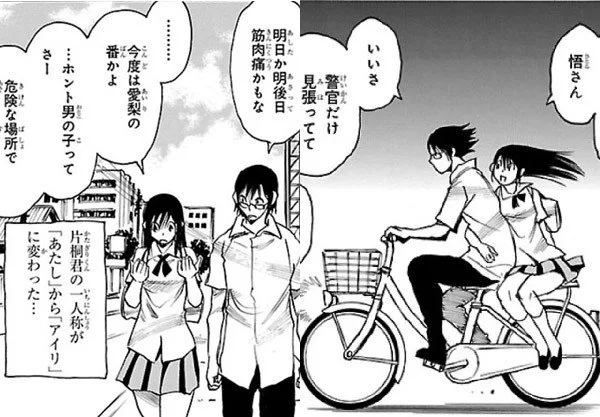
Instead of real firearms, Japanese interest in shooting mechanics is channeled into safe, highly regulated recreational hobbies, most notably airsoft. In fact, modern airsoft was invented in Japan during the 1970s precisely because gun enthusiasts wanted realistic shooting replicas without violating strict firearms legislation. Today, airsoft fields, clubs, and tactical simulation games enjoy popularity throughout the country, even inspiring specialized anime and manga series.

Traditional hunting, on the other hand, is an aging practice in Japan. Most licensed hunters are older residents in rural prefectures who manage wild boar and deer populations that threaten crops, rather than recreational sport hunters. As this generation ages, the total number of licensed firearm owners continues to decline every year.
How does Japan manage to be safe without firearms?
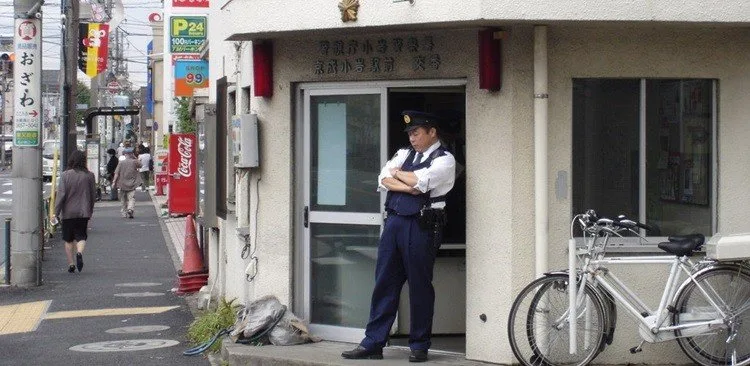
Japan's high level of safety stems directly from comprehensive social institutions, rigorous law enforcement, and cultural values centered on collective responsibility. Community policing plays a central role through the widespread network of the koban (neighborhood police box) system, where local officers interact closely with residents, assist with directions, resolve minor neighborhood issues, and deter crime through visible presence.
Some argue that Japan's security is purely geographical because it is an island nation, while larger continental countries face porous land borders. However, geography alone cannot explain public safety. Countries with similar borders experience vastly different crime levels based on how effectively their legal and judicial systems operate. The determining factors are institutional trust, effective crime prevention, and social education.

In countries struggling with acute public security crises, simply facilitating access to firearms without addressing systemic institutional failures, judicial impunity, and educational gaps carries serious risks. Introducing more weapons into a volatile social environment often accelerates violent confrontations rather than deterring them.
Genuine public safety is rooted in consistent laws, competent law enforcement, strong educational foundations, and mutual social respect rather than weapon ownership. Japan and other peaceful societies prove that when legal and educational systems function properly, firearms become entirely unnecessary for everyday protection.



Community
Comments
0 comments
There are no published comments in this language yet.
Send comment