
In this article, we will share swear words in Japanese, known in the language as warui kotoba [悪い言葉]. You will learn insults, slang, curses, and other bad things in the Japanese language. I hope you enjoy the article.
It is worth clarifying that most swear words in Japanese do not have a literally offensive translation. Most of the time, Japanese people insult each other with pronouns and other words that may seem harmless in Portuguese.
Table of Contents
Warui Kotoba – Swear Words in Japanese
In Japan, it is not customary to speak sexual slang in public, nor to use such swear words; there are indeed some cases and diversities, but the swear words we know here are not commonly used in Japan.
People often translate these swear words and insults in Japanese incorrectly, making it seem like a certain word is equivalent to something immoral or offensive in Portuguese. It is rare for a Japanese word to be like that, but it can have the same impact.
We notice that they translate unrelated things to Porra or foda-se. I remember watching an episode of No Game No Life where the protagonist says: dameda [ダメだ], which means useless, and the fansub translated it as fudeu.
It is worth noting that there are indeed taboo words with sexual connotation, offensive and terrible, but they are not commonly used to insult others. Warui Kotoba [悪い言葉] is a common term to refer to bad words, but it is not the only term or the most used.
I made a video explaining more about Japanese swear words and their pronunciations and meanings:
Bubetsu – Insult – Words of Contempt
There is a Japanese word called “bubetsu” [侮蔑] that can be literally translated as contempt or insult. Unlike “warui kotoba,” the word bubetsu is not limited to just words or attitudes, but also to depreciative feelings and their intention.
In fact, bubetsu is a standard term for referring to the many synonyms and phenomenological forms of contempt that we will list below. Besides the swear words, you will also learn in Japanese the various categories of insults:
| Japanese | Romaji | Meanings |
| 悪態 | akutai | Abusive language |
| 悪口 | waruguchi | Slander, speaking ill |
| 罵倒 | batou | Defamation, verbal abuse, depreciation |
| 卑罵 | hiba | Pejorative, depreciative word |
| 憎まれ口 | nikumareguchi | Abusive language |
| 雑言 | zōgon | Coarse language |
| そしり | soshiri | Criticism, censure, depreciation |
| ののしり | nonoshiri | Cursing, insult |
| 皮肉 | hiniku | Irony, sarcasm, cynicism, satire |
| あだ名 | adana | Nickname |
| 侮辱語 | bujoku-go | Insult |
| 蔑視語 | besshi-go | Contempt, disdain |
| 毒舌 | dokuzetsu | Vicious language |
| 罵詈 | bari | Abusive language |
| 罵倒 | batō | Denunciation, depreciation, defamation |
| 揶揄 | yayu | Teasing, provocation |
| 非難 | hinan | Criticism, blame, censure, attack |
| 皮肉 | hiniku | Irony, sarcasm, cynicism, satire |
| 風刺 | fūshi | satire; irony; sarcasm |
| 陰口 | kageguchi | malicious gossip; slander; speaking ill behind someone’s back |
In Japanese, many synonyms were generated when the ideograms were imported and evolved over time, which gave rise to the dozens of types of contempt and insults shown above, as well as many synonyms and variations of curses.
In the past, there were Japanese poems and decapitations in the Nara and Heian eras that applied the rhetorical technique of Kanji to insult. Things are not limited to just words; some people tend to create hidden puns or use sarcastic misspellings.
Higo – Vulgar and Pejorative Insults
Speaking of swear words or bad words, the expression Higo [卑語] can be used to categorize abusive words that should be avoided in public. Some words are commonly used in insults, while others are quite underground (obscure).
The words in this category mostly refer to slang for genitals, sexual relations, excrement, semen, buttocks, breasts, and other related words. You might be interested in reading the article about sexual terms. Here are some:
We recommend reading: Vocabulary and phrases about sex in Japanese
Swear Words Related to Genitals
Below we will see some words related to genitals that can be used to insult others in Japanese:
- Chin Chin [ちんちん] – Penis;
- Kintama [金玉] – balls;
- Bobo [ぼぼ] – pussy, sex (Kyoto dialect);
- Ketsu [ケツ] – butt, buttocks;
- Ketusnoana [ケツの穴] – ass;
- Chikubi [乳首] – nipples;
- Oppai [おっぱい] – breasts;
- Paipai [ぱいぱい] – breasts, nipples;
- Oshikko [おしっこ] – penis;
- Ochinchin [おちんちん] – penis;
- Chinko [ちんこ] – penis;
- Chinpo [チンポ] – penis;
- Pokochin [ポコチン] – penis;
- Oppai [おっぱい] – breasts;
- Tamatama [たまたま] – testicles;
- Manko [まんこ] – vagina, pussy;
Not all the words mentioned above are depreciative; they can just be slang or terms to refer to genitals. But the mere fact of talking about genitals in public, depending on the situation, can be something contemptible.

Swear Words Related to F*cking
It is uncommon to use expressions related to sex in Japanese vocabulary, but there are indeed expressions that represent the sexual act, f*cking, eating, and things like that. The expressions below generally mean the same thing:
- Okasu [犯す] – Deflower, rape, violate, commit, perpetrate
- Komasu [こます] – Do, give, eat, f*ck;
- Itekomasu [いてこます] – Attack, punch, f*ck;
- Kamawohoru [かまをほる] – Take it in the ass, anal f*ck, sodomize;
Insults and Dirty Words
Below we will see some dirty words in Japanese, things like excrement, shit, feces, etc. The words below are the most common; some will fall into another category further down.
- Kuso [糞] – Shit, damn;
- Kusotare [クソタレ] – Shithead;
- Unko [うんこ] – Shit, poop;
- Shikko [しっこ] – Pee, urine;

Other Ways to Insult with Higo
It is also common in the “Higo” category to use words that convey some pejorative idea. Words related to appearance, constitution, function, and countless others. Calling people thieves and bums also fits into “Higo”.
One way to insult people with “Higo” is by merging these swear words with other swear words or even with the name of the person you want to insult. For example: Benimanko, Kintamani, and Unkorosai. Some will be seen throughout the article.
Swear Words and Insults in Japanese
Now let’s take a look at some of these insults and curses in Japanese, as well as other words that have a negative effect in conversations. Most Japanese insults or things of that sort consist of more than one word.
Insulting Appearance in Japanese
The list of swear words below is related to a person’s appearance:
- Busu [ブス] – Ugly (used more for women);
- Busaiku [ 不細工] – Awkward, ugly;
- Ketou [毛等] – People with different hair colors or people from abroad;
- Gaki [ ガキ] – Shorty, brat;
- Chibi [ちび] – Small, short (often affectionate);
- Bakemono [化け物] – Monster, horrible thing;
- Debu [デブ] – You pig, filthy, fat;
- Kitanai [汚い] – Dirty;
- Akuma [悪魔] – Devil, evil;
- Oni [鬼] – Ogre;
- Majyo [魔女] – Witch;
- Obake [おばけ] – Monster, ghost, goblin;
- Deka [デカ] – Big;
- Routai [老体] – Old body, old man, elderly;
- Miira [ミイラ] – Mummy, corpse;
- Taikobara [太鼓腹] – Taiko belly (drum);

Animal Insults in Japanese
It is common to insult others with animal names to describe certain appearances or personalities; see some below:
- Buta [豚] – Pig (used for fat people);
- Kaba [カバ] – Hippopotamus (referring to fat);
- Zako [雑魚] – Small fish;
- Tako [タコ] – Coward (referring to octopus);
- Yajyuu [野獣] – Wild beast, wild animal;
- Gorira [ゴリラ] – Gorilla (someone wild, violent, and big);
- Saru [さる] – Monkey (annoying person);
- Koumori [蝙蝠] – Bat (opportunist, turncoat);
- Uma [馬] – Horse;

Adjective and Characteristic Insults
Below we will see some Japanese swear words and insults that are adjectives or present some characteristic of the person, such as occupation, animal appearance, or personality. Words related to intelligence are excluded.
- Hentai [変態] – Perverted, sexual maniac;
- Boke [ボケ] – Lazy, fool, bum;
- Okama [おかま] – Gay;
- Kichigai [キチガイ] – Crazy, retarded, stupid;
- Kechi [けち] – Stingy, cheap;
- Dokechi [どけち] – Augmented form of stingy;
- Hidoi(i) [酷い] – Terrible, horrible, bad;
- Saitei(dayo) [最低] – Lowest, terrible, worst, unpleasant;
- Yariman [やりまん] – Prostitute, slut – sleeps with anyone;
- Debesu [出べそ] – Protruding navel;
- Amattare [あまったれ] – Spoiled, dependent, childish;
- Gomi [ゴミ] – Trash;
- Yarou [野郎] – Brat, bastard, idiot, jerk;
- Shounin [小人] – Small child, dwarf, narrow-minded;
- Piero [ピエロ] – Clown;
- Odokemono [戯け者] – Idiot, mannequin, clown, trickster;

Insulting a Person’s Intelligence in Japanese
There are many insults and swear words referring to a person’s intelligence, which is why we decided to separate them; see a list below:
- Baka [馬鹿] – idiot, dumb, stupid, fool, clown, silly;
- Otankonasu [おたんこなす] – Idiot, silly, birdbrain;
- Aho [あほ] – Stupid;
- Kusottare [クソッタレ] – Idiot (asshole);
- Manuke [間抜け] – Nuance of a silly person, idiot, retarded;
- Heta(kuso) [下手糞] – Clumsy, awkward, useless;
- Doji [どじ] – Clumsy; awkward; spoiled;
- Bontsuke [ぽんつく] – Idiot, stupid;
- Roba [驢馬] – Donkey, butt (lit. butt);
- Usagiuma [兎馬] – Donkey, ass (lit. rabbit + horse);
- Arokamono [愚か者] – Fool;
- Funeke [腑抜け] – Idiot, coward;
- Gubetsu [愚物] – Idiot, fool;
- Oko [おこ] – Stupidity;

Insults that are Commands and Actions
The words below are commands; you are telling the person to do a certain action, usually verbs. Enjoy:
- Damatte [黙って] – The Kanji 黙 means silence, be quiet or shut up;
- Damare [黙れ] – Alternative to “damatte,” can be used in both extensions “yo” [よ];
- Shine [死ね] – Die;
- Urusai [うるさい] – Noisy, shut up;
- Ikke-nai [ne] [いっけ-ない] – Damn, don’t f*ck (lit. don’t go, don’t do that);
- Kusokurae [糞食らえ] – Fuck you!
- Kutabare [くたばれ] – Get out of here, die, fuck off;
- Deteike [出て行け] – Get out of here, leave, go away;
- Bakanisuruna [ばかにするな] – Don’t make me an idiot;
- Hikome [ひっこめ] – Withdraw, get lost, go back;
- Namekusatte [なめくさって] – Slobber!

Other Insults in Japanese
The Japanese swear words below did not fit into any previous category, but they are quite popular:
- Konchikushou [こん畜生] – Fucking shit, son of a bitch, bastard;
- Kusomajime [クソ真面目] – Excessively serious, humorless, dull;
- Kimochi warui [気持ち悪い] – Disgusting, horrible, repugnant, unpleasant (literally, bad feeling.)
- Chikushou [畜生] – (It is an expression of revolt for a circumstance) What the hell!, What the fuck! Look at this shit!
- Baka Bakashii [ 馬鹿馬鹿しい] – Absurd, ridiculous, madness;
- Nantehetakuso [なんてへたくそ] – What the hell, what shit;
Depreciative Suffixes and Prefixes in Japanese
Another way to insult and curse people is by using honorific prefixes and suffixes that convey the idea of an insult or depreciation. They are often used before or after a swear word or even the name of the person. See a list of them below:
- Ike [いけ] – prefix used to strengthen a depreciative adjective;
- Ikke [いっけ] – same as ike, stronger;
- Me [奴] – depreciative suffix meaning shit and bastard;
- Kou [公] – suffix that can become depreciative after a name;
- Suke [すけ] – pejorative suffix;
- Kuso [クソ] and Kusare [くされ] – Can be used as a suffix and prefix for shit;
Do [ど] or Don [どん] are also used as prefixes to reinforce an insult. Here are some examples below:
- Dobeta [ど下手] – Very clumsy;
- Doinaka [ど田舎] – Peasant;
- Donbyakushou [どん百姓] – Poor farmer;
Additionally, we can use level prefixes to depreciate something: [二級][下等][三流][平];

Understanding Japanese Swear Words
We can see that Japanese insults do not have a correct meaning when translated; they can mean various words in Portuguese. We also notice the use of additions and modifications of words, as in the case of different forms of insults that use the word ばか (baka).
だよ – Dayo – Only a few examples have been cited here, but many insults end with Dayo, to confirm, emphasize, and increase the insult. Dayo is one of the forms of the verb to be.
They also use the fusion of other insults to amplify them, such as Baka + Aho / Baka + Yaro / Baka + Mono. It is possible to use them even as prefixes or suffixes in names.
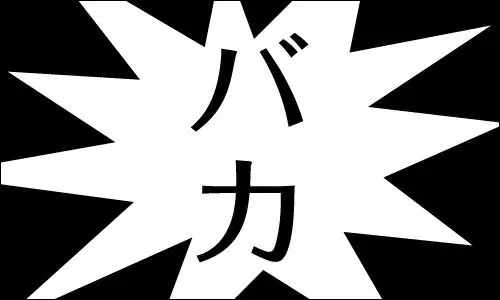
It is also worth remembering that swear words and some insults can be written in Katakana, as in the case of バカ, and are often seen in katakana in manga and books to create a strong and special effect.
There are also insults using the term “You” itself, such as “kisama, temee,” which means you, but depending on the tone of voice or the region, this can be an insult.
We also have another article that talks about swear words in Japanese anime. In this article, you will learn in detail about the main words heard in anime such as: “kuso, uzai, chikushou, baka, aho, yatsu, shinee, debu, nanda, temee”.
We recommend reading: Slang, swear words, insults, and vulgarities in anime
Japanese Slang
Mendokusai – Means something like: what a hassle, what a nuisance, tiring, annoying, difficult, problematic, laborious, and others. This word can be used in different situations, both for insults and to express irritation.
Mukatsuku – Means Irritating! This is a Japanese slang that you can use in a sentence or by itself when you want to complain about something or someone that is bothering you!
Kimoi – An abbreviated version of “kimochi warui,” which means disgusting or nausea. If something bothers you, a simple “Kimoi!” is enough to show your disgust! This can be used to describe someone’s actions or something, as well as their appearance.
See also: What does kimochi really mean in Japanese
Dasai – Means ugly, lame, or outdated. It can be used to describe appearances and actions. If someone is completely reckless, you can say they are “dasai” and if they are wearing horrible clothes, you can also say “dasai.”
Bimyō [微妙] – Means questionable or uncertain. You can use the word bimyō to describe something that is neither good nor bad; however, it is generally used to describe the bad.
Majide – Means something like serious? Really? It can also be used in different occasions with expressions like chō or metcha. If you want to know more slang in the Japanese language, how about getting to know the famous Yabai.
See also: Do you know what Yabai means?

Insulting Phrases in Japanese
To conclude the article, let’s also look at some phrases, questions, and answers that can become insults. Notice that there are different ways to say such phrases, and remember that the phrases below should be pronounced in a strong way; otherwise, they will be normal phrases and not insults.
| Rōmaji | KANJI/KANA | HIRAGANA | TRANSLATION |
|---|---|---|---|
| Nanda-yo?/ Nani-yo?/ | 何だよ? | なんだよ | What’s your problem? What happened? (used in moments of anger, with an authoritative tone.) |
| Namen jyaneyo | なめんじゃねよ | Literally: Don’t lick me, but means don’t underestimate me, don’t mess up, don’t screw up. | |
| Nante ittan-dayo? / Nante itta no? | なんて言ったんだよ? | なんていったんだよ | What did you say? |
| Fuzakenai deyo! / Fuzakeruna yo! | ふざけないでよ! | Stop acting stupidly! Don’t underestimate me! | |
| Baka yamete yo [yamero, yamena, yatten ] | ばかやめてよ | Stop being stupid. | |
| Baka iwanai deyo! / Baka ittenna yo! | バカ言わないでよ! | くそ | Don’t say stupid things! |
| Kakko tsukenna yo | かっこ付けんなよ | Don’t try to be cool / Stop showing off. | |
| Bukkoroshite yaru! | ぶっ殺してやる | ぶっころしてやる | I’m going to finish you off. (Literally: I’m going to beat you to death.) |
| Kono yaro! | このやろ | I’m going to get you, you bastard, hey you…[say this before punching someone]. | |
| Eraso ni suruna yo! | 偉そうにするなよ | えらそにするなよ! | Don’t be so arrogant! |
| Nani sama no tsumori? | 何様のつもり | なにさまのつもり | Who do you think you are? |
| Keri wo tsuke yoze! | けりをつけようぜ | <Let’s finish this quickly. | |
| Nande sonna koto shita no? | 何でそんなことしたの | きたない | Why did you do that? |
Other Ways to Insult in Japanese
One way to insult is by using metaphors; we can call a person by names of low-value objects like trash, feces, shit, and others. It is also common for Japanese people to insult with names of animals, fruits, and other objects that may present some characteristic.
Japanese people also like to depreciate another person using honorific words. Implicitly, we can use good and magnificent words to give exaggerated and sarcastic honor.
Others use the spelling itself or pronounce it incorrectly on purpose to mix or create some sarcastic insult. In fact, there are thousands of ways to insult people in Japanese. Over time, we will keep you updated!
I hope you enjoyed this list of insults and swear words in Japanese. We recommend reading our article that talks in detail about one of the most used swear words in the Japanese language.
Also read: What does Baka really mean in Japanese?
To conclude the article, I will leave some videos about swear words in Japanese for you to listen to and learn.
Leave a Reply