

Have you ever thought about visiting the place where an atomic bomb fell? Hiroshima, a city devastated in World War II, has become a major tourist spot with a beautiful Peace Memorial Museum and Park. In this article, we will learn some details about this park and museum in the city of Hiroshima that transformed from ashes into a beautiful city.
The Hiroshima Peace Memorial Park, in Japan, was designated a World Heritage Site by UNESCO in 1996. In the Park, you will find the famous atomic bomb dome (genbaku dome), a structure that survived the bomb. In addition, the park is filled with monuments and a peace museum where you can travel through time.
The ruin serves as a memorial for the people who were killed in the atomic bombing on August 6, 1945. More than 70,000 people died instantly and another 70,000 suffered fatal radiation injuries.
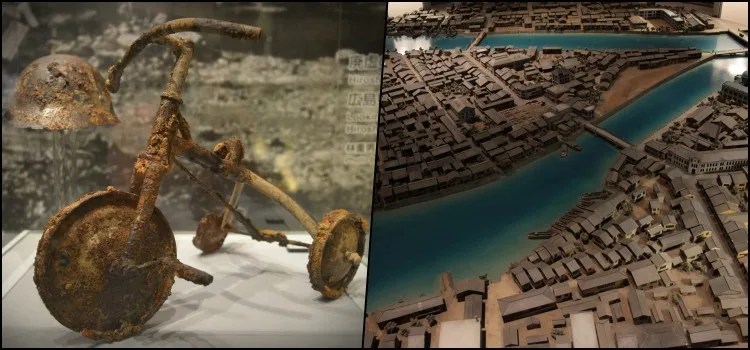
Table of Contents
Bombs at Dawn in Hiroshima
At 8:15 am, on August 6, 1945, Little Boy, the first atomic bomb, was used in the war. It was dropped by the United States Army Air Forces from a B-29 bomber. The force of the atomic bomb effectively obliterated the city of Hiroshima, Japan.
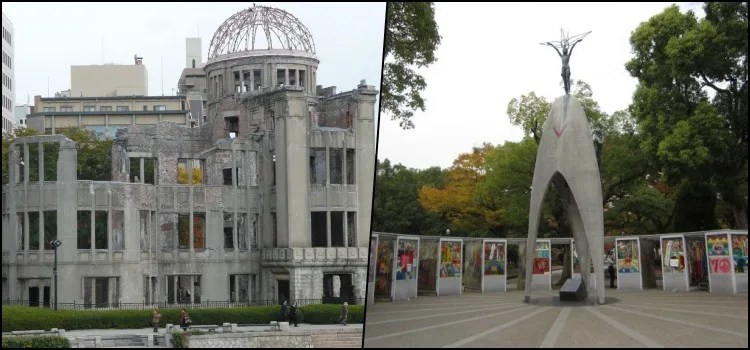
Within 43 seconds of falling, Little Boy detonated the city, missing its target by 240 meters. Intended for the Aioi Bridge, the bomb exploded directly over the Shima Hospital, which was very close to the Genbaku Dome. Since the explosion was almost directly overhead, the building managed to maintain its shape. The vertical columns of the building were able to withstand the vertical force of the explosion, and parts of the external concrete and brick walls remained intact.
The center of the explosion occurred 150 meters horizontally and 600 meters vertically from the Dome. Everyone inside the building was killed instantly. In December 1996, the Genbaku Dome was registered on the UNESCO World Heritage List, based on the Convention for the Protection of the World Cultural and Natural Heritage.
Its inclusion on the UNESCO list was based on its survival from a destructive force (atomic bomb), the first use of nuclear weapons on a human population, and its representation as a symbol of peace. The dome was originally built in 1915 by Czech architect Jan Letzel, where it was the Hiroshima Prefectural Commercial Exhibition.
The Statue and the Legend of the Tsuru
A girl named Sadako Sasaki was hit by radioactive rain from the atomic bomb in Hiroshima, resulting in leukemia. On August 3, 1955, Chizuko Hamamoto, a friend of Sadako, visited her in the hospital and made her an origami of a Tsuru.
Her friend told her a Japanese legend that whoever makes a thousand origami Tsurus is granted a wish by the gods. Sadako began making Tsurus every day with the wish to heal and return to life, and she also wished for peace for humanity.
Sadako managed to make 646 paper Tsurus, and after her death, her friends made another 354, to reach a total of 1000. Sadako died on October 15, 1955, and her friends erected a monument in her memory. In the Peace Memorial Park, you can find inscribed on the monument: “This is our cry, this is our prayer. Peace on Earth!” This legend and story moved and reached the whole world!
Throughout the year, you will find many people visiting this monument in her memory and bringing various origami Tsurus. This statue was made not only in memory of Sadako but for all the children who died as victims of the atomic bomb.
Hiroshima Peace Memorial Museum
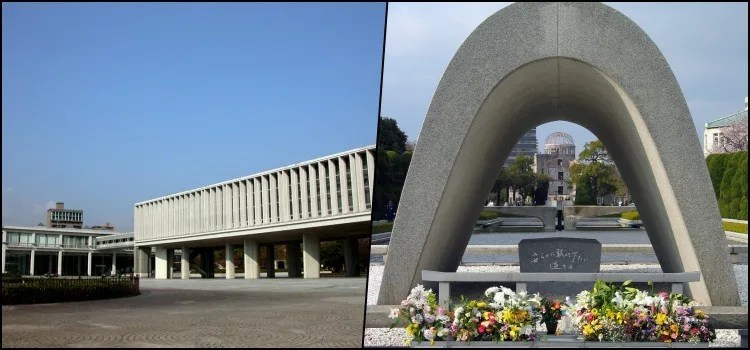
Despite all the sadness from the death of so many people, the reconstruction of the City of Hiroshima is impressive. The Museum helps us understand the total devastation caused by the atomic bomb. You will find objects and belongings of people affected by the bombs and even pieces and the capsule of the bomb.
In addition, the museum offers an accessory for you to follow through audio in Portuguese, all the objects in the museum. The museum also has other exhibitions, 3D films, testimonies from survivors, and photos of the event. The scenes are strong and cause knots in the throat, be well prepared.
In addition to photographic records, there are wreckage, models, and explanations about the bomb and the effects of radiation on the human body. The various recordings are personal accounts from survivors, stories of the victims in detail with name, surname, age, where they were at the moment of the explosion, and the complications that occurred.
Other Points of the Peace Memorial Park
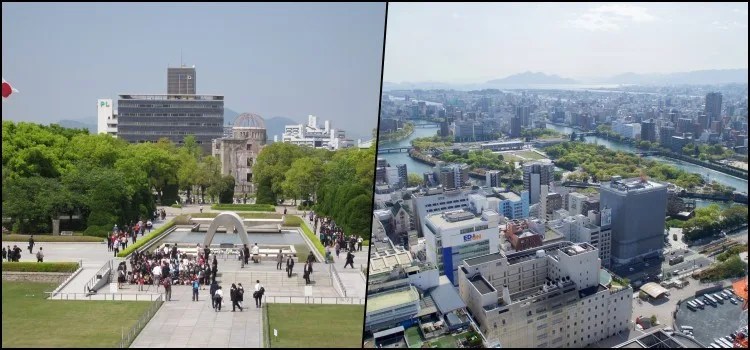
In addition to the dome, main museum, and the statue of the children mentioned in this article, there are numerous monuments and inscriptions in memory of those who died as a result of the atomic bomb. There is a monument that contains the ashes of more than 70,000 unidentified dead.
The park reflects all the effort to restart the city and its deep respect for the lives lost and lessons from the tragedy. The purpose of this Park is to remember the horrors caused by the atomic bomb so that this never happens again, in addition to being a memorial to the victims of this war, which total more than 166,000 people.
The park is filled with gardens, sculptures, tombs, and small memorial buildings that concentrate the memory of one of the fateful dates in World History. The park also has some cenotaphs, the flame of peace, the gates of peace, and the bells of peace. On the morning of August 6, the lantern ceremony takes place on the Motoyasu River.
The Hiroshima Peace Memorial Park Rest House is another bombed building located in the park. Originally, it was the Taishoya Kimono Shop in March 1929. The only thing that survived was the basement and a 47-year-old man.
When visiting Hiroshima, you must know this peace memorial park and its beautiful museum. It is amazing to see the recovery of the city and to be moved by all the recorded events. Have you had the chance to visit the Hiroshima Peace Memorial Park? What was your experience? We appreciate your comments and shares.
Leave a Reply