
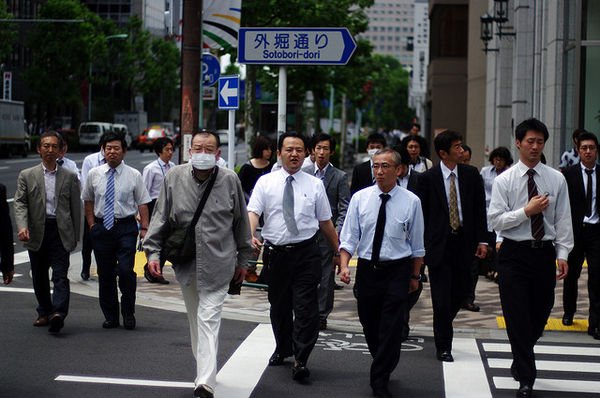
Have you ever wondered what corruption is like in Japan? The country is famous for its honesty, but there is no perfect country, and Japan has its cases of corruption, not only in the government but in various areas, from small things to large ones.
Politicians crying, suicides, money being used to buy video games, these are the reactions of some Japanese who have been caught in corruption scandals. These are some of the Japanese corruption scandals we will see in this article.
We recommend reading: The Honesty of the Japanese
Is corruption rare in Japan?
In Japan, corruption is something rare because there are effective mechanisms to investigate and punish corruption. Although the law is quite strict, cases of bribery and various corrupt schemes still occur, often managed by the Yakuza or companies.
Although it is not corruption, it is worth mentioning that not all Japanese find money on the street and return it to the owner, which results in the arrest of some of them. Corruption cases in Japan tend to be small and imperceptible due to the country’s high security and laws.
However, these cases can be harmful, involving false security in a certain building by fraudulently passing an inspection. Embezzlement, shell companies, misuse of public assets, etc.
Also read: Yakuza – All about the Japanese mafia

How do the Japanese view corruption?
Although the Japanese population is considered honest, there are some notable contrasts. Even with corruption cases being exposed, many Japanese turn a blind eye to these cases and end up re-electing a politician involved in scandals.
After the crackdown on fraud and bribery, people seem to be more outraged by the fact that their beloved politicians and bureaucrats have been arrested than by the corruption occurring.
The Japanese press and media can be quite aggressive in their reporting on scandals and corruption. Television coverage of such activities is usually extensive and thorough, even leading to the suicide of some involved.
Some involved are questioned about why they did not delete a corruption case within a certain location. It is difficult for the Japanese to speak up, as this can lead to the loss of the entire organization involved.
Japan is very strict when it comes to scandals. As a consequence, the Japanese people may hesitate to become “whistleblowers”… This can harm them, affecting their careers for the rest of their lives, even if they are not involved in the scandal.

Types of corruption in Japan
Something very common is amakudari (天下り), a practice where retired Japanese bureaucrats take high-level positions in some public and private companies. This commonly happens in financial, construction, transportation, and pharmaceutical industries.
One of the risks of corruption in Japan lies in the manipulation of bids known as Kansei Dango. Some project proposals are manipulated, not always involving money, but these manipulations end up harming other proposals and foreign companies.
Many people give expensive gifts annually to their doctors, teachers, bureaucrats, bosses, and others. Some do this as insurance for good treatment, promotion, or job recommendation.
American businessmen doing business in Japan say that a little “grease” is needed to quickly maneuver through the bureaucracy. Nothing that a little cash can’t speed up.
A common practice is for bureaucrats to grant a contract to a construction company, and that company rewards the bureaucrat with a well-paid job when they retire from the government.
Corruption seems to be particularly ingrained in the political culture of Hokkaido. Much of the corruption revolves around construction companies trying to secure money for public works projects.

Corruption scandals in Japan
To give an idea, Japan has 20 points in corruption. The least corrupt country is Denmark with 1 point, while Brazil has 79 points. Japan is not free from cases of improperly used funds, fraud, and bribery. Let’s see some cases that occurred below:
- About 90% of road contracts in 2006 did not involve bidding;
- An investigation found that 69 million yen of tax funds intended for public works were spent on parties;
- In 2006, there was a major scandal involving the falsification of data related to the earthquake resistance of some buildings;
- In 2001, a foreign affairs official spent about 4,000,000 yen on horse racing and golf club;
- In 2006, three governors were arrested and forced to resign due to bidding manipulation scandals;
- Other famous scandals were those of Ōura, Siemens, and Teijin, which were considered the biggest scandals involving corruption in Japan’s history. I recommend doing individual research on them;
- For more reports of corruption in Japan, we recommend accessing this link.
An investigation found that 46% of the $30 million budget for office supplies for the Chiba prefectural government was misused or improperly spent, with part of the money intended for the purchase of items such as video game consoles and ping pong tables.
One of the most common forms of corruption in Japan is bribery for construction projects. This form of bribery is one of the reasons why Japan has so many bridges and railway lines, but less than half of the population has a sewage system.
At least, most of the time, those caught end up losing their positions, but the law is flawed, and some manage to get away with it.
The sex scandal of the Ministry of Finance in Japan
Underwear was seized in a raid, and two officials from the Ministry of Finance were arrested for demanding that bankers take them to “no-pan shabu shabu restaurants“, where waitresses in short skirts without underwear serve customers.
The waitresses would bend over to customers when receiving tips of 10,000 yen. The bankers spent more than 10 million yen on these and other entertainments, and only received warnings about investigations into bad loan scandals.
Other officials from the Ministry of Finance were reprimanded for taking “naps” with prostitutes in rooms rented by the MOF. One was found with 400 pieces of women’s underwear in his home.
The official told the police: “I picked up all the lingerie on the streets by pure chance.” In April 1998, two former Ministry of Finance officials were indicted for receiving $69,000 in bribes during nights at restaurants and golf matches.
Another 112 officials from the Ministry of Finance were reprimanded for improperly accepting meals and entertainment. In 2000, there were drastic reductions in wines and meals for bureaucrats.

The corrupt Japanese who cried
Nonomura became famous after crying during a defense against corruption charges. He spent about 3 million yen (30,000 USD) of public money on train trips made during the last fiscal year.
When the politician tries to explain the reason for the trips and public spending, he simply starts crying profusely and mumbling phrases, and later begins to hiss, flail, and pound the table like a retard.
After insistence, Nonomura submitted his resignation for the unjustified use of public funds and offered to return the amounts spent. If only Brazilian politicians would resign and return the stolen money.
The Recruit Scandal
Prime Minister Noboru Takeshita was forced to resign in April 1989 after members of his party, the LDP, were involved in a favor exchange scandal, generating the worst political crisis in Japan since the end of World War II.
Also read: Japanese Crimes Committed in World War II
The leader of the PDL, Shin Kanemaru, was among those forced to resign. One of Takeshita’s top aides committed suicide. Many thought he chose suicide to avoid revealing any irregularities about his boss.
In the Recruit scandal, LDP legislators accepted pre-IPO shares from Recruit Cosmos Co., a real estate subsidiary of the Recruit group, with the understanding that the shares would have high value when listed on the Tokyo Stock Exchange.
In exchange, the legislators granted favors to Recruit, helping it expand its business. About 70 politicians and insiders bought shares before the company was listed. The trial for the scandal lasted 13 years and involved 322 hearings.
Takeshita resigned from the position of prime minister after taking full responsibility for the Recruit scandal, but this was not the only crime he was linked to. It was later discovered that Takeshita’s aides had sought help from the Japanese mafia to win an election.
In 1993, his closest aide was indicted for tax evasion after millions of dollars in gold bars and bearer bonds were found in his closet. Various companies were involved in the scandals.

The Lockheed Scandal
Prime Minister Kakuei Tanaka was forced to resign in 1974 over allegations of corruption. In 1976, he was arrested for receiving bribes in the scandal where the aircraft manufacturer Lockheed funneled funds to top government officials.
In exchange, L-1011 Tri-Star jets were sold to All Nippon Airways. The Lockheed scandal erupted in February 1976 when a Lockheed executive, A. Carl Kotchian, testified before the U.S. Congress that Lockheed gave money to foreign officials to sell Lockheed aircraft.
The accusation implicated 16 Japanese politicians, including Tanaka. Kodama Yoshio, one of the founders of the LDP, was accused of accepting large payments from Lockheed. Tanaka was convicted in a lower court and died in 1993 while appealing to the Japanese Supreme Court.
Construction and earthquake scandals in Japan
There was a major scandal involving the falsification of data related to earthquake resistance. Some buildings were condemned because earthquake resistance requirements were not met but were covered up in 2005 and 2006.
Residents of the condominiums were forced to move, and hotels were required to close. Much blame was placed on architect Hidetsugu Aneha, who falsified the data. Aneha said he was pressured by his clients in the construction industry to falsify the data so they could save money on construction costs.
Investigations revealed that Aneha fabricated data for 99 condominiums and hotels, making them susceptible to collapse in an earthquake of level 5 or higher. Buildings must withstand earthquakes at level 7.
Aneha said he did this because he was asked by a construction company manager to reduce the amount of steel reinforcement with the understanding that the manager knew this would weaken the building. Aneha said that if he did not comply, he would lose business.
Later, Aneha said that the falsified data were originally known as cost-cutting measures and he continued falsifying the data to maintain his reputation. He was sentenced to five years in prison. The scandal raised questions about the credibility of the construction industry as a whole and harmed real estate businesses.

Scandals involving Shinzo Abe’s Government
The administration of Prime Minister Shinzo Abe was rocked by a series of inappropriate comments, mistakes, and corruption scandals. Weeks after taking office, Abe was hurt by controversial comments from his ministers.
A health minister ended up calling women “baby-making machines” and a defense minister criticized the invasion of Iraq by close U.S. allies.
Abe was also hurt by the revelation that a tax commissioner he appointed was using public housing to meet his girlfriends, despite having criticized the use of public housing by ordinary government workers.
In July 2007, Defense Minister Fumio Kyuma was forced to resign due to his criticisms regarding the U.S. atomic bombings of Hiroshima and Nagasaki being justifiable and inevitable.
During a lecture, he said: “I understand that the bombings ended the war; I think it was something that could not be changed, as it aimed to prevent the Soviet Union from entering the war.” The gaffe reinforced feelings that Abe’s government was inept.
In May 2007, Agriculture, Forestry and Fisheries Minister Toshikatsu Matsuoka committed suicide by hanging himself in a housing complex used by legislators in Tokyo. He had been criticized by the opposition for dubious uses of his office expenses and questionable spending by an association to which he was affiliated.
Two Agriculture, Forestry and Fisheries ministers who followed Matsuoka – Norihiko Akagi and Takehikiko Endo – were forced to resign due to corruption scandals. Endo was forced to leave office after just eight days in office.

Public money for video games and ping pong
An investigation found that 46% of the $30 million budget for office supplies for the Chiba prefectural government was misused or improperly spent, with part of the money intended for the purchase of items such as video game consoles and ping pong tables.
Of course, these 7 cases are just the tip of the iceberg in Japan. By reading our article on corruption in Japan, you will see that exchanging gifts, favors, and bribes is common, especially involving public construction and renovations.
I hope you enjoyed the article; if you did, share it and leave your comments. Do you know of any more bizarre cases of scandal and corruption in Japan? If so, share with us!
Global Corruption Ranking
For comparison, we will leave below a ranking of the most corrupt and least corrupt countries in the world. This list is updated every year, so disregard it and use it only as a basis to get an idea of the honesty of the countries.
The tables below have honesty points. How many points do you think Japan can achieve?
The 20 most corrupt countries:
Responsive Table: Scroll the table sideways with your finger >>
| Rank | Most corrupt | Points |
| 1 | Somalia | 10 |
| 2 | South Sudan | 11 |
| 3 | North Korea | 12 |
| 4 | Syria | 13 |
| 5 | Yemen | 14 |
| 6 | Sudan | 14 |
| 7 | Libya | 14 |
| 8 | Afghanistan | 15 |
| 9 | Guinea-Bissau | 16 |
| 10 | Venezuela | 17 |
| 11 | Iraq | 17 |
| 12 | Eritrea | 18 |
| 13 | Angola | 18 |
| 14 | Republic of the Congo | 20 |
| 15 | Haiti | 20 |
| 16 | Chad | 20 |
| 17 | Central African Republic | 20 |
| 18 | Burundi | 20 |
| 19 | Uzbekistan | 21 |
| 20 | Democratic Republic of the Congo | 21 |
The 20 least corrupt countries
Responsive Table: Scroll the table sideways with your finger >>
| Rank | Least corrupt | Points |
| 1 | Denmark | 90 |
| 2 | New Zealand | 90 |
| 3 | Finland | 89 |
| 4 | Sweden | 88 |
| 5 | Switzerland | 86 |
| 6 | Norway | 85 |
| 7 | Singapore | 84 |
| 8 | Netherlands | 83 |
| 9 | Canada | 82 |
| 10 | Germany | 81 |
| 11 | Luxembourg | 81 |
| 12 | United Kingdom | 81 |
| 13 | Australia | 79 |
| 14 | Iceland | 78 |
| 15 | Belgium | 77 |
| 16 | Hong Kong | 77 |
| 17 | Austria | 75 |
| 18 | United States | 74 |
| 19 | Ireland | 73 |
| 20 | Japan | 72 |
Leave a Reply