

JRPGs (Japanese RPGs) are extremely fun and useful for learning a second language. Because they have a type of language that mixes the modern and the ancient, RPGs are highly recommended for those who wish to improve their reading skills, understanding of grammar, and also enhance their comprehension of different dialects. In addition, of course, to greatly improving vocabulary.
Many students use the method of collecting phrases and words while playing a game that contains a large amount of text. JRPGs are that type of game. Just as many people learn English by playing, it is also possible to improve in the Japanese language through video games.
However, unlike English, which has the same alphabet as ours (Portuguese), in Japanese it is necessary to have at least knowledge of the Hiragana, Katakana, and basic vocabulary in Kanji before starting this endeavor.
Through gaming, it is possible to acquire new vocabulary, often quite specific. I personally learned over 90% of the vocabulary related to magic and battle by playing this type of game, picking up words I didn’t know and later adding them to Anki (or another spaced repetition app).
In this article, we will list 5 games that can help you in your Japanese studies.

Don’t forget to also read the articles below:
Table of Contents
1. Estpolis Denki II (Lufia)
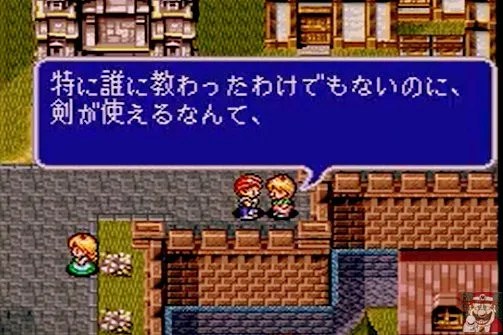
One of the best JRPGs to practice reading in Japanese is undoubtedly Estpolis Denki II (Lufia). The grammar used by the developers is quite simple, and many words are written in hiragana, considering it is a game for children and young people. Since Japanese children and young people are still learning kanji, the creators of the games tend to leave many terms in hiragana or katakana.
Rating: 10.0
Difficulty: 5 (from 0 to 10)
2. Dragon Quest I and II
Because it takes place in a medieval era, the game mixes complicated (and older) terms with simpler and more common terms in everyday life. Just as in Estpolis Denki, the developers of Dorakue (the nickname by which it is better known in Japan) were concerned with leaving many texts in hiragana. However, now and then, more difficult names in kanji appear on the screen.
This is where I learned the meanings of words like “tools,” “map,” “monsters,” “battle,” “magic,” and things like that.

Rating: 9.0
Difficulty: 7
3. Dragon Quest VI

In addition to being one of the best games in the franchise, it is considered one of the most accessible and fun for improving Japanese. Following the premise of the other games in the series, the grammar varies depending on the NPC. Older NPCs tend to use language typical of the elderly. I highly recommend this game, not only for those who want to practice reading but also for those who wish to play a good game. The most well-known version of DQ 6 is for SNES (Super Nintendo), but there are versions for portable consoles and Mobile.
Rating: 10.0
Difficulty: 8
4. Secret of Mana
Secret of Mana, like the other games in the “Mana” franchise, is extremely popular worldwide. Initially developed for SNES, it recently received a remake for PS4, PS Vita, and PC. Unlike most Japanese RPGs, Secret of Mana stands out for having a real-time battle system, contrasting with the classic turn-based model. It is also an excellent option for learning Japanese.

Rating: 8.5
Difficulty: 7
5. Chrono Trigger

Rating: 10.0
Difficulty: 9
My favorite JRPG. We recently made an article about it here on the site. Click here to read it.
Other JRPGs to practice nihongo
- Terranigma
- EarthBound
- Chrono Cross
- Final Fantasy
- Pokémon
- Breath of Fire
JapaneseQuest – Twitch channel focused on learning Japanese with JRPGs
On Twitch TV, there is a channel specialized in JRPG gameplay focused on learning Japanese. During the live streams and gameplay, the host collects words and expressions and records everything in a database. The channel’s name is JapaneseQuest and can be watched through the following link.
If you want to access the list of recorded words click here. There are over 3000 words!
Basic RPG Vocabulary
- 魔物 (まもの, mamono) = Monsters, Demons, Creatures.
- 剣 (けん, ken) = Sword.
- 盾 (たて, tate) = Shield.
- 城 (しろ, shiro) = Castle.
- 竜 (りゅう, ryuu) = Dragon.
- 防御 (ぼうぎょ, bougyo) = Defense, Protection, Defensive Armament.
- 攻撃 (こうげき, kougeki) = Attack, Charge, Strike.
- 呪文 (じゅもん, jumon) = Magic.
- 道具 (どうぐ, dougu) = Items.
- 作戦 (さくせん, sakusen) = Battle tactic.
- 旅 (たび, tabi) = Journey.
- 冒険 (ぼうけん, bouken) = Adventure.
- 勝負 (しょうぶ, shoubu) = Confrontation, Dispute, Fight, Duel.
- 勝利 (しょうり, shouri) = Victory.
- 王国 (おうこく, oukoku) = Kingdom, Monarchy.
- 国王 (こくおう, kokuou) = King.
- 女王 (じょおう, joou) = Queen.
- 王妃 (おうひ, ouhi) = Queen, Empress.
- 王女 (おうじょ, oujo) = Princess.
- 王子 (おうじ, ouji) = Prince.
- 勇者 (ゆうしゃ, yuusha) = Hero, Brave Warrior.
- 英雄 (えいゆう, eiyuu) = Hero.
So? Did you like the article? Don’t forget to comment on what you thought, like, and share on social media!
Leave a Reply