
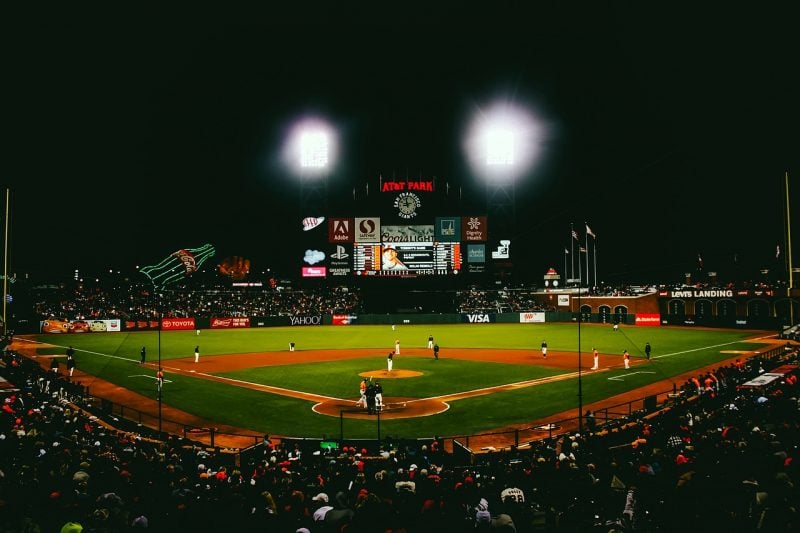
Baseball in Japanese is called yakyuu [野球] or simply beesubooru [ベースボール] and is one of the most popular sports in Japan. There you will find many more baseball stadiums than soccer. Even with the influence of the USA, baseball is completely unknown in Brazil and few have any idea how the game works.
The name Baseball in Japanese, yakyuu [野球], comes from the ideograms for field and ball. The sport was first introduced to Japan in 1872 by American Horace Wilson in Tokyo. The first baseball team was called the Shimbashi Athletic Club, founded in 1878. In 1896, the team won against a foreign team in Yokohama, which gradually increased the sport’s popularity in Japan.

Baseball, basebol or baseball? All these pronunciations are correct and we will use all 3 in this article to make it more dynamic. To help navigate, we will leave a summary below:
How does a baseball game work?
A baseball team usually has more than 25 players, some may perform more than one role. In a baseball team, we have catchers, defenders, pitchers, batters, and various substitutes and reserves. The team manager is called the manager and is usually accompanied by coaches who prepare the team.
The game seems complicated at first, but it simply consists of scoring points by running the bases when hitting the ball. Each team takes turns attacking and defending; the defending team needs to pitch the ball or catch it when hit to prevent the attacking team from scoring points by running the bases.

The pitcher is the one who throws the ball. He needs to pitch the ball within a strike zone that is between the knees and shoulders of the catcher. Each time the batter fails to hit the ball and it falls into the catcher’s hands, the defense scores a strike.
In summary, the objective of the offense is to score points while that of the defense is to eliminate batters. For a batter to score points, he needs to run around the 4 bases of the field. If he manages to hit a home run, which consists of hitting the ball out of the field (without crossing the foul zone), all batters on the bases can complete their run.
How is a batter eliminated?
By getting 3 strikes, the batter is out of the game, and with 3 batters eliminated, the teams switch sides. When the pitcher throws the ball outside the strike zone, it is called a ball [booru|ボール], and after marking 4 balls, the batter can advance one base. When a batter runs to the last base, he scores a point.

A batter or teammates on other bases can run from one base to another when the batter successfully hits the ball and the defending team manages to catch it. The defending team can try to eliminate the batters running from one base to another by touching them with the ball (tag out) or reaching the base before they do (ground out) with the ball in hand.
If the defense catches the ball before it hits the ground, the batter is also eliminated (flyout). Strikes occur only if the batter fails to hit the ball in the strike zone or tries to hit any ball without success. If the batter hits the ball into the foul zone (foul ball), he also receives a strike (except for the third strike).
Batters can also try to steal bases when the pitcher is preparing; if he gets caught, it is considered a (force out). If the ball stops near the pitcher and he throws it to a teammate, the batter trying to run to another base is also eliminated with a (force out).

The baseball game works in turns; after both teams play both offense and defense, they complete an inning. A professional game usually has 9 innings, and the team that accumulates the most points in these 9 innings wins the game. A baseball game can be unpredictable and can last a long or short time.
Professional baseball in Japan
Baseball is undoubtedly one of the most popular sports in Japan, where there are school championships, international participation, and a national tournament. The professional baseball season usually starts with training in February and March, and the regular season games take place from late March to October.
There are various baseball associations in Japan, from school, amateur, industrial, to professional. You can easily find baseball stadiums or simple amateur fields in common neighborhoods throughout the city. Baseball is undoubtedly one of the most popular sports in all of Japan.
If you want to watch a baseball game in Japan, you can buy a ticket on-site unless it is an important game or a holiday when they might sell out before the day. If you believe that tickets might sell out, you can buy them in advance online or by phone.

The influence of the Japanese on baseball in Brazil
Many think that the Japanese brought the sport to Brazil, but in fact, it was the Americans in 1850. Around 1910, the game began to attract more popularity than soccer in some places. The Japanese helped popularize the sport in 1908 with Japanese immigration to Brazil.
The impact of Japanese immigrants was significant, transforming the years from 1925 to 1938 into a golden age for baseball in Brazil. Unfortunately, baseball declined during World War II with the prohibition and prejudice of Brazilians against the Japanese. Softball was another sport similar to baseball that became popular in Brazil.
From the 70s to the 90s, things worsened even more with the descendants of Japanese going to Japan in search of jobs. This caused the popularity of the sport to drop drastically, even losing media coverage. Unfortunately, after this situation, baseball never managed to grow in Brazil again.

Animes related to baseball
I became interested in baseball after starting to watch the anime One Outs, which I highly recommend. From the same author as Liar Game, this anime manages to deliver a psychological thriller along with the sport. A very intelligent anime that I recommend everyone to watch.
Other animes are:
- Daiya no Ace;
- Cross Game;
- Touch;
- Major;
Baseball vocabulary in Japanese
Below we will provide a list of words related to baseball in English and Japanese. I thought about translating, but everyone knows the sport by the terms in English, and even the Japanese use English terms in their games. Even if there is a Japanese word for a certain thing, it is common to hear the English expressions on the field.
- クローザー (kuroozaa) – closer
- セーブ (seebu) – save
- ホームラン, 本塁打 (hoomuran or hon-rui da) – home run
- 一塁 (ichi-rui) – first base
- 一塁手 (ichi-rui shu) – first baseman
- 三塁 (san-rui) – third base
- 三塁手 (san-rui shu) – third baseman
- 三塁打 (san-rui da) – triple
- 三振 (sanshin) – strikeout
- 中堅, センター (chuuken or sentaa) – center field
- 中堅手 (chuukenshu) – center fielder
- 二塁 (ni-rui) – second base
- 二塁手 (ni-rui shu) – second baseman
- 二塁打 (ni-rui da) – double
- 先発投手 (senpatsu-toushu) – starting pitcher
- 内野 (naiya) – infield
- 出塁率 (shutsuruiritsu) – on-base percentage
- 勝利 (shouri) – win
- 右翼, ライト (uyoku or raito) – right field
- 右翼手 (uyokushu) – right fielder
- 四球, フォアボール (shikyuu or foa-booru) – walk
- 外野 (gaiya) – outfield
- 安打 (anda) – hit
- 審判 (shinpan) – umpire
- 左翼, レフト (sayoku or refuto) – left field
- 左翼手 (sayokushu) – left fielder
- 得点 (tokuten) – run
- 打席 (daseki) – at bat
- 打点 (daten) – runs batted in
- 打率 (daritsu) – batting average
- 投手 (toushu) – pitcher
- 指名打者 (shimei-dasha) – designated hitter
- 捕手 (hoshu) – catcher
- 救援投手 (kyuuen-toushu) – relief pitcher
- 敗戦 (haisen) – loss
- 本塁, ホーム (hon-rui or hoomu) – home plate
- 死球, デッドボール (shikyuu or deddo-booru) – beanball
- 盗塁 (tourui) – stolen base
- 監督 (kantoku) – manager
- 試合 (shiai) – game
- 遊撃手 (yuugekishu) – shortstop
- 野球場 (yakyuujou) – ballpark
- 長打率 (choudaritsu) – slugging percentage
- 防御率 (bougyoritsu) – earned-run average
Leave a Reply