
Anyone learning Japanese meets the small ね at the end of sentences very early. It appears so often in everyday conversation that it can look like a filler. In fact, it carries a clear social function: the speaker presents information as something both people already share. Almost every use of the particle follows from that idea.
This article explains what the particle means, how it differs from よ, why it is not related to the Portuguese né, and when it sounds friendly, polite or even sarcastic.

Contents 9
What ね is: a sentence-ending particle
ね belongs to the sentence-ending particles. These particles do not change facts; they change the relationship between speaker, statement and listener. ね signals that the speaker expects the listener to agree or to share the same perception. In English it works roughly like a tag question: “isn't it?”, “right?” or “okay?”, depending on the situation and the tone.
A simple example makes the difference clear. The sentence 雨が降ってる (“It's raining”) sounds like a private thought. With ね it becomes a statement addressed to someone: 雨が降ってるね, close to “It's raining, isn't it?”.
Not a Portuguese né
The resemblance to the Portuguese né is striking but accidental. Japanese borrowed many words from Portuguese in the 16th and 17th centuries, including パン (pan, bread) and カルタ (karuta, playing card). ね comes from Japanese itself and is attested as a sentence-final particle in the Nara period, long before the first contact with Portuguese traders. Japanese dictionaries cite examples from the Manyōshū, a poetry collection of the eighth century.
The core function: shared information
ね presents a statement as common information. When both people see or know the same thing, the speaker can add ね to create a sense of togetherness. Typical sentences are 今日は暑いね (“It's hot today, isn't it?”) or いい天気ですね (“The weather is nice, don't you think?”). The listener confirms with うん, そうですね or simply a nod.
This function also explains why ね appears so often in polite speech. It softens a statement and turns it into a shared observation.
Agreement, confirmation and よね
In conversation, ね often confirms something. A waiter repeating a guest's name can say ご予約の佐藤さんですね: “You are Mr Satō with the reservation, correct?” The question particle か would mark a real question, but the answer is already known. ね only double-checks.
For a mix of conviction and agreement there is よね. Here よ shows the speaker's confidence, while ね expects the other person to agree. A sentence such as 君は賢いよね means “You're pretty smart, aren't you?” and sounds both certain and inviting.
Softening requests and suggestions
ね makes requests gentler. Added to the て form of a verb, it makes the request sound like an agreement both sides already share: 食べ終わったらお皿洗ってね (“When you finish eating, do the dishes, okay?”). Without ね the sentence is much more direct.
ね works the same way with suggestions using 〜よう. The speaker assumes the other person is already on board, which creates a caring tone, for example when a parent reminds a child about homework.
ね in the middle of sentences and as a call for attention
ね is not limited to the end. At the start of a sentence or between words, it catches attention. In writing it often appears lengthened: ねぇ, ねーねー or ねぇねぇ, similar to “hey” or “listen”. This use is informal and fits conversations between people who know each other well.
Japanese dictionaries list this as 間投助詞, an interjectory particle. It breaks sentences into chunks, fills pauses and shows that the speaker wants to keep talking, much like “like” as a filler in English.
Polite, feminine or neutral
After nouns and na-adjectives, a bare ね sounds rather feminine: しずかね (“It's quiet, isn't it?”) or 犬ね (“A dog, right?”). In modern daily speech many speakers choose the neutral form with だ or the polite form with です: しずかだね, しずかですね. The meaning stays the same; the tone shifts.
When ね sounds sarcastic
The particle can also sting. If ね is attached to information the listener clearly does not know, it can sound condescending. Asked about an expensive whisky, the host answers それ?マッカラン・ラリックの62年だね: “That? A Macallan Lalique 62 year old.” In a mocking tone it implies “everyone knows that”. The same particle that creates closeness can create distance.
いいね and everyday social media
Online, ね lives on. いいね, literally “good, isn't it?”, is the Japanese equivalent of a “Like” button and has become part of social media routine. In conversation the particle remains a tool for closeness: it shows that you are listening, following along and on the same page.
Used deliberately, ね makes Japanese sound natural. Beginners can remember a simple rule of thumb: add ね at the end when a shared assessment should emerge, and use よ when new information needs emphasis. Together they form よね, the polite mix of conviction and invitation.
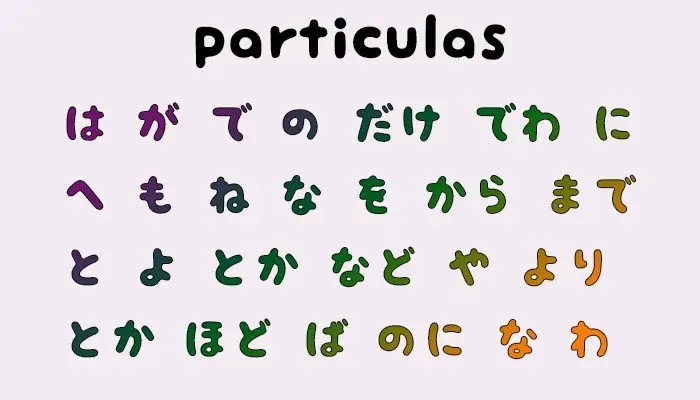
Read more: ending sentences with Japanese particles, は and が, baka, dōmo and kimochi.

Community
Comments
0 comments
There are no published comments in this language yet.
Send comment